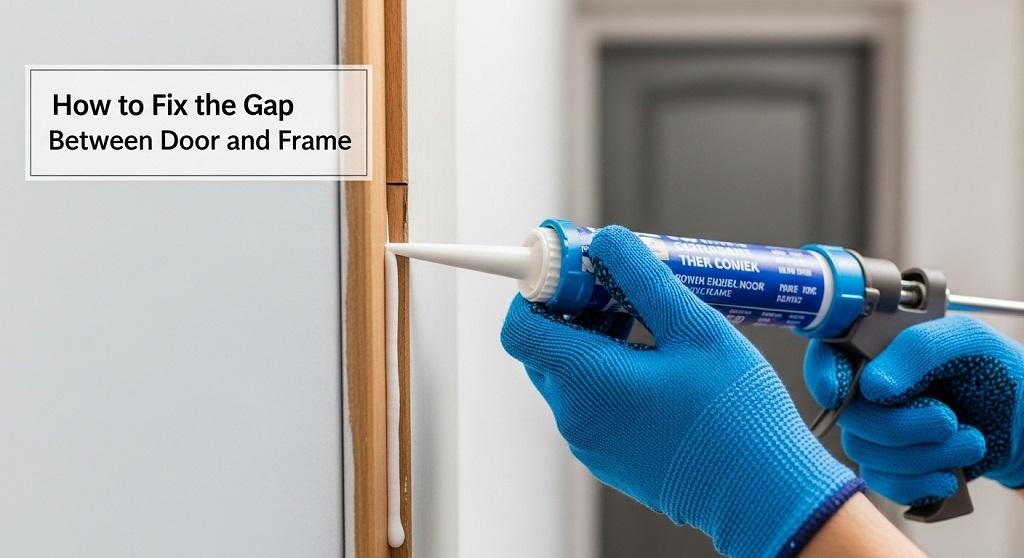
A drafty door that whistles when the wind blows or lets light peek through the edges frustrates every homeowner. That annoying space between the door and frame not only raises energy bills but also invites dust, insects, and noise. According to the U.S. Department of Energy, air leaks around doors and windows account for 10–25% of a typical home’s heating and cooling costs. Fortunately, you can close those gaps yourself in less than an afternoon. This comprehensive guide walks you through every proven method to fix door-frame gaps for good.
Why Gaps Appear Between Doors and Frames
Doors shift over time. Houses settle, wood swells or shrinks with humidity, and hinges loosen. These natural changes create uneven spacing on the latch side, top, or hinge side.
Common causes include:
- Seasonal humidity fluctuations that expand or contract wood
- Foundation settling that tilts the frame slightly
- Worn weatherstripping that no longer fills the space
- Loose hinge screws that let the door sag
- Improper installation from the start
Understanding the root cause helps you choose the best permanent solution instead of a temporary band-aid.
Tools and Materials You Need
Gather everything before you start. Most items cost little and last for multiple projects.
Essential tools:
- Phillips and flathead screwdrivers
- Cordless drill with bits
- Utility knife
- Tape measure
- Level (4-foot recommended)
- Hammer and nail set
- Putty knife or 5-in-1 painter’s tool
Common materials:
- Weatherstripping (foam, vinyl, silicone, or magnetic)
- Door sweep or bottom seal
- Shims (wood or composite)
- Longer hinge screws (2½–3 inches)
- Wood filler or auto-body filler
- Threshold seal or replacement threshold
Step-by-Step Diagnosis: Find the Exact Problem

Accurate diagnosis saves time. Walk through this checklist methodically.
- Close the door and observe light coming through on all four sides.
- Slide a dollar bill or thin cardboard around the perimeter while the door is closed. Resistance means good contact; easy sliding means a gap exists.
- Check if the door rubs at the top or bottom when opening—this often indicates hinge-side issues.
- Use a level on the door edge and frame to detect twisting.
- Inspect weatherstripping for tears, compression set, or missing pieces.
Mark problem areas with painter’s tape so you remember exactly where to work.
Quick Fixes for Minor Door Gaps (Under 1/8 Inch)
Small gaps often respond to simple adjustments.
Adjust the Strike Plate Misaligned strike plates create latch-side gaps. Loosen the two screws, slide the plate toward the stop if the gap appears at the knob, then retighten. Add a thin cardboard shim behind the plate if needed for finer adjustment.
Tighten or Replace Hinge Screws Sagging doors create top gaps and bottom rubbing. Remove one screw at a time from the top hinge on the frame side and replace with a 3-inch screw that reaches the stud. This pulls the frame back into alignment. Repeat on the middle hinge if necessary.
Add or Replace Weatherstripping Peel-and-stick foam works fast for minor gaps. For better durability, choose V-strip (tension seal) or silicone bulb weatherstripping. Clean the surface with rubbing alcohol first so adhesive bonds permanently.
Moderate Gaps (1/8 to 1/4 Inch): Structural Adjustments
Larger spaces require repositioning the door or frame.
Shim Behind Hinges Open the door fully. Insert thin cardboard or veneer shims behind the hinge leaf on the side opposite the gap. For example, shim the top hinge to lift the door and close a bottom gap. Tighten screws gradually while checking alignment.
Plane or Sand the Door Edge If the door binds on the latch side yet shows a top gap, plane the latch edge slightly. Remove the door, lay it across sawhorses, and use a hand plane or belt sander with 80-grit paper. Take off only 1/32 inch at a time and test fit frequently.
Bend the Hinge Knuckles (Emergency Fix) For quick correction on metal doors, close the door and tap the hinge knuckles gently with a hammer and block of wood to shift the door sideways. This works surprisingly well in a pinch.
Large Gaps (Over 1/4 Inch): Advanced Solutions
Significant gaps usually mean the frame shifted or warped.
Install an Adjustable Threshold Bottom gaps larger than ½ inch often need a new threshold with height adjustment. Remove the old one, clean the sill, and install an oak or aluminum adjustable threshold that raises to meet the door.
Add a Door Sweep or Automatic Door Bottom Heavy-duty sweeps with silicone bulbs seal up to 1-inch gaps at the bottom. Automatic door bottoms drop a seal when the door closes—perfect for uneven floors.
Re-square the Frame with Shims and Screws Remove interior trim on the hinge side. Insert tapered shims between the frame and stud at the top and bottom on the side opposite the gap. Drive 3-inch screws through the frame and shims into the stud. Check squareness with a level, then reattach trim.
Fixing Gaps on the Top and Sides Permanently
Top gaps annoy homeowners the most because they let in the most air.
Magnetic Weatherstripping Upgrade Magnetic strips provide the strongest seal for steel doors. Cut kerf-style magnetic weatherstripping to length, slide into the door stop kerf, and enjoy refrigerator-door tightness.
Install a Door Jamb Repair Kit Bent or cracked jambs create persistent gaps. Metal repair plates reinforce the jamb without removing the entire frame. Screw the L-shaped plate over the damaged area, fill gaps with wood filler, and repaint.
Use Expanding Foam for Extreme Cases When the frame pulled away from the wall, inject minimal-expanding foam into the gap between rough opening and jamb. Trim excess after curing, then cover with new trim.
Weatherstripping Types Compared: Choose the Best One
Different materials suit different needs.
- Foam tape: Cheapest, easiest, least durable (1–2 years)
- Vinyl or rubber bulb: Good compression, lasts 5+ years
- Silicone bulb: Best temperature resistance (−40°F to 250°F)
- Bronze or brass V-strip: Classic look for older homes, extremely durable
- Magnetic: Strongest seal, ideal for entry doors
Measure twice and buy 10% extra to account for corners and mistakes.
Preventing Future Door Gaps
Proactive maintenance stops problems before they start.
- Tighten hinge screws annually
- Keep gutters clean so water doesn’t rot the threshold
- Maintain consistent indoor humidity (40–50%) with a humidifier or dehumidifier
- Repaint or reseal exterior doors every 5–7 years
- Install storm doors for an extra barrier
When to Call a Professional
Some situations exceed typical DIY skills.
Call a carpenter if you notice:
- Severe frame rot or termite damage
- The door sticks badly in summer but gaps in winter (major structural shift)
- Cracked king studs or header
- You lack confidence working with power tools
A professional fixes these issues quickly and prevents costly water damage later.
Related Topics: Demystifying the Hybrid Mattress vs. Memory Foam Debate
Conclusion
You now possess every proven technique to eliminate gaps between your door and frame permanently. Start with simple hinge tightening and weatherstripping replacement, then progress to shimming or threshold upgrades as needed. Most homeowners finish the entire project in one weekend and immediately notice quieter rooms, lower energy bills, and fewer insects. Grab your screwdriver, measure those gaps tonight, and enjoy a cozier, more efficient home tomorrow.
Take action right now—your perfectly sealed door awaits!
Related Topics: Moths in Wood: A Comprehensive Guide to Identification, Prevention, and Removal
FAQs
Why is there a sudden gap between my door and frame after years of no problems?
Sudden gaps usually result from foundation settling, extreme humidity changes, or a house shifting after heavy rain. Check hinge screws first; they often loosen over time.
Can I fix a gap without removing the door?
Yes. Tighten hinges, adjust the strike plate, or add adhesive weatherstripping without ever taking the door off its hinges for gaps under 3/16 inch.
What causes a gap only at the top corner of the door?
This classic “door sag” happens when top hinge screws loosen or the house settles unevenly. Replace top hinge screws with 3-inch versions and add shims if needed.
How do I fix a gap at the bottom of an exterior door?
Install a door sweep or replace the threshold. For uneven floors, choose an automatic door bottom that drops when closed.
Is it normal to have a small gap around an interior door?
Minor gaps (under 1/8 inch) on interior doors are acceptable for airflow. Larger gaps waste energy and should be sealed with low-profile weatherstripping.
References
- U.S. Department of Energy – Energy Saver: Air Sealing Your Home https://www.energy.gov/energysaver/air-sealing-your-home
- Natural Resources Canada – Keeping the Heat In: Chapter 5 Doors and Windows https://natural-resources.canada.ca/energy-efficiency/keeping-heat
- Fine Homebuilding – Fixing Common Door Problems https://www.finehomebuilding.com/project-guides/doors-windows