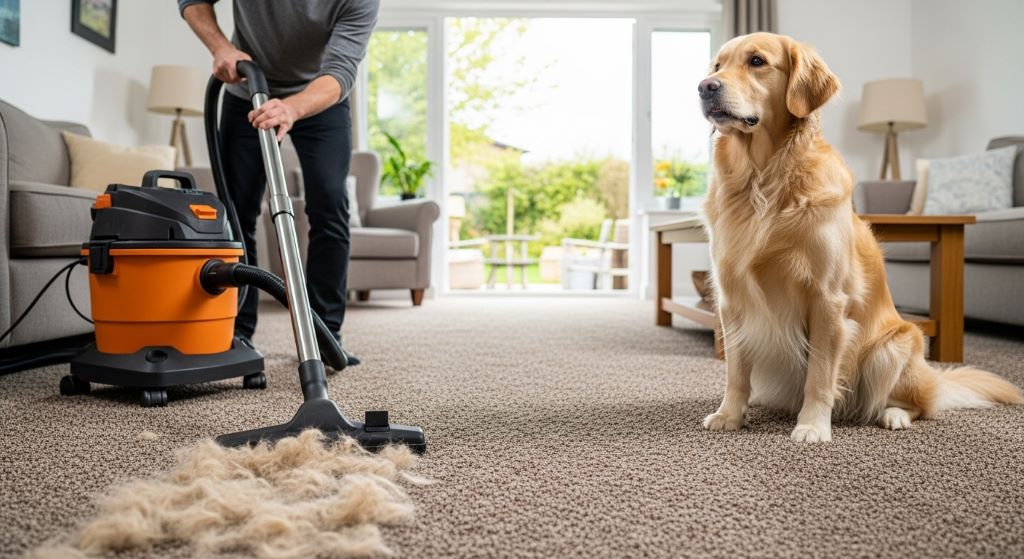
If you share your home with a dog or cat, you already know the struggle. Pet hair gets everywhere. It clings to sofas, hides in carpet fibers, and floats through the air when you least expect it. No matter how often you clean, it always seems to come back.
The good news is that vacuuming the right way can make a dramatic difference. However, it is not just about having the right machine. Technique, timing, and maintenance all play a role. This guide will show you exactly how to get the most out of your vacuum and keep pet hair under control for good.
Why Pet Hair Is So Hard to Remove
Pet hair behaves differently from regular dust and debris. It wraps around brush rolls, embeds deep into carpet fibers, and sticks to upholstery with static electricity. Short pet hair is especially tricky because it works its way into fabric weaves and becomes nearly invisible.
Additionally, dander — the tiny flakes of skin that pets shed — travels with the hair and settles into surfaces throughout your home. This combination of hair and dander is what makes a thorough clean so challenging.
Therefore, using the right vacuum with the right approach is not optional. It is essential for both cleanliness and air quality.
Choosing the Right Vacuum for the Job
Before diving into technique, it helps to understand what makes a vacuum suitable for pet hair. Not all machines are built the same way. A strong suction cleaner designed specifically for pet owners will outperform a basic household model every time.
Here is what to look for:
- Sealed HEPA filtration to trap allergens and fine particles
- A motorized brush roll that agitates carpet fibers
- Tangle-resistant brush heads to prevent hair wrap
- Strong consistent suction across different floor types
- Large-capacity dustbins that do not need emptying mid-session
Upright vacuums tend to work well on carpets, while canister models are more flexible for stairs and upholstery. Robot vacuums can handle daily maintenance between deep cleans. However, for serious pet mess cleanup, a full-size machine with powerful suction is hard to beat.
Getting Your Home Ready Before You Vacuum
A little preparation goes a long way. Vacuuming without preparing the space first means you will miss a lot and work harder than necessary.
Start by picking up any toys, clothing, or clutter from the floor. These items block your path and can get sucked into the vacuum, causing jams. Move lightweight furniture like dining chairs out of the way so you can reach every corner.
Next, brush or lint-roll your furniture before you vacuum the floors. This loosens hair from cushions and armrests, and it falls to the floor where your vacuum can pick it up. If you vacuum the floor first and then brush the sofa, you will just have to vacuum again.
Additionally, open windows if possible. This reduces static in the air, which can cause loose hair to resettle on surfaces you have already cleaned.
The Right Vacuuming Technique for Carpets
Carpets hold onto pet hair like a trap. The fibers grip each strand, especially in high-traffic areas where hair gets pressed deeper with foot traffic.
Slow and steady is the key. Many people vacuum too quickly and miss a significant amount of embedded hair. Move the vacuum forward slowly, then pull it back over the same path. This two-directional pass works the brush roll into the carpet from both angles and pulls out far more hair.
Overlap each pass slightly so you do not leave gaps. Think of it like mowing a lawn — consistent rows, no skipped sections.
For thick carpets or areas where pets sleep regularly, make three or four passes in different directions. Cross-hatching — vacuuming in both horizontal and vertical directions — is one of the most effective methods for deep cleaning pet hair from carpet.
Furthermore, lower the vacuum height setting when working on plush or high-pile carpet. A setting that is too high means the brush roll barely touches the fibers. A setting that is too low can strain the motor. Most machines have a recommended setting range — use it.
Tackling Hard Floors Without Spreading Hair Around
Hard floors present a different challenge. On smooth surfaces, pet hair tends to scatter and float rather than stay in place. Rushing the vacuum across a hardwood or tile floor pushes hair ahead of the suction path and sends it spinning across the room.
To avoid this, use a slower pace on hard floors as well. Turn off the brush roll if your vacuum allows it — on hard surfaces, a spinning brush can scatter hair rather than collect it. Instead, rely on pure suction to draw the hair in.
Work in sections and vacuum toward a central point in the room. This keeps loose hair from drifting into areas you have already cleaned.
A microfiber dust mop can also be useful before vacuuming hard floors. Running it over the surface first gathers hair into clumps that are far easier for the vacuum to pick up in one pass.
How to Vacuum Upholstery and Furniture Effectively
Furniture is where pet hair tends to concentrate most heavily. Pets spend hours on sofas and chairs, leaving behind layers of hair that weave into the fabric.
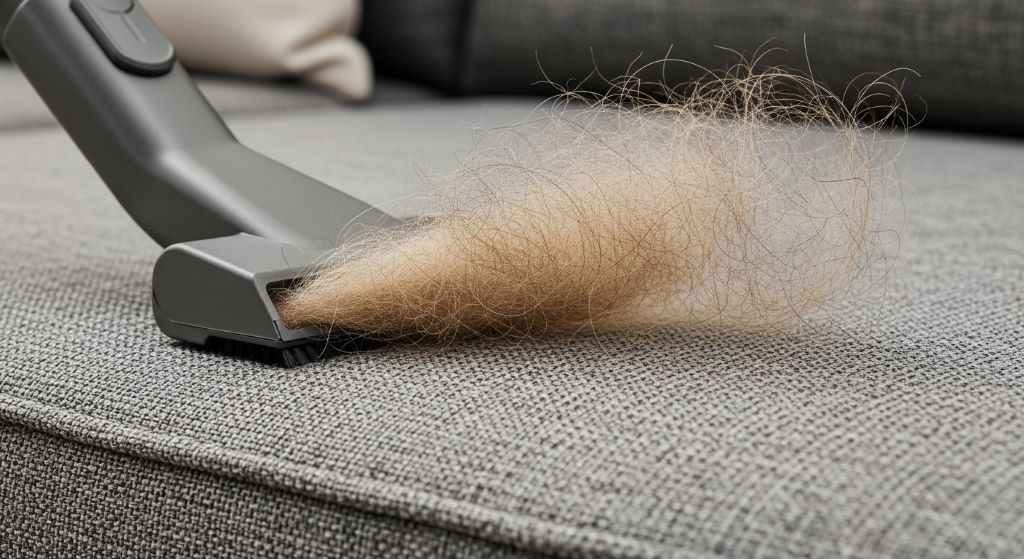
Start by using a narrow upholstery attachment. These are designed to create strong focused suction on a small surface area, which lifts embedded hair more effectively than a wide floor head. Work in short strokes, moving with the grain of the fabric and then against it.
For cushions, remove them from the sofa and vacuum both sides. Pay special attention to the seams and crevices where hair collects and hides. A crevice tool is perfect for these tight spots.
Additionally, consider using a rubber pet hair brush before applying the vacuum. These brushes use friction to gather hair into visible clumps, making the vacuum’s job much easier. They are inexpensive and work exceptionally well on microfiber and velvet fabrics.
Pet beds and blankets should be vacuumed regularly too. These items attract enormous amounts of hair and dander. Shake them outside first, then vacuum both sides thoroughly before washing.
Stairs: The Most Overlooked Pet Hair Zone
Stairs are a common blind spot in most cleaning routines. However, they tend to collect hair at an alarming rate because pets run up and down them constantly, shedding with every step.
Use a handheld vacuum or the hose attachment of your main machine for stairs. Work from the top step downward so any dislodged hair falls to steps you have not yet cleaned. On each step, vacuum the horizontal surface and then the vertical riser behind it.
Pay attention to the edges where the step meets the wall. Hair collects heavily in these corners and is easy to miss with a broad attachment. A crevice tool clears these spots quickly.
For carpeted stairs, use the same slow two-directional technique you use on floor carpets. One pass is rarely enough. Therefore, going over each step twice in opposite directions produces much better results.
Maintaining Your Vacuum for Peak Performance
Even the best strong suction cleaner loses performance when it is not maintained properly. A clogged filter or full dustbin dramatically reduces suction, which means you are working harder for worse results.
Follow these maintenance habits:
- Empty the dustbin after every single session, not when it looks full
- Wash or replace filters according to the manufacturer’s schedule, usually every one to three months
- Cut tangled hair from the brush roll with scissors after each use
- Check the hose for blockages if suction seems weaker than usual
- Clean attachment heads regularly to remove built-up debris
A well-maintained vacuum lasts longer and performs consistently. Neglecting maintenance is one of the most common reasons vacuums underperform on pet hair.
Setting Up a Cleaning Schedule That Works
Consistency matters more than intensity. Vacuuming once a week will not keep up with active shedding pets. Most pet owners get better results by vacuuming high-traffic areas every two to three days and doing a full deep clean once a week.
During shedding seasons — typically spring and fall — increase your frequency. Pets can shed dramatically more during these periods, and staying ahead of the buildup is much easier than catching up after the fact.
Additionally, consider using a robot vacuum for daily maintenance. While it cannot replace a deep clean, it picks up surface hair before it embeds into carpet or drifts under furniture. This reduces the workload significantly during your weekly session.
A consistent routine is the most effective form of pet mess cleanup. It prevents hair from reaching the level where it becomes genuinely difficult to remove.
Air Quality and Filtration: The Hidden Side of Pet Hair Cleaning
Vacuuming removes hair and debris from surfaces, but what happens to the fine particles that get stirred up in the process? Without proper filtration, your vacuum can exhaust allergens and dander back into the air.
This is why sealed HEPA filtration matters so much in pet households. A HEPA filter captures particles as small as 0.3 microns, which includes pet dander and many common allergens. Homes without this filtration level may actually worsen air quality during vacuuming.
Furthermore, after vacuuming, give the air time to settle before sitting in freshly cleaned rooms. Running an air purifier with a HEPA filter in pet areas adds another layer of protection, especially for allergy sufferers.
Replacing vacuum filters on schedule is equally important. A clogged filter forces particles through gaps in the vacuum body, bypassing filtration entirely. Therefore, keeping the filter clean is just as important as keeping the floor clean.
Extra Tips to Reduce Pet Hair Around the Home
Vacuuming is the most important step, but it works even better when combined with a few preventive habits.
- Brush your pet regularly to remove loose hair before it falls on your floors and furniture
- Use washable furniture covers on sofas and chairs that your pet uses most
- Place pet beds in easy-to-clean locations so you can wash them frequently
- Add doormats near entrances to catch dirt and hair brought in from outside
- Groom pets more frequently during heavy shedding seasons
These steps reduce the total volume of hair in your home, which means each vacuuming session becomes faster and more effective.
Conclusion
Managing pet hair does not have to feel like an endless battle. The right vacuum, used the right way, transforms the task from frustrating to manageable. Start by choosing a machine built for the job, with strong suction and proper filtration.
Prepare your space before vacuuming, use slow overlapping passes on carpet, and pay attention to furniture, stairs, and hard floors with the appropriate techniques. Keep your vacuum maintained so it always performs at its best.
Build a consistent cleaning schedule and combine it with simple preventive habits. Over time, these practices will keep pet hair under control and your home feeling genuinely clean. With the right approach, effective pet mess cleanup becomes a routine rather than a chore.
Frequently Asked Questions
How often should I vacuum if I have a pet that sheds heavily?
For heavy shedders, vacuum high-traffic areas every two to three days and do a full clean once a week. During shedding seasons in spring and fall, you may need to increase this frequency further.
What type of vacuum works best for pet hair on carpet?
An upright vacuum with a motorized brush roll and sealed HEPA filtration works best on carpet. Look for models marketed specifically for pet owners, as these are designed with tangle-resistant brush heads and stronger suction for embedded hair.
Why does my vacuum lose suction so quickly when cleaning pet hair?
The most common cause is a full dustbin or clogged filter. Pet hair fills containers faster than regular debris. Empty the bin after every session and clean or replace filters regularly to maintain consistent performance.
Can I use a robot vacuum to manage pet hair between deep cleans?
Yes. A robot vacuum is excellent for daily surface maintenance. It picks up loose hair before it embeds into carpet or collects under furniture. However, it should supplement rather than replace regular deep cleaning with a full-size machine.
Is it worth investing in a strong suction cleaner specifically for pet hair?
Absolutely. General-purpose vacuums often struggle with pet hair, especially on carpet and upholstery. A vacuum designed for pet owners includes features like tangle-resistant brush rolls, better filtration, and stronger consistent suction that makes a real difference in results.
Related Topics:
How to Clean Suede Shoes: The Ultimate Guide