Most people spend nearly one-third of their lives sleeping, yet many unknowingly place their neck in a position that resembles balancing a bowling ball on a bent straw for hours every night. A contour pillow improves sleep posture, enhances spinal alignment, and provides targeted cervical support by matching the natural curve of the neck and head. When the neck remains properly supported, pressure decreases, muscles relax, and the spine stays in a healthier position throughout the night.
Waking up with stiffness, headaches, shoulder tension, or persistent neck discomfort is often linked to poor pillow support rather than the mattress alone. Traditional pillows can flatten over time, forcing the neck into awkward angles that strain muscles and joints. This nightly stress can gradually affect sleep quality, posture, and recovery. A contour pillow is specifically designed to solve this problem by supporting the natural curvature of the cervical spine while promoting proper body alignment during sleep.
In this guide, you’ll learn how contour pillows work, why they help improve sleep posture, who benefits most from using one, and how to choose the right option for your sleeping position. You’ll also discover practical tips for maximizing comfort and maintaining healthy spinal alignment every night.
What Is a Contour Pillow and How Does It Support Sleep Posture?
Direct Answer: A contour pillow is an ergonomically shaped pillow featuring raised edges and a lower center designed to support the natural curve of the neck while maintaining proper sleep posture.
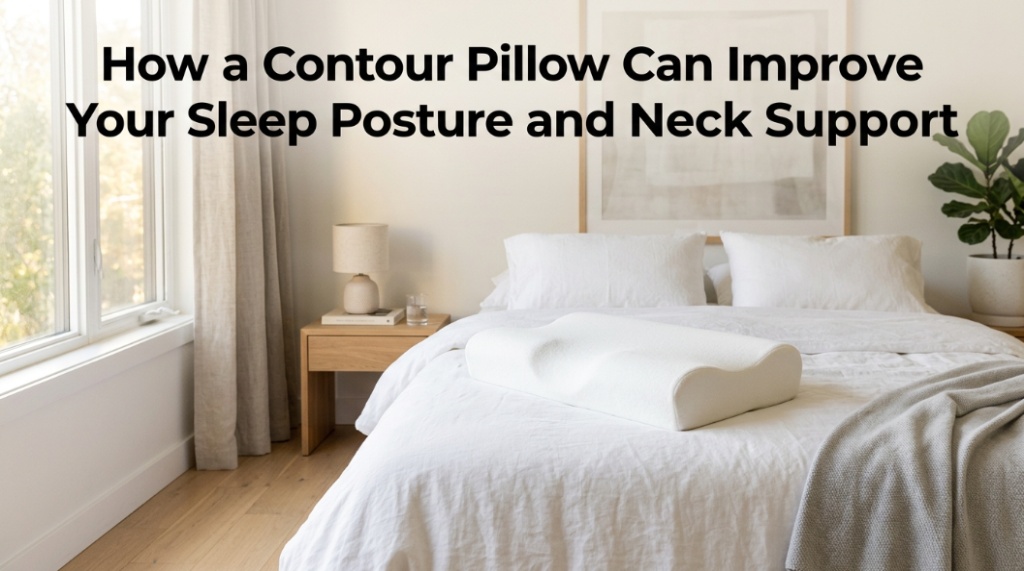
Unlike conventional pillows that create a flat sleeping surface, contour pillows are engineered to follow the anatomical structure of the head, neck, and shoulders. The elevated sections cradle the neck while the recessed center supports the head without pushing it too far forward.
This design helps maintain a neutral spine position throughout the night. Instead of forcing the cervical spine into unnatural angles, the pillow distributes weight evenly and reduces muscular strain.
People researching ergonomic sleep solutions often compare different models before purchasing. Reviewing a detailed guide on the best contour pillow options for better neck support and alignment can help identify features that match individual sleeping preferences.
Key benefits include:
- Improved cervical spine positioning
- Reduced neck and shoulder tension
- Enhanced sleeping comfort
- Better pressure distribution
- Support for side and back sleepers
- Reduced morning stiffness
Can a Pillow Really Affect Posture While Sleeping?
Yes. Pillows play a critical role in maintaining head and neck alignment. A pillow that is too high, too low, or insufficiently supportive can place stress on muscles, ligaments, and vertebrae for several hours each night.

How Does a Contour Pillow Improve Spinal Alignment During Sleep?
Direct Answer: A contour pillow improves spinal alignment by keeping the head, neck, and upper spine in a neutral position, reducing unnecessary bending and rotational stress.
The cervical spine naturally forms a gentle inward curve known as cervical lordosis. Maintaining this curve during sleep is essential for proper biomechanical function and muscle relaxation.
When sleeping on an unsupportive pillow, the head may tilt too far forward, backward, or sideways. This misalignment can strain muscles and place uneven pressure on spinal structures.
A contour pillow minimizes these issues by supporting the neck’s natural curvature while stabilizing head position. This allows the vertebrae to remain aligned with the thoracic spine.
Interestingly, spinal support principles are similar to selecting quality household tools—whether choosing a pillow or evaluating equipment durability, detailed product comparisons often reveal important performance differences. For example, comprehensive buying guides such as expert comparison resources that evaluate quality and performance factors help consumers make informed decisions based on real-world testing.
| Feature | Traditional Pillow | Contour Pillow |
|---|---|---|
| Neck Curve Support | Limited | Excellent |
| Spinal Alignment | Variable | Consistent |
| Pressure Relief | Moderate | High |
| Shape Retention | Often decreases over time | Usually maintains structure |
| Cervical Support | Minimal | Targeted |
Why Is Neutral Spine Position Important?
A neutral spine reduces stress on joints, muscles, ligaments, and discs. Maintaining this position supports natural recovery processes during sleep and can contribute to improved comfort upon waking.
What Makes Cervical Support So Important for Neck Health?
Direct Answer: Cervical support helps maintain the natural neck curve, reduces muscle strain, and minimizes pressure on spinal structures during sleep.
The human head weighs approximately 10–12 pounds. During sleep, this weight requires proper support to prevent excessive stress on the cervical vertebrae and surrounding soft tissues.
Without adequate cervical support, muscles must remain partially engaged to stabilize the neck. Over time, this can contribute to tension, soreness, and reduced sleep quality.
A contour pillow provides targeted support beneath the neck rather than supporting only the head. This distinction is important because the cervical spine requires continuous reinforcement throughout the night.
Common signs of insufficient cervical support include:
- Morning neck stiffness
- Shoulder discomfort
- Tension headaches
- Numbness in arms
- Frequent position changes during sleep
- Interrupted sleep patterns
Can Better Cervical Support Reduce Morning Pain?
Many individuals experience reduced discomfort when their cervical spine remains properly supported throughout the night. While results vary, improved alignment often decreases mechanical stress responsible for morning stiffness.
Who Benefits Most From Using a Contour Pillow?
Direct Answer: Side sleepers, back sleepers, individuals with neck discomfort, office workers, and people seeking better spinal alignment often benefit significantly from contour pillows.
Contour pillows are particularly effective for people whose sleeping habits contribute to posture-related discomfort. Their ergonomic design accommodates natural spinal positioning while supporting proper biomechanics.
Groups that may benefit include:
- Back sleepers needing cervical support
- Side sleepers requiring shoulder clearance
- Desk workers with forward-head posture
- Individuals recovering from neck strain
- People experiencing frequent tension headaches
- Those seeking improved sleep posture
Research from sleep health organizations consistently highlights the importance of proper pillow selection in maintaining musculoskeletal comfort during sleep.
Choosing supportive products often requires examining detailed reviews and testing experiences. This same evidence-based approach is reflected in comprehensive evaluations such as hands-on product reviews that assess performance through practical testing, helping consumers understand real-world functionality before purchasing.
Are Contour Pillows Good for Side Sleepers?
Yes. Many contour pillows feature elevated sides that fill the space between the shoulder and head, helping maintain straight spinal alignment when sleeping on one side.
Can a Contour Pillow Improve Sleep Quality?
Direct Answer: Yes. By reducing pressure points and supporting proper alignment, contour pillows can help create a more comfortable sleeping environment that promotes uninterrupted rest.
Sleep quality depends on multiple factors, including body position, pressure distribution, temperature regulation, and musculoskeletal comfort.
When discomfort occurs, the body often responds with subconscious movements and position changes. Frequent repositioning may interrupt restorative sleep stages.
A contour pillow helps by:
- Supporting natural neck posture
- Reducing pressure concentration
- Enhancing muscular relaxation
- Promoting stable sleeping positions
- Reducing unnecessary tossing and turning
Many memory foam contour pillows additionally offer motion stability and shape retention, allowing consistent support throughout the night.
Can a proper pillow support help reduce snoring?
For some individuals, improved head and neck positioning may contribute to more open airways, potentially reducing mild positional snoring. Results vary depending on the underlying cause.
How Do Memory Foam Contour Pillows Compare With Traditional Pillows?
Direct Answer: Memory foam contour pillows generally provide more consistent support, superior pressure relief, and better shape retention than many traditional pillow materials.
Memory foam adapts to body contours while maintaining structural integrity. This combination allows customized support without excessive compression.
| Characteristic | Memory Foam Contour Pillow | Traditional Fiber Pillow |
|---|---|---|
| Shape Retention | High | Moderate |
| Pressure Relief | Excellent | Moderate |
| Neck Support | Targeted | Variable |
| Durability | Long-lasting | Often compresses faster |
| Spinal Alignment Support | Strong | Limited |
Modern contour pillows may also incorporate:
- Cooling gel layers
- Ventilated foam channels
- Adjustable loft systems
- Hypoallergenic materials
- Washable covers
How Long Does It Take to Adjust to a Contour Pillow?
Most users adapt within several days to two weeks. During this period, the neck and shoulder muscles may gradually adjust to improved alignment patterns.
How Can You Choose the Best Contour Pillow for Your Sleeping Position?
Direct Answer: Select a contour pillow based on sleeping position, body size, shoulder width, firmness preference, and support requirements.
Not all contour pillows are identical. Height, firmness, material composition, and contour depth can vary considerably.
Important factors include:
Sleeping Position
- Back sleepers: Medium contour height
- Side sleepers: Higher loft and deeper contours
- Combination sleepers: Adaptive support design
Firmness Level
- Soft: Greater cushioning
- Medium: Balanced comfort and support
- Firm: Maximum structural support
Material Quality
- High-density memory foam
- Latex foam
- Hybrid foam systems
- Cooling technology materials
Shoulder Width Considerations
Individuals with broader shoulders generally require greater pillow height to maintain proper spinal alignment while side sleeping.
What Common Mistakes Prevent Proper Sleep Posture?
Direct Answer: Using the wrong pillow height, sleeping on worn-out pillows, poor mattress support, and improper sleeping positions commonly interfere with healthy sleep posture.
Even the best contour pillow cannot fully compensate for habits that negatively affect spinal alignment.
Common mistakes include:
- Using a pillow that is too high
- Using a pillow that is too flat
- Sleeping with multiple stacked pillows
- Keeping an old compressed pillow
- Sleeping face down for extended periods
- Ignoring mattress support quality
Evaluating product quality before purchasing can prevent many of these issues. Similar comparison-based approaches are often used in buying guides, such as carefully researched product recommendations that compare value and performance, helping consumers avoid low-quality options.
Should Stomach Sleepers Use a Contour Pillow?
Many stomach sleepers benefit from lower-profile pillows because excessive elevation may increase neck rotation and spinal stress. Specialized low-loft contour models may provide better support when needed.
Conclusion: Is a Contour Pillow Worth It for Better Sleep Posture and Neck Support?
Direct Answer: Yes. A contour pillow is one of the most effective sleep accessories for improving sleep posture, supporting spinal alignment, and enhancing cervical support throughout the night.
By maintaining the natural curve of the neck and stabilizing head position, contour pillows help reduce strain on muscles and joints while encouraging healthier sleeping mechanics. Whether you’re a side sleeper, back sleeper, office professional dealing with posture-related tension, or someone simply seeking better restorative sleep, the right contour pillow can make a measurable difference.
Remember that proper sleep posture is not determined by a pillow alone. Mattress quality, sleeping habits, body mechanics, and overall health all contribute to long-term comfort. Combining an ergonomic pillow with informed product research—similar to how consumers evaluate detailed buying resources and comparison guides—can lead to better decisions and improved outcomes.
If you’re ready to improve neck comfort and spinal support, start by exploring a well-researched guide to the best contour pillow choices for sleep posture improvement and choose a model tailored to your sleeping style and support needs.
Frequently Asked Questions About Contour Pillows
Do contour pillows help with neck pain?
Yes. Contour pillows are designed to provide cervical support and maintain proper spinal alignment, which may reduce mechanical stress associated with neck discomfort.
Are contour pillows suitable for side sleepers?
Yes. Many contour pillows feature elevated sides that support the gap between the head and shoulder, helping maintain neutral alignment while sleeping on the side.
How long does a contour pillow last?
High-quality memory foam contour pillows typically last between three and five years, depending on material quality, usage frequency, and maintenance.
Can contour pillows improve sleep posture?
Yes. Their ergonomic shape helps align the head, neck, and spine, supporting healthier sleep posture throughout the night.
What firmness level is best for cervical support?
Medium to firm support is often preferred because it maintains neck positioning without excessive sinking. Personal comfort preferences should also be considered.
Do contour pillows work for back sleepers?
Absolutely. Back sleepers often benefit significantly because contour pillows support the natural cervical curve while preventing excessive head elevation.
Are memory foam contour pillows better than traditional pillows?
For cervical support and spinal alignment, memory foam contour pillows generally provide more consistent support and shape retention than many conventional pillow materials.