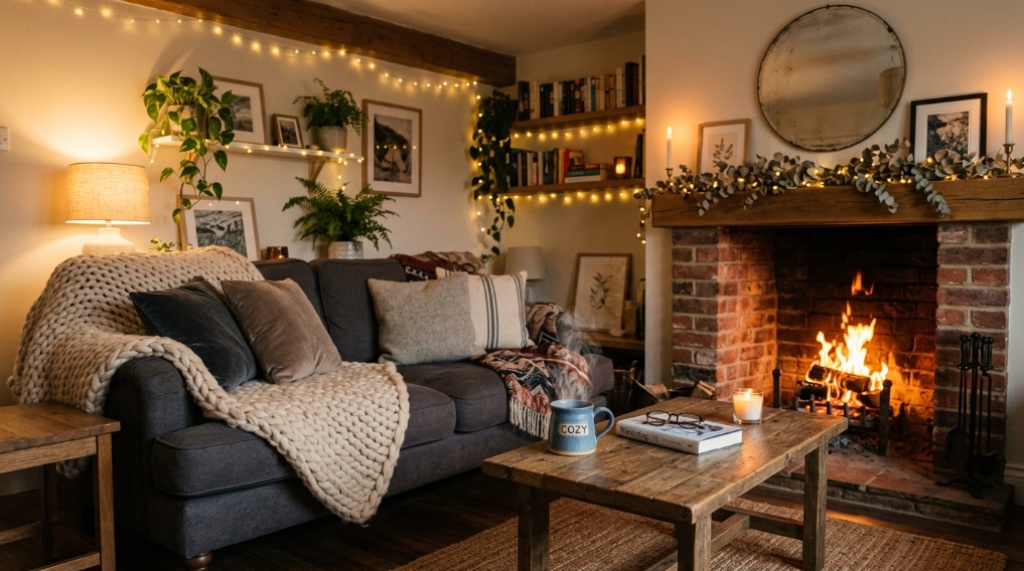
A living room can look perfectly styled and still feel unwelcoming—usually because comfort got sacrificed for aesthetics. The good news is that coziness and style are not competing goals. Simple adjustments to lighting, texture, layout, and a few carefully chosen accents can transform a room that looks nice into one people actually want to sit in. For instance, one unconventional option worth exploring is a knotted ball pillow, and you can learn more here about how sculptural cushions add both visual interest and tactile comfort. This guide skips the generic advice and focuses on adjustments that deliver real results.
Quick Answer
To make a living room cozy and stylish, prioritize warm layered lighting, at least three textures (soft, nubby, smooth), a layout that encourages conversation, and a restrained color palette with one or two accents. Add a throw, rug, and cushions to soften hard surfaces. Style comes from consistency and restraint, while coziness comes from sensory comfort—warmth, softness, and intimacy. You rarely need new furniture; most improvements come from rearranging and layering what you already own.
Key Takeaways
- Lighting has more impact on coziness than almost any other element—multiple small warm light sources beat one bright overhead fixture.
- Aim for a mix of at least three textures in every seating area: soft, textured, and smooth.
- Pull furniture off the walls and arrange it around conversation rather than the television alone.
- Limit your palette to two or three main colors and introduce accent tones sparingly.
- Rugs, curtains, and throws do more for warmth than most decorative accessories.
Why Some Living Rooms Feel Cold Even When They Look Good
A room that photographs well can still feel uncomfortable to sit in. The usual culprits are hard surfaces, harsh lighting, and furniture pushed against the walls. When seating is spread around the perimeter, conversations become awkward, the middle of the room feels empty, and the space reads as a showroom rather than a living area.
Coziness is largely sensory. Your body registers temperature, softness underfoot, and the quality of light before your eyes register design choices. That is why a room can have expensive furniture and still feel unwelcoming: the senses are receiving hard, cold, and bright signals.
The fix is usually not a major purchase. It is layering—adding softness where hard surfaces dominate and warmth where the light is cold.
Layer Your Lighting Instead of Relying on One Fixture
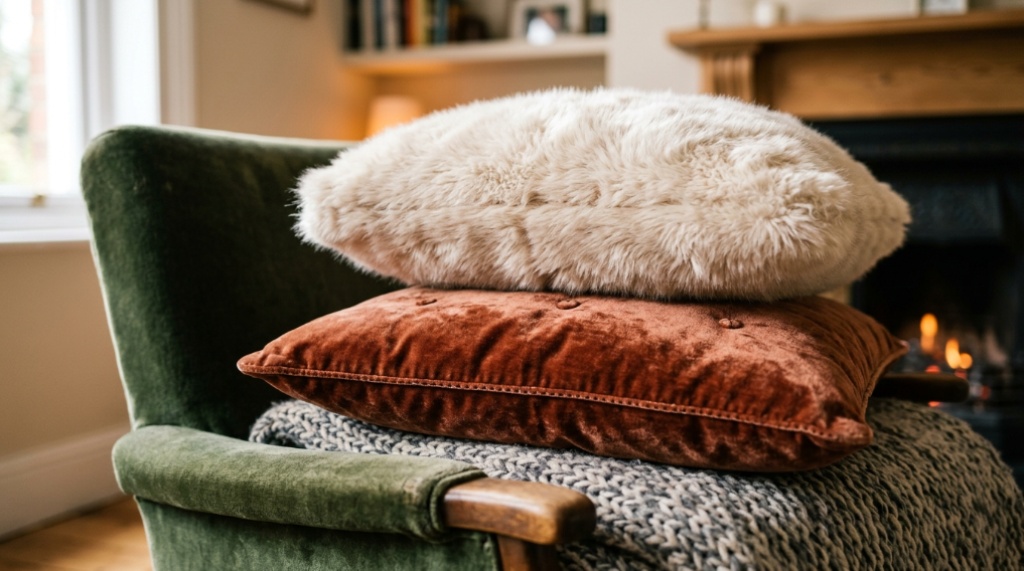
Lighting is the single most effective tool for changing how a room feels, and it is often the most neglected. A single ceiling light washes the room evenly, flattens shadows, and creates a clinical atmosphere regardless of how the furniture is arranged.
The practical approach is to build three layers:
- Ambient: overall illumination from a ceiling fixture or floor lamp, ideally on a dimmer.
- Task: focused light for reading or working, such as a table lamp or adjustable floor lamp.
- Accent: small pools of light that create depth, such as a lamp on a side table, a picture light, or candles.
Warm bulb temperatures—roughly 2700K—make a noticeable difference. Cool white bulbs, common in kitchens and offices, will fight every cozy choice you make elsewhere. Dimming capability matters too, because a room that can only be fully lit or fully dark loses the flexibility that makes evenings comfortable.
A Quick Lighting Test
Turn off your overhead light and switch on every lamp you own. If the room immediately feels warmer and more inviting, your ceiling fixture is the problem, not your furniture. If the room feels too dark, add a lamp rather than reaching for the overhead switch.
Mix Textures to Make the Room Feel Soft
Texture is what separates a styled room from a flat one. A room in a single material—all smooth leather, all flat cotton, all painted drywall—reads as cold no matter what colors you choose.
A practical rule is to include at least three distinct textures in your main seating area. Common combinations that work well:
- A chunky knit or woven throw over a smooth sofa
- A wool or jute rug underfoot instead of bare hardwood or tile
- Velvet, linen, or boucle cushions against a different upholstery
- Wood, ceramic, or stone accents to break up fabric-heavy surfaces
This is also where sculptural pieces earn their place. A knotted ball pillow, for instance, adds a three-dimensional, tactile element that a flat square cushion cannot, and it works as both seating comfort and visual interest. The key is contrast: if everything in the room is soft and fluffy, the effect flattens out. One smooth surface next to one nubby one creates the depth you are after.
Rearrange the Layout Around Conversation
Furniture placement determines whether a room feels intimate or cavernous, and it costs nothing to change. The most common mistake is a ring of seating pressed against the walls with a large empty center, which creates distance and discourages interaction.
Pull the main seating group toward the center and angle pieces toward each other. A workable arrangement usually has:
- Two facing pieces, such as a sofa and two chairs, ideally no more than about eight feet apart.
- A rug that the front legs of every seat rest on, which visually ties the group together.
- A coffee table or ottoman within arm’s reach of every seat, so nobody has to get up to set down a drink.
If your room is long and narrow, you may need two separate zones rather than one large one. If it is small, resist the urge to shrink everything—a too-small rug is one of the most common errors, because it makes the seating area feel disconnected from the floor.
Choose a Restrained Color Palette
Style in a living room usually comes from consistency rather than variety. A room with five competing accent colors will feel busy, while a room with two or three related tones will feel deliberate even if the furniture is inexpensive.
A simple structure is a dominant neutral, a secondary tone, and one accent. Warm neutrals—cream, oatmeal, warm gray, tan—tend to feel cozier than cool grays, though cool palettes can work if you compensate with texture and warm lighting.
One practical warning: match your undertones. A warm beige sofa next to a cool gray wall will make both look slightly off, and the problem is difficult to diagnose until you realize the room has two different temperature families fighting each other. Test paint samples on the actual wall in daylight and at night before committing.
Use Rugs, Curtains, and Throws to Add Warmth
These three items do more for a room’s comfort than most decorative accessories combined, and they are often the last things people buy.
| Item | What It Does | Practical Note |
|---|---|---|
| Area rug | Softens hard flooring, defines the seating zone, reduces echo | Choose a size that fits all front legs of the seating group, not just the coffee table |
| Curtains | Adds vertical softness, insulates windows, controls light | Hang the rod high and wide; floor-length panels look more deliberate than sill-length |
| Throws | Adds color, texture, and accessible warmth | Drape rather than fold neatly—an overly tidy throw can look staged |
Beyond these, a few cushions in mixed sizes give a sofa shape and comfort. General guidance suggests combining two larger squares with one or two smaller or textured pieces, and mixing at least one solid with one pattern to avoid a flat look.
Add Personality Without Clutter
Stylish rooms usually show something about the people who live in them, but the line between personal and cluttered is easy to cross. A useful guideline: group objects in odd numbers and vary their heights, then leave visible empty space around each grouping.
Books, framed art, plants, and one or two meaningful objects generally do more for a room than a large quantity of small decorations. If a surface is completely covered, remove roughly a third of what is on it and see whether the room feels calmer.
What Not to Do
- Do not buy a rug that is too small; it makes the seating area feel unanchored.
- Do not mix color temperatures within one room, such as warm lamps next to cool daylight bulbs.
- Do not place all seating against the walls and leave the center empty.
- Do not treat one overhead light as sufficient for evening use.
- Do not introduce more than one or two accent colors if you want a cohesive look.
Frequently Asked Questions
How can I make my living room cozy on a small budget?
Start with lighting and textiles rather than furniture. Swap cool bulbs for warm ones, add a lamp or two, then layer a rug, throw, and cushions. Rearranging existing seating to face inward costs nothing and often produces a bigger change than any purchase.
What is the best color for a cozy living room?
Warm neutrals such as cream, oatmeal, tan, and warm gray are the easiest foundation because they reflect warm light and pair with nearly any accent. Cool colors can work but usually need extra texture and warm lighting to avoid feeling chilly.
How many cushions should go on a sofa?
Most sofas look balanced with three to five cushions, combining two larger squares with one or two smaller or textured pieces. Mix solid and patterned options, and avoid covering the entire seat so the sofa still looks usable.
Does a rug really make a room feel cozier?
Yes. A rug softens hard flooring, reduces echo, and visually connects the seating group. The most common mistake is choosing one that is too small; it should extend beyond the front legs of the seating on all sides.
Is warm or cool lighting better for a living room?
Warm lighting, generally around 2700K, suits living rooms because it makes skin tones and fabric colors look richer and relaxes the atmosphere. Cool white light is better reserved for kitchens, garages, and workspaces.
How do I keep a cozy room from looking cluttered?
Limit decorative objects to a few grouped pieces, vary their heights, and keep visible empty space around each grouping. If a shelf or table is fully covered, removing about a third of the items usually restores a calmer feel.
Conclusion
Cozy and stylish are not opposites—they come from the same handful of decisions. Layer your lighting with warm bulbs, add textures until the room stops feeling flat, pull your seating into a conversation group, and keep your palette restrained. None of these steps require a major renovation, and most can be done with what you already own. Start with lighting and layout this weekend, then add textiles as budget allows. The shift will be noticeable well before the room is finished.