Affordable garage door repair starts with fixing only simple maintenance tasks yourself while leaving high tension parts to trained professionals. You can save money by cleaning tracks, tightening hardware, and replacing weather seals, but you should never repair springs or lift cables without proper equipment.
A garage door is one of the largest moving parts in most homes, and many operate several times every day. Around 80 percent of homes have a garage, while roughly 35,000 garage door related injuries occur annually, making safe repair decisions important. Regular maintenance reduces expensive breakdowns and extends door life. Therefore, understanding what you can safely repair helps protect both your budget and your family.
Why Garage Door Repairs Matter
Garage doors protect vehicles, tools, and household belongings every day. They also improve home security and energy efficiency when working correctly.
Small problems often become expensive repairs when ignored for too long. Consequently, early maintenance usually costs much less than emergency service.
Common Signs Your Garage Door Needs Attention
Watch for these warning signs before serious damage develops.
- Loud grinding or squeaking noises
- Slow opening or closing
- Door moves unevenly
- Remote works inconsistently
- Visible loose hardware
- Worn weather stripping
- Vibrating during operation
- Door reverses unexpectedly
Recognizing these issues early often prevents larger repair bills. It also helps avoid unnecessary damage to the opener.
Repairs You Can Safely Handle Yourself
Many basic maintenance tasks require simple household tools. These projects involve little risk when completed carefully.
Tighten Loose Hardware
Garage doors create vibration every time they move. Therefore, bolts, brackets, and hinges naturally loosen over time.
Use the correct wrench without overtightening fasteners. Afterwards, check that every bracket remains firmly attached.
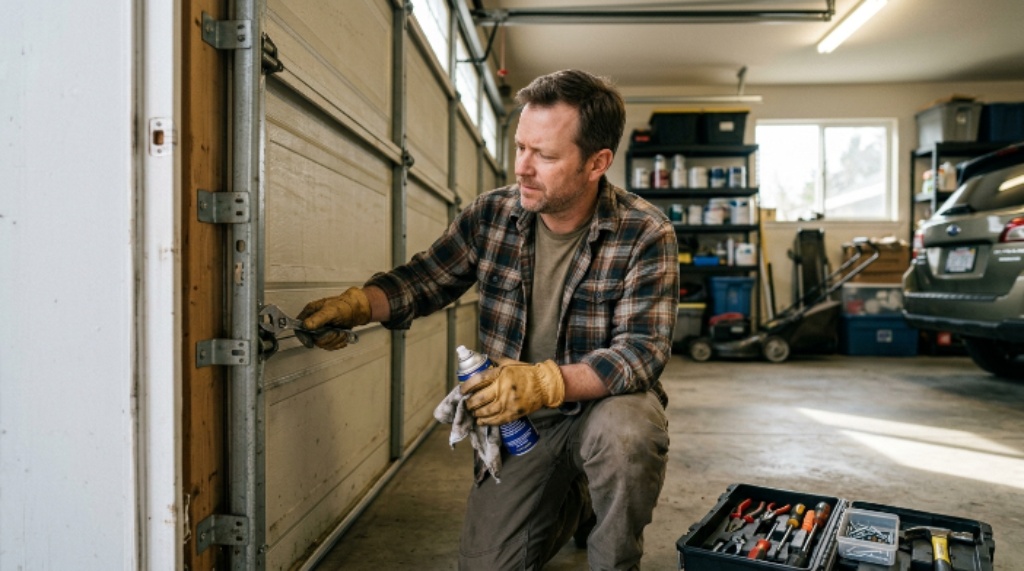
Lubricate Moving Parts
Proper lubrication reduces friction and unwanted noise. It also helps rollers and hinges last much longer.
Apply garage door lubricant to rollers, hinges, and bearings only. However, avoid lubricating the tracks because rollers need traction.
Clean the Tracks
Dirty tracks cause rough movement and unnecessary strain. Dust, leaves, and debris often collect inside them.
Wipe tracks using a clean cloth and mild cleaner. Then remove stubborn dirt without bending the metal.
Replace Weather Stripping
Old weather seals crack after years of exposure. As a result, drafts, moisture, and pests enter the garage.
Remove the damaged seal before installing the replacement strip. Finally, confirm it seals evenly across the floor.
Replace Remote Batteries
Weak batteries commonly cause unreliable remote operation. Fortunately, replacing them takes only a few minutes.
Install fresh batteries matching the recommended size. Afterwards, test the remote several times.
Check Door Balance
An unbalanced door places extra stress on the opener. Consequently, the motor may wear out sooner.
Disconnect the opener using the emergency release handle. Then raise the door halfway and observe whether it stays in place.
Repairs You Should Never Attempt
Certain garage door components store enormous mechanical energy. Attempting these repairs without training creates serious safety risks.
Torsion Spring Replacement
Torsion springs lift the heavy garage door using extreme tension. Even a small mistake may cause severe injuries.
Professional technicians use specialized tools for safe spring replacement. Therefore, this repair should never become a weekend project.
Lift Cable Repairs
Lift cables support the full weight of the garage door. Damaged cables may snap unexpectedly during repair.
Replacing cables requires correct tension and alignment. Consequently, professional service remains the safest option.
Bottom Bracket Removal
Bottom brackets connect directly to tensioned cables. Removing them incorrectly releases stored energy instantly.
Never loosen these brackets while the springs remain under tension. Instead, schedule qualified repair assistance.
Track Realignment After Major Damage
Bent tracks affect door movement and stability. Incorrect adjustments may cause the door to fall.
Professionals measure alignment carefully before securing replacement parts. This process prevents further mechanical damage.
Opener Motor Electrical Repairs
Modern garage door openers contain electrical components and safety systems. Incorrect wiring may create additional failures.
Leave internal electrical repairs to experienced technicians. This approach protects both equipment and personal safety.
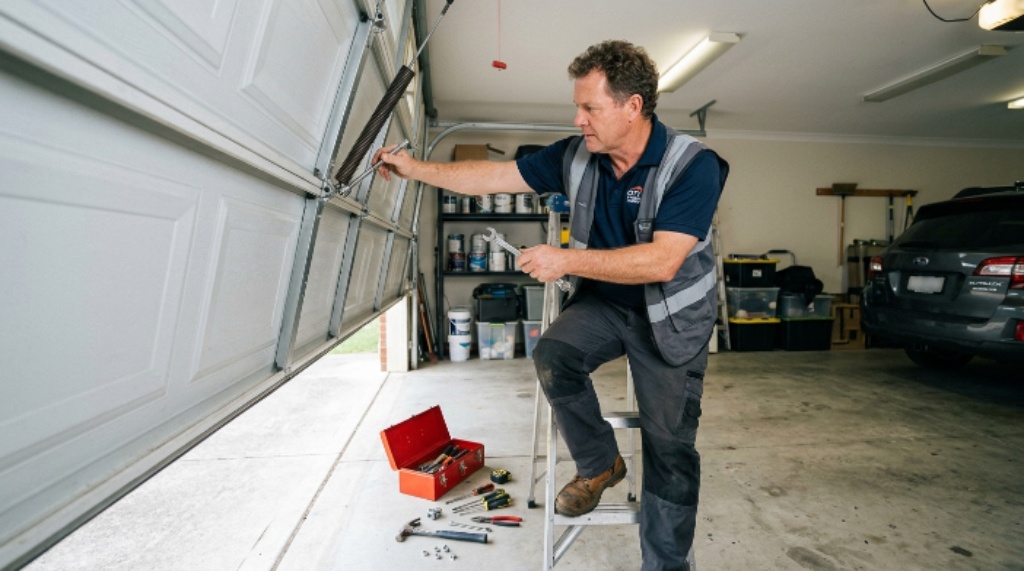
Smart Ways to Save Money on Garage Door Repairs
Affordable repair involves preventing problems before they become expensive emergencies. Good maintenance delivers long term savings.
Inspect the garage door every month for loose hardware and visible wear. Small adjustments often prevent costly breakdowns later.
Keep rollers, hinges, and bearings properly lubricated throughout the year. Smooth operation reduces unnecessary strain on moving parts.
Replace worn weather stripping before moisture damages the garage interior. This simple repair also improves energy efficiency.
Avoid forcing a door that refuses to open normally. Continued operation may damage the opener or additional components.
Schedule preventive inspections every few years for older garage doors. Early detection usually reduces overall repair expenses.
When Replacement Makes More Sense Than Repair
Some garage doors eventually cost more to repair repeatedly. In those situations, replacement becomes the better investment.
Consider replacement when multiple major parts fail together. Frequent repairs usually indicate widespread wear.
An outdated door lacking modern safety features may also deserve replacement. Newer models improve insulation, security, and quieter operation.
Visible structural damage often reduces safe operation permanently. Therefore, replacing the door protects long term reliability.
Questions to Ask Before Hiring a Repair Company
Choosing the right technician protects both your investment and safety. Asking good questions improves service quality.
- Is the company licensed where required
- Do technicians inspect the entire system
- Are replacement parts compatible
- Does the estimate include labor
- What maintenance is recommended afterward
Clear communication helps prevent unexpected costs. It also ensures the repair solves the underlying problem.
Easy Maintenance Schedule
Follow this simple routine to keep your garage door working efficiently.
Monthly:
- Inspect hardware
- Clean tracks
- Test remote batteries
Every Three Months:
- Lubricate moving parts
- Check weather stripping
- Test door balance
Yearly:
- Inspect rollers
- Test safety sensors
- Schedule professional inspection if needed
Final Thoughts
Affordable garage door repair depends on knowing your limits and maintaining the system consistently. Handle basic maintenance yourself, but leave springs, cables, and other high tension components to professionals. Start a simple maintenance routine today, address small issues quickly, and invest in expert repairs whenever safety becomes a concern.
FAQs
Can I repair a noisy garage door myself?
Yes, cleaning and lubricating moving parts often eliminates common garage door noises.
Is it safe to replace a garage door spring?
No, spring replacement requires professional training because the stored tension can cause severe injuries.
How often should I lubricate my garage door?
Lubricate the moving parts about every three months or whenever they begin making noise.
Why does my garage door open unevenly?
Uneven movement often indicates worn rollers, damaged cables, or balance problems requiring inspection.
What is the cheapest way to avoid major garage door repairs?
Regular cleaning, lubrication, inspections, and prompt attention to small problems provide the greatest long term savings.