If you’re choosing between a Sailnovo pasta maker and a Marcato Atlas, you’re really choosing between two different philosophies of pasta making. The Sailnovo is an electric, 2-in-1 machine aimed at convenience and hands-off mixing. The Marcato Atlas is a manual, hand-cranked roller built for control and durability. Neither is universally better — the right pick depends on how often you make pasta, how much counter space you have, and whether you value speed or feel. This comparison breaks down where each machine genuinely wins and where it falls short.
Key Takeaways
- The Sailnovo is electric and mixes dough in the same machine, which reduces hands-on effort but limits your control over dough texture.
- The Marcato Atlas is a manual roller that doesn’t mix dough at all — you knead by hand or in a separate mixer, then feed the dough through the rollers.
- For occasional, quick pasta sessions, the Sailnovo’s automation is a real advantage; for repeat, texture-focused pasta making, the Marcato usually holds up better over time.
- The Marcato Atlas has a long-standing reputation in home pasta circles, partly because its all-metal body and simple mechanics are easy to maintain and repair.
- Neither machine makes shaped pasta like penne or fusilli — both are designed around flat sheets and cut strands like fettuccine, tagliolini, or spaghetti.
What Each Machine Actually Does
The two products aren’t direct equivalents, so comparing them fairly means understanding their basic functions first. One is an electric appliance that both mixes and extrudes/rolls; the other is a manual rolling tool that only handles dough that’s already made.
Sailnovo 2-in-1: Mixing Plus Rolling
The Sailnovo is designed as an all-in-one countertop appliance. You add flour and liquid to a mixing chamber, the machine kneads the dough, and then it pushes the dough through a shaping or cutting mechanism to produce pasta. Because it handles the messy kneading step, it appeals to people who want fresh pasta without flour-covered countertops or a separate mixer. The trade-off is that you’re trusting the machine’s preset mixing cycle rather than adjusting hydration by feel.
Marcato Atlas: A Manual Roller and Cutter
The Marcato Atlas is a hand-cranked pasta machine. You make and knead your dough separately, flatten it into a rough disc, then pass it through the rollers at progressively thinner settings. Cutting attachments on the side produce strands. There’s no motor and no mixing chamber — the entire process is manual. That’s a deliberate design choice: it gives you direct feedback on dough consistency and lets you slow down or adjust at any stage. A Sailnovo vs Marcato pasta maker comparison often comes down to whether that level of manual control is a feature or a chore for you.
Effort and Convenience: Where Sailnovo Pulls Ahead
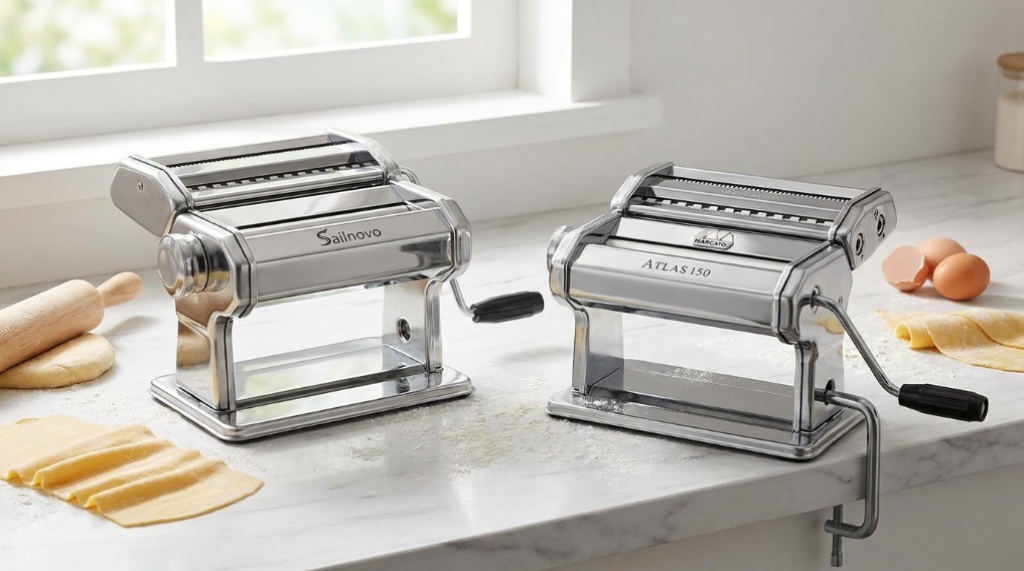
If convenience is your priority, the Sailnovo is the clear winner. The mixing function removes the most physically demanding part of pasta making — kneading — and the electric operation means you’re not cranking a handle for ten minutes. For someone making pasta once or twice a month, that reduction in effort can be the difference between actually doing it and putting it off.
Manual machines like the Marcato require you to:
- Measure and mix ingredients by hand or in a stand mixer
- Knead the dough until it reaches the right elasticity
- Rest the dough so gluten relaxes before rolling
- Crank each sheet through multiple thickness settings
That’s a real time and energy cost. It’s also why some people who buy a manual machine end up using it rarely. The Sailnovo lowers that barrier, which matters more for beginners and casual users than for enthusiasts who enjoy the process.
Control and Dough Quality: Where Marcato Wins
Control is where the Marcato Atlas earns its reputation. Because you’re handling the dough at every stage, you can feel when it’s too dry, too sticky, or under-kneaded, and correct it immediately. Roller thickness is set by you, sheet by sheet, so you can stop at the exact thinness you want for a given shape.
With the Sailnovo, the machine determines mixing time and pressure. That produces consistent results with less variability, but it also means less flexibility. If your flour absorbs water differently than expected — common with varying humidity or different flour brands — the machine can’t adapt the way your hands can. For most home cooks, this isn’t a dealbreaker. For anyone trying to dial in a specific texture, it’s a meaningful limitation, For gluten-free cooking options that pair perfectly with these machines, check out our guide on how to find the best gluten-free pasta brands for everyday cooking.
Durability and Long-Term Ownership
Manual pasta machines like the Marcato Atlas tend to age well because they have few moving parts and no electronics to fail. The mechanics are simple enough that many users maintain them for years, and replacement parts or attachments are generally easy to find. Cleaning is straightforward: brush off flour, wipe down, and avoid water on the rollers.
Electric machines like the Sailnovo have more components — a motor, a mixing chamber, and internal parts that can wear or clog. Cleaning is often more involved because dough residue can accumulate in hard-to-reach areas. Over time, the motor and electronics are the parts most likely to need attention. This isn’t a criticism specific to Sailnovo; it applies to most electric pasta makers in this category.
Which One Fits Which Cook?
The decision usually comes down to your habits rather than specs. Here’s how the two tend to map onto different users:
| If you are… | Sailnovo tends to suit you | Marcato Atlas tends to suit you |
|---|---|---|
| A beginner who wants results with minimal effort | Yes | Less so — the learning curve is steeper |
| Someone who makes pasta rarely | Often better — automation reduces friction | Possible, but manual effort may discourage use |
| A cook who wants texture control | Limited by preset mixing | Yes — full control over dough and thickness |
| Short on counter space | One unit does two jobs | Compact roller, but needs a separate mixing space |
| Looking for long-term durability | Motor and electronics are wear points | Simple mechanics age well |
| Avid pasta makers who want shaped pasta | Neither — both focus on sheets and strands | Neither |
Common Mistakes When Choosing Between Them
One frequent error is assuming an electric machine will produce “better” pasta. In reality, dough quality depends mostly on your ingredients and technique, not on whether a motor is involved. A well-made dough rolled by hand can easily outperform a poorly mixed electric batch.
Another mistake is buying a manual machine expecting it to be effortless. The Marcato Atlas is genuinely simple to use, but it’s still manual work. If you dislike kneading or cranking, an electric model will get used more often.
A third issue is forgetting about cleanup entirely. Both machines require maintenance after each use — flour dust in rollers or dough stuck in a mixing chamber can affect future batches if ignored. Consider which cleaning routine you’re realistically willing to do.
What Neither Machine Does
It’s worth being clear about scope. Both the Sailnovo and the Marcato Atlas are built around flat pasta sheets and cut strands. They don’t produce shaped pasta like penne, rigatoni, or fusilli. If shaped pasta is your goal, you’d need a different tool — an extruder-style machine or a manual shaping method. Knowing this upfront prevents disappointment, since a lot of “pasta maker” marketing blurs these categories.
Frequently Asked Questions
Is the Sailnovo pasta maker easier to use than the Marcato Atlas?
Yes, for most beginners. The Sailnovo mixes the dough automatically and runs on a motor, so there’s less manual kneading and cranking. The Marcato Atlas requires you to make and knead dough separately before rolling it by hand.
Does the Marcato Atlas mix dough?
No. It’s a roller and cutter only. You have to mix and knead the dough yourself, either by hand or with a stand mixer, before feeding it through the machine.
Which produces better-tasting pasta?
Taste depends mainly on your ingredients and dough technique, not the machine. A carefully made dough on either machine can taste excellent. The Marcato gives you more control over texture, which experienced cooks often prefer.
Can both machines make spaghetti and fettuccine?
Yes, both can produce flat sheets and cut them into strands like fettuccine, tagliolini, or spaghetti, provided the appropriate cutting attachment is available. Neither makes shaped pasta like penne.
Which is better for someone who makes pasta once a month?
If you make pasta infrequently, the Sailnovo’s automation usually makes it more likely you’ll actually use it, since it reduces effort and setup. Frequent, texture-focused cooks often prefer the Marcato.
Are electric pasta makers harder to clean?
Generally yes, because they have more internal parts where dough can collect. Manual rollers like the Marcato are usually quicker to brush clean since the mechanism is exposed and simple.
Conclusion
There’s no universal winner in the Sailnovo vs Marcato pasta maker debate — only a better fit for how you cook. Choose the Sailnovo if convenience, automation, and lower effort matter most to you, especially if you’re new to pasta making. Choose the Marcato Atlas if you value control, durability, and enjoy the hands-on process. Before buying either, confirm what shapes you actually want, because both focus on flat sheets and strands rather than shaped pasta.