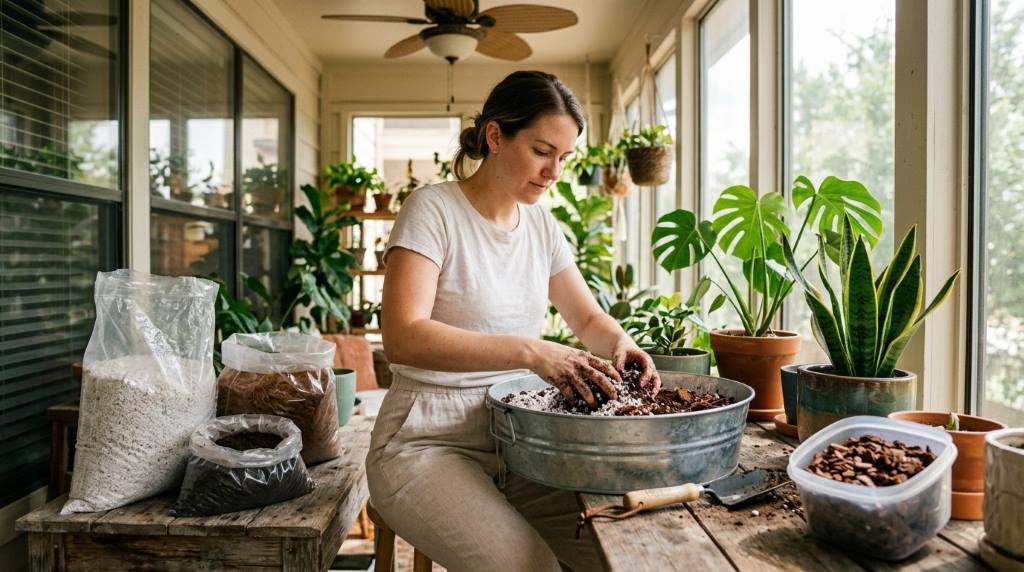
Indoor gardening continues to grow in popularity across Texas, and Austin residents especially enjoy bringing greenery into apartments, condos, and family homes. According to the National Gardening Association, more than 66% of American households now care for indoor plants regularly. Additionally, research from NASA shows that indoor plants can improve air quality and reduce stress levels inside living spaces. However, healthy plants need the right soil structure to thrive in Austin’s warm climate and fluctuating indoor humidity. Many plant owners now explore a chunky soil mix recipe for indoor plants because proper drainage and airflow directly affect root health and long-term growth.
Why Indoor Potting Blend Matters in Austin, TX
Austin has long, hot summers and occasional dry indoor air from heavy air conditioning use. These conditions can quickly damage plants if the soil retains too much moisture or dries too fast. Therefore, choosing the correct indoor potting blend becomes essential for healthy roots and balanced hydration. A high-quality mix also reduces the risk of fungal growth and root rot.
Most indoor plants struggle when gardeners use standard outdoor garden soil inside containers. Outdoor soil compacts easily and blocks oxygen around delicate roots over time. In contrast, indoor potting blends stay lighter and create better airflow throughout the container. As a result, plants grow stronger leaves and healthier root systems.
Different homes in Austin also create different growing environments for indoor plants. Apartments with large south-facing windows often become warmer and brighter throughout the day. Meanwhile, shaded homes may hold moisture longer because of lower light exposure. Therefore, plant lovers should customize potting blends according to both plant type and indoor conditions.
Understanding the Basic Components of Indoor Potting Mix
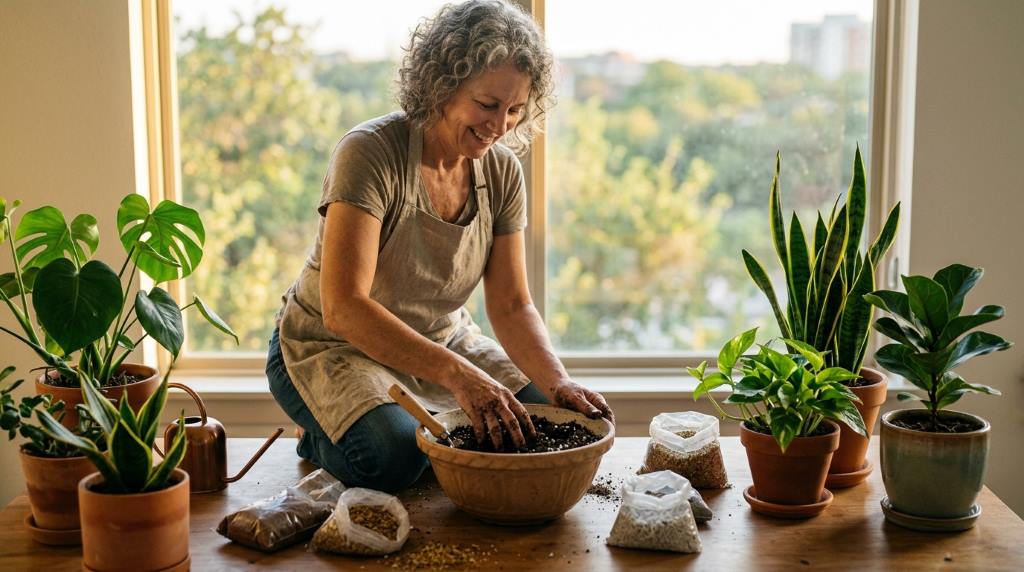
A balanced indoor potting blend contains ingredients that support drainage, moisture retention, and airflow together. Each ingredient serves a specific purpose for healthy plant growth indoors. Therefore, understanding these materials helps gardeners build a better mix for their plants. Many local Austin gardeners now create customized blends instead of buying generic bagged soil.
Potting Soil Base
A quality potting soil base provides nutrients and anchors the plant roots securely. Most commercial indoor mixes contain peat moss or coco coir as the primary foundation ingredient. Peat moss retains moisture well, while coco coir offers better sustainability and airflow. Both options work effectively for common houseplants in Austin homes.
Potting bases should remain fluffy instead of compact or muddy after watering. Dense soil prevents roots from breathing properly and often leads to slow plant growth. Additionally, compacted soil increases the risk of gnats and mold indoors. Therefore, gardeners should refresh old soil mixes every year when possible.
Perlite for Drainage
Perlite is a lightweight volcanic material that improves drainage and root aeration significantly. It prevents excess moisture from staying trapped around plant roots for extended periods. Because Austin temperatures can become intense during summer, proper drainage becomes even more important indoors. Many tropical houseplants respond especially well to added perlite.
Gardeners should mix perlite evenly throughout the potting blend for consistent airflow. Uneven distribution can create wet pockets that encourage root disease. Furthermore, perlite keeps the mix lighter and easier to manage in large indoor pots. This feature also helps prevent overwatering problems common among beginners.
Bark and Chunky Materials
Orchid bark and chunky materials create large air pockets within indoor soil blends. These ingredients work particularly well for monsteras, pothos, philodendrons, and other tropical plants. Since Austin homes often use strong air conditioning, roots benefit from extra airflow and balanced moisture. Chunky textures also reduce soil compaction over time.
Many experienced plant lovers combine bark with pumice or horticultural charcoal for better long-term soil performance. These materials help maintain healthy microbial activity around the roots. Additionally, chunky mixes allow faster drying between watering sessions. Consequently, indoor plants develop stronger and more resilient root systems.
Best Potting Blend Tips for Austin Plant Owners
Plant lovers in Austin should adapt indoor potting blends based on seasonal weather and indoor humidity. Although many plants enjoy warmth, Texas heat can stress roots when soil conditions remain poor. Therefore, several practical adjustments can improve plant health throughout the year. Small changes often create noticeable results within weeks.
Use Faster-Draining Mixes During Summer
Austin summers regularly exceed 90 degrees, which affects indoor moisture levels dramatically. Plants near sunny windows may dry out quickly during long heat waves. However, poorly draining soil can still trap excess water beneath the surface. Therefore, gardeners should increase drainage ingredients slightly during summer months.
Adding more bark, pumice, or perlite keeps roots cooler and better oxygenated in hot conditions. Faster-draining soil also reduces the risk of fungus gnats and bacterial growth indoors. Additionally, plants recover faster after watering when roots receive consistent airflow. This approach works especially well for tropical foliage plants.
Retain Slightly More Moisture in Winter
Indoor heating systems can dry the air significantly during colder Austin nights. As a result, some houseplants lose moisture faster than expected despite lower temperatures. Therefore, gardeners may need slightly more coco coir or peat moss in winter soil blends. This adjustment helps maintain stable root hydration.
Plant owners should still avoid overly wet soil during cooler months indoors. Excess moisture combined with lower light levels often causes root rot problems. Instead, balanced moisture retention works best for steady winter growth. Monitoring soil dryness weekly can also prevent seasonal stress.
Match Soil to Plant Type
Different plants require different soil structures for healthy long-term growth indoors. Succulents and cacti prefer gritty, fast-draining mixes with minimal moisture retention. Meanwhile, tropical plants enjoy blends that hold moderate moisture while still allowing airflow. Therefore, one universal mix rarely works perfectly for every indoor plant.
Austin plant enthusiasts often separate plants into categories based on watering needs. This method simplifies care routines and reduces accidental overwatering. Furthermore, grouped plants usually thrive because their soil matches their natural habitat requirements. Customization leads to stronger and healthier indoor gardens overall.
Common Indoor Plants and Their Ideal Soil Mixes
Austin homes commonly feature tropical foliage plants because they adapt well to indoor environments. However, each species benefits from a slightly different blend composition. Understanding these preferences helps plant owners avoid common care mistakes. Healthy roots almost always begin with appropriate soil structure.
Monstera and Philodendron
Monsteras and philodendrons prefer airy, chunky soil with excellent drainage. A balanced mix may include potting soil, orchid bark, coco coir, and perlite together. This structure allows roots to breathe while still retaining moderate moisture. Additionally, these plants grow faster when roots avoid prolonged sogginess.
Austin homes with bright indirect light create ideal conditions for these tropical plants. However, dense soil can still limit healthy root expansion indoors. Therefore, chunky mixes remain especially important for larger specimens. Repotting every one to two years also helps maintain soil freshness.
Snake Plants and Succulents
Snake plants and succulents require sharply draining soil to avoid root rot problems. A cactus mix combined with coarse sand or pumice works very effectively indoors. Since Austin temperatures can stay warm most of the year, these plants often grow actively for longer periods. Proper drainage supports healthy growth without excess moisture stress.
Overwatering remains the most common issue with succulents indoors. Therefore, gardeners should allow the soil to dry fully between watering sessions. Additionally, terracotta pots can improve evaporation and root airflow naturally. These simple practices help succulents thrive even in humid indoor spaces.
Peace Lilies and Ferns
Peace lilies and ferns prefer soil that holds moisture slightly longer without becoming muddy. A blend with coco coir, compost, and perlite usually works well indoors. These plants also appreciate moderate humidity levels throughout Austin’s dry summer months. Consistent moisture helps maintain lush green foliage.
Gardeners should avoid placing moisture-loving plants directly beside strong air conditioning vents. Excess airflow can dry leaves and soil too quickly indoors. Furthermore, regular misting or humidifiers may improve plant performance during heat waves. Healthy soil combined with stable humidity creates the best results.
Signs Your Potting Blend Needs Improvement
Indoor plants often show visible symptoms when their soil no longer supports healthy root growth. Recognizing these signs early helps prevent serious plant damage indoors. Fortunately, many soil-related issues improve quickly after simple adjustments. Careful observation remains one of the best tools for successful indoor gardening.
Yellowing Leaves
Yellow leaves frequently indicate improper moisture levels inside the potting mix. Soil that stays soggy too long can suffocate roots and reduce nutrient absorption. However, extremely dry soil may also stress the plant significantly. Therefore, gardeners should inspect moisture balance before changing watering routines.
Austin’s indoor climate changes seasonally, so soil performance may shift throughout the year. A mix that worked during winter might drain too slowly during summer heat. Consequently, occasional soil adjustments help maintain healthier plant conditions. Monitoring drainage regularly prevents long-term root issues.
Slow Growth
Plants that suddenly stop growing may struggle with compacted or nutrient-depleted soil. Over time, repeated watering compresses soil particles and limits root oxygen. This issue commonly affects older indoor potting mixes after one or two years. Freshening the soil often restores healthy growth surprisingly quickly.
Repotting gives gardeners an opportunity to inspect root systems carefully. Healthy roots usually appear firm and white instead of dark or mushy. Additionally, refreshed soil improves nutrient availability and water distribution indoors. Plants often produce new growth within weeks after repotting.
Persistent Fungus Gnats
Fungus gnats thrive in overly moist soil with poor airflow and excess organic matter. Although small, these pests quickly become frustrating inside homes and apartments. Therefore, persistent gnat problems often indicate drainage issues within the potting blend. Improving airflow usually reduces infestations naturally.
Adding more chunky materials helps the topsoil dry faster between watering sessions. Gardeners should also remove dead leaves and avoid standing water beneath pots. Furthermore, watering less frequently can interrupt the gnat breeding cycle indoors. Healthy soil conditions discourage most pest problems naturally.
Where to Buy Indoor Potting Supplies in Austin
Austin offers many excellent garden centers and plant shops for indoor gardening enthusiasts. Local stores often carry specialized soil ingredients better suited for Texas conditions. Additionally, knowledgeable staff can recommend products for specific plant varieties. Shopping locally also supports small gardening businesses within the community.
Popular garden centers usually stock perlite, orchid bark, coco coir, worm castings, and decorative pots together. Many stores now offer pre-made chunky indoor mixes for convenience as well. However, mixing custom blends often provides better flexibility for plant care. Buying ingredients separately also saves money over time.
Farmers markets and local plant events continue growing in popularity across Austin neighborhoods. These events sometimes feature handmade soil blends from experienced growers and hobbyists. Furthermore, plant communities often share valuable care tips specific to the local climate. Connecting with other plant lovers can improve gardening success significantly.
Simple DIY Indoor Potting Blend Recipe
Many indoor gardeners prefer making their own blends because customization improves plant performance. DIY mixes also help plant owners control drainage, texture, and moisture retention precisely. Fortunately, creating a balanced indoor blend does not require complicated ingredients. Most supplies remain affordable and easy to find locally.
A simple tropical plant mix may include:
- 40% potting soil
- 25% orchid bark
- 20% perlite
- 10% coco coir
- 5% horticultural charcoal
This blend creates strong airflow while still retaining moderate moisture around the roots. Additionally, the chunky texture prevents compaction over time inside containers. Austin gardeners often adjust percentages slightly based on indoor humidity levels. Testing small batches first can help determine the best balance.
Final Thoughts on Indoor Potting Success in Austin
Indoor gardening becomes much easier when plant owners understand how soil affects root health and moisture balance. Austin’s warm climate creates unique indoor growing conditions that require thoughtful potting blends. Therefore, choosing the right combination of drainage and moisture retention makes a major difference. Healthy roots ultimately produce stronger leaves, better growth, and longer-lasting plants.
If you want healthier indoor plants this year, start by improving your potting blend instead of changing fertilizers or watering schedules first. Small soil adjustments often create dramatic improvements within a short time. Additionally, experimenting with customized blends helps you understand your plants more effectively. Build a better indoor garden today by creating soil mixes designed specifically for Austin conditions.
FAQs
What is the best indoor potting mix for Austin homes?
A chunky, well-draining mix with perlite and bark works best for most indoor plants in Austin.
How often should indoor potting soil be replaced?
Most indoor plants benefit from fresh potting soil every one to two years.
Why does my indoor soil stay wet too long?
Poor drainage, compacted soil, or low indoor light usually causes excess moisture retention.
Can I use outdoor garden soil for indoor plants?
No, outdoor soil compacts easily and often causes drainage and pest problems indoors.
Which ingredient improves airflow in potting mixes most?
Orchid bark and perlite both improve airflow and prevent soil compaction effectively.
Related Reads
Learn: Fixing Nutrient Lockout in New Lawn
Explore: What Herbs Can Be Planted Together: A Comprehensive Guide to Companion Planting