Planning a baby shower in 2026 means thinking beyond traditional party planning. Modern parents and hosts increasingly want celebrations that align with their values, particularly when it comes to environmental responsibility. Creating memorable games and activities doesn’t require mountains of disposable decorations or single-use plastics. Instead, you can design a fun, engaging event that leaves minimal environmental impact.
This guide will walk you through planning baby shower games that entertain your guests while protecting the planet. You’ll discover creative alternatives to wasteful traditions, learn how to repurpose materials you already have, and find inspiration for activities that guests will actually enjoy. By the end, you’ll have everything you need to host a celebration that’s both meaningful and environmentally conscious.
Understanding the Environmental Impact of Traditional Showers
Before diving into solutions, it’s worth understanding why traditional baby showers create so much waste. The average celebration generates significant trash through disposable plates, plastic utensils, paper decorations, wrapping paper, and game supplies that get thrown away immediately after use.
Game materials often represent a particularly wasteful category. Printed worksheets, single-use props, plastic prizes, and disposable activity supplies all contribute to landfill waste. Moreover, many traditional games require purchasing items specifically for the event that serve no purpose afterward.
The good news is that guests increasingly appreciate hosts who make environmentally conscious choices. Rather than feeling deprived, attendees often feel relieved to participate in celebrations that don’t create guilt along with the fun. Therefore, planning sustainable party ideas doesn’t mean sacrificing enjoyment or memorable moments.
Choosing Games That Require No New Materials
The most effective way to reduce waste is selecting games that don’t require purchasing anything new. Many classic baby shower activities can be adapted to use materials you already have at home.
Memory and guessing games work perfectly without any physical materials. For example, ask guests to share their predictions about the baby’s birth date, weight, and time of arrival. Write these on a reusable whiteboard or chalkboard that you already own. The winner can be announced after the baby arrives, extending the celebration beyond the shower itself.
Storytelling activities create wonderful keepsakes without waste. Have each guest contribute a sentence to a collaborative story about the baby’s future adventures. Use a notebook you already have, or better yet, create a digital version that can be saved and shared electronically. This becomes a treasured memory without consuming resources.
Advice cards can be completely digital in 2026. Create a shared document or use a free online platform where guests type their parenting wisdom, favorite memories, or wishes for the baby. The parents can access these messages anytime, and nothing gets thrown away after the event.
Digital Alternatives to Paper-Based Games
Technology offers numerous opportunities to eliminate paper waste while actually improving the guest experience. Digital games can be more interactive and engaging than their paper counterparts.
Smartphone-based scavenger hunts work brilliantly for baby showers. Create a list of items guests must photograph during the party. These might include finding something blue, capturing a candid laugh, or taking a creative group photo. Guests use their own phones, and the photos can be shared in a group album as lasting memories.
Online quiz platforms let you create custom baby trivia without printing a single sheet. Services like Kahoot or Google Forms allow guests to answer questions on their phones while seeing results displayed on a shared screen. Additionally, these platforms automatically tally scores, eliminating the need for physical answer sheets and pens.
Virtual baby bingo can be played using apps or simple video calls if you have remote guests. Each participant creates their own bingo card on paper they already have at home, or they can play entirely digitally. This approach works whether your shower is in-person, virtual, or hybrid.
Repurposing Household Items for Creative Games
Look around your home for items that can be transformed into entertaining activities. This approach not only reduces waste but often results in more creative and memorable games.
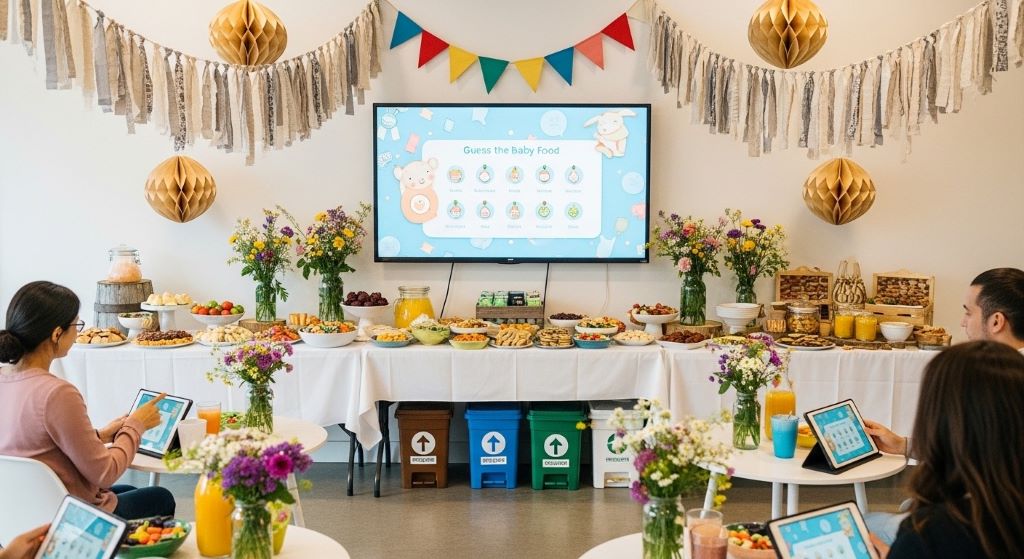
Baby food jar guessing games become zero waste shower activities when you save and reuse jars you already have. Remove the labels from empty jars, fill them with different pureed foods or mashed items, and have guests guess the contents by sight alone. Afterward, wash and return the jars to your regular kitchen rotation.
Clothespin games use items most households already own. The classic “don’t say baby” game requires only clothespins that you clip to guests as they arrive. Anyone who says the forbidden word loses their pin to the person who catches them. At the end, whoever has the most pins wins. These clothespins return to your laundry room after the event.
Measuring tape challenges create fun competition without waste. Have guests estimate the size of the parent-to-be’s belly using yarn or string you already have. Cut pieces to their guessed lengths, then measure them against the actual circumference. The closest guess wins, and the yarn can be composted or saved for future use.
Nature-Based Activities and Outdoor Games
If weather permits, moving activities outside opens up numerous waste-free possibilities. Natural settings provide built-in entertainment that requires minimal supplies.
Planting activities serve double duty as games and meaningful favors. Have each guest pot a seed or small plant in containers made from newspaper or toilet paper rolls. These biodegradable pots can be planted directly in the ground, eliminating plastic waste. Guests take home living favors that grow alongside the baby, and the activity itself becomes the entertainment.
Outdoor scavenger hunts use nature as your game board. Create a list of natural items for guests to find in your yard or a nearby park. Leaves, flowers, interesting rocks, and specific tree types all work well. Guests can photograph their finds rather than collecting them, leaving nature undisturbed.
Garden games like bean bag toss or ring toss can be created from natural or reclaimed materials. Use stumps, branches, or stones you find in your yard as targets. These items return to nature after the party, or they become permanent garden features.
Interactive Group Activities That Create Lasting Memories
Some of the best sustainable party ideas involve experiences rather than things. These activities create meaningful memories without producing waste.
Time capsule creation gives everyone a role in building something permanent. Ask guests to bring one small item from home that represents their hopes for the baby. Include written predictions and advice in a sturdy container you already own. The parents can open this with their child on a milestone birthday, creating an experience that spans years.
Collaborative art projects result in lasting keepsakes from recyclable materials. Set up a large canvas or piece of fabric where guests add fingerprints, drawings, or messages using non-toxic, water-based paints. This becomes nursery art while providing an activity everyone can participate in simultaneously.
Story circle games require nothing but imagination. Sit in a circle and have each person add a sentence to an ongoing tale about the baby’s future. Record the audio on a smartphone to preserve the moment, including everyone’s voices and laughter. These authentic memories often become more treasured than any physical game prize.
Prize Alternatives That Don’t Create Waste
Traditional game prizes often end up in the trash shortly after the party. However, several alternatives reward winners without contributing to landfill waste.
Edible prizes using items from your kitchen work beautifully. Bake cookies, brownies, or other treats using ingredients you already have. Package them in reusable containers or cloth bags that can be washed and used again. Winners get something they can actually use and enjoy.
Service certificates cost nothing and provide real value. Offer to babysit, cook a meal, help with yard work, or provide another service based on your skills. Write these offers on scrap paper or send them digitally. These prizes often mean more than any store-bought trinket.
Borrowing items from your home library works for book-loving crowds. Lend a favorite book to the winner with a note inside explaining why it’s special to you. This personal touch creates connection while requiring no new purchases. The winner eventually returns the book, completing the sustainable cycle.
Food-Based Games That Double as Refreshments
Games centered around food serve dual purposes, providing entertainment while feeding your guests. This efficiency reduces overall party waste.
Blind taste tests using items from your pantry create fun challenges. Pour different juices, teas, or smoothies into identical cups and have guests identify them. These refreshments get consumed during the game, eliminating waste while keeping everyone hydrated.
Recipe collection activities build useful resources without waste. Ask each guest to bring or share their favorite family recipe digitally. Compile these into an electronic cookbook for the new parents. During the shower, guests can discuss their recipes, turning the exchange into an interactive activity.
Decorating edible items provides hands-on fun with delicious results. Set up a cookie or cupcake decorating station using treats you’ve baked and decorations made from fruit, nuts, or other edible items. Everyone eats their creations, leaving nothing behind.
Adapting Traditional Games With Sustainable Twists
You don’t have to abandon beloved classic games. Instead, modify them to eliminate waste while maintaining the fun elements that make them popular.
Baby word scrambles can be played on a chalkboard or whiteboard instead of printed worksheets. Display scrambled words related to babies and parenting, and have guests write their answers on slips of scrap paper you’ve saved from previous projects. Alternatively, guests can call out answers verbally, making it more interactive.
Diaper raffles traditionally generate enormous waste through multiple entries and disposable tickets. Instead, give one raffle entry to guests who bring diapers in recyclable packaging or cloth diapers. Use a random number generator on your phone to select the winner, eliminating paper tickets entirely.
Baby item price guessing games work without printing pictures. Show items from your home or the registry using your phone or tablet. Guests write guesses on a communal board or call them out. The person who guesses closest to the total wins, and no paper gets wasted.
Creating Game Kits From Recycled Materials
If you enjoy crafting, creating game supplies from materials destined for recycling adds a creative element to your party planning. These projects often become conversation starters themselves.
Bingo cards can be made from cardboard boxes you’ve broken down. Cut them into uniform squares and draw grids using markers you already own. For game pieces, use buttons, dried beans, or small stones from your yard. After the party, the cardboard can be recycled again, and the markers return to your supply.
Matching games work beautifully with scrap paper or cardboard. Create pairs of baby-related images or words on card-sized pieces. Guests flip them over to find matches, exercising memory skills. These cards can be saved and used again at future celebrations or given to the parents for their child to use eventually.
Pin-the-tail variations can be drawn on the back of wrapping paper you’ve saved from previous gifts. The blank side provides a perfect canvas for creating game boards. Blindfolds can be cloth napkins or scarves you already own, and players can use sticky notes that peel off cleanly.
Planning for Different Group Sizes
The number of guests affects which games work best, but sustainable options exist for any crowd size.
Small gatherings benefit from intimate activities that encourage conversation. Story sharing circles, advice sessions, and collaborative projects work perfectly when you have fewer than ten guests. These activities create meaningful connections without requiring any materials.
Medium-sized parties of ten to twenty people call for games that allow for some competition while keeping everyone involved. Team-based activities, relay-style games, and rotating stations all work well. Use items from around your house as props, and let the group dynamic create the energy.
Large celebrations with more than twenty guests need games that either accommodate everyone simultaneously or create multiple happening at once. Bingo works perfectly for big crowds, as does having several activity stations where smaller groups can rotate. Additionally, large groups make outdoor games more feasible and fun.
Communicating Your Sustainable Approach to Guests
Setting expectations helps guests understand and appreciate your environmental choices. Clear communication prevents confusion and often inspires others to adopt similar practices.
Invitation language can gently prepare guests for your zero waste shower approach. Mention that you’re planning an eco-friendly celebration and encourage guests to embrace the theme. Suggest that gifts come unwrapped or in reusable fabric, reducing waste before the party even begins.
Explaining your choices at the party itself can be done with light touches. A small sign or brief verbal mention of your sustainable approach shows intentionality without being preachy. Most guests will appreciate understanding the thinking behind your decisions.
Leading by example often speaks louder than words. When guests see how much fun sustainable games can be, they’ll likely adopt similar practices for their own future events. Your celebration becomes a model that ripples outward into your community.
Budget Considerations for Sustainable Games
Many people assume eco-friendly choices cost more, but sustainable baby shower games often save significant money. Using what you already have eliminates most expenses.
Free digital tools replace costly printed materials. Most online quiz platforms, shared documents, and photo-sharing apps cost nothing to use. These tools often provide better experiences than their physical equivalents while saving both money and resources.
Natural and repurposed materials cost less than store-bought decorations and game supplies. Rocks, branches, fabric scraps, and cardboard boxes are either free or very inexpensive. Additionally, these items often look more unique and interesting than mass-produced alternatives.
Eliminating prizes or choosing meaningful alternatives saves considerable money. Traditional baby showers often allocate substantial budgets to plastic trinkets that nobody really wants. Homemade treats, service certificates, or simply celebrating the winner with applause all work just as well.
Conclusion
Planning eco-friendly baby shower games in 2026 is both easier and more enjoyable than traditional approaches. By focusing on sustainable party ideas and embracing zero waste shower principles, you create celebrations that honor both the new baby and the planet they’ll inherit. The games and activities outlined here prove that environmental responsibility doesn’t mean sacrificing fun or meaningful connections.
Digital alternatives, repurposed materials, nature-based activities, and experience-focused games all provide entertainment without generating waste. These approaches often result in more authentic, memorable celebrations than disposable decorations and forgettable plastic prizes ever could. Moreover, they set positive examples that inspire others to make similar choices.
Remember that perfection isn’t the goal. Every waste-reducing choice you make contributes to a healthier planet. Start with whatever feels manageable for your situation, and build from there. Your guests will appreciate the thoughtfulness, the parents-to-be will value your consideration, and you’ll feel good knowing you’ve celebrated new life while protecting the environment. The baby shower games you choose today help create the kind of world you want that baby to grow up in tomorrow.
Frequently Asked Questions
What if my guests expect traditional baby shower games with physical prizes?
Most guests are more flexible than you might think, especially when you communicate your intentions clearly. Explain that you’re planning an environmentally conscious celebration, and focus on making the games themselves engaging and fun. If you do want to offer prizes, choose edible treats, service certificates, or meaningful items from your home. The memories and connections created during the shower will matter far more than any plastic trinket.
How can I involve guests who aren’t tech-savvy in digital games?
Pair less tech-comfortable guests with those who are smartphone-confident, creating natural opportunities for connection. Alternatively, offer both digital and analog versions of the same game, allowing everyone to participate in their preferred way. Simple activities like verbal games, nature scavenger hunts, and collaborative art projects require no technology while still being completely waste-free.
Are eco-friendly baby showers more difficult to plan than traditional ones?
Actually, many hosts find sustainable showers easier to plan because they involve less shopping and fewer decisions about disposable items. You’re working with what you already have, which simplifies preparation. The key is starting with a mindset shift from “what do I need to buy” to “what can I use that I already have.” This approach often reduces both planning stress and costs.
What should I do with decorations after an eco-friendly baby shower?
Choose decorations that have life beyond the party. Natural items like potted plants, flowers in vases, or fabric bunting can all be reused or repurposed. Store fabric decorations for future events, give plants to guests as favors, or use flowers to brighten your home afterward. If you create paper decorations from recycled materials, they can be composted or recycled again after the celebration.
Can I still have a beautiful, Instagram-worthy baby shower while being sustainable?
Absolutely. Natural and repurposed materials often photograph more beautifully than plastic store-bought items because they have authentic texture and character. Flowers from your garden, simple fabric draping, and handmade elements create sophisticated, photogenic spaces. Moreover, the story behind your sustainable choices adds depth to any photos you share, showing intention and values rather than just surface aesthetics.
Related Topics:
DIY Snoopy Thanksgiving Decorations: Easy and Fun Crafts for Kids
How To Clean A Baby Bathtub Without Leaving Anything Behind