
Living in an apartment or condo often means sacrificing outdoor grilling. However, you can still enjoy delicious grilled meals without stepping outside. Contact grills offer a practical solution for preparing your favorite foods indoors while keeping your kitchen smoke-free. This guide will show you exactly how to master indoor grilling techniques and create restaurant-quality meals in your own home.
Why Choose a Contact Grill for Your Kitchen
Contact grills have revolutionized home cooking over the past decade. These appliances cook food from both sides simultaneously, reducing cooking time significantly. Unlike traditional stovetop methods, they distribute heat evenly across the entire surface.
The design eliminates many common indoor cooking problems. Drip trays catch excess fat and juices, preventing mess and reducing smoke production. Furthermore, the closed cooking system traps steam and moisture, creating perfectly cooked meals every time.
Many people hesitate to grill indoors because of smoke concerns. Traditional indoor cooking methods often produce unwanted fumes and odors. Contact grills solve this problem through innovative engineering and temperature control features.
Understanding Smoke Production in Indoor Cooking
Smoke occurs when fats and oils reach extremely high temperatures. When droplets hit a hot surface, they vaporize and create visible smoke. This process happens frequently with stovetop grilling and open flame cooking.
Contact grills minimize this issue through several mechanisms. The top and bottom plates seal in moisture, preventing excessive evaporation. Additionally, the sloped cooking surface directs drippings away from heating elements into collection trays.
Temperature control plays a crucial role in smoke-free grilling. Most contact grills maintain consistent heat between 350 and 450 degrees Fahrenheit. This range cooks food thoroughly without burning fats and creating smoke.
Selecting the Right Contact Grill for Your Space
Size matters when choosing kitchen appliances, especially in smaller living spaces. Measure your counter space before shopping. Most compact grill models fit comfortably in tight kitchens while still offering adequate cooking surface.
Consider your typical meal sizes. Single people or couples can manage with smaller cooking surfaces. However, families need larger plates to prepare multiple servings simultaneously. Fortunately, manufacturers offer various sizes to suit different household needs.
Storage becomes important in apartment cooking situations. Look for models with detachable plates and vertical storage capabilities. Some designs feature cord wrap systems and compact profiles that slide easily into cabinets.
Power requirements vary between models. Standard household outlets handle most contact grills, but verify the wattage matches your electrical setup. Higher wattage units heat faster but may require dedicated circuits in older buildings.
Essential Features for Successful Indoor Grilling
Adjustable temperature controls give you precision over cooking results. Digital displays make monitoring easier than analog dials. Therefore, you can replicate restaurant techniques with consistent temperatures.
Non-stick surfaces simplify cleanup and prevent food from sticking. Ceramic coatings often outperform traditional non-stick materials in durability. Moreover, they distribute heat more evenly across the cooking surface.
Removable plates offer significant advantages for maintenance. Dishwasher-safe components save time and ensure thorough cleaning. This feature becomes particularly valuable when cooking marinaded meats or oily fish.
Drip trays must be adequately sized for your cooking style. Larger trays accommodate more fat and juices during extended cooking sessions. Additionally, easy removal and cleaning prevent buildup and potential smoke issues.
Preparing Your Kitchen for Indoor Grilling
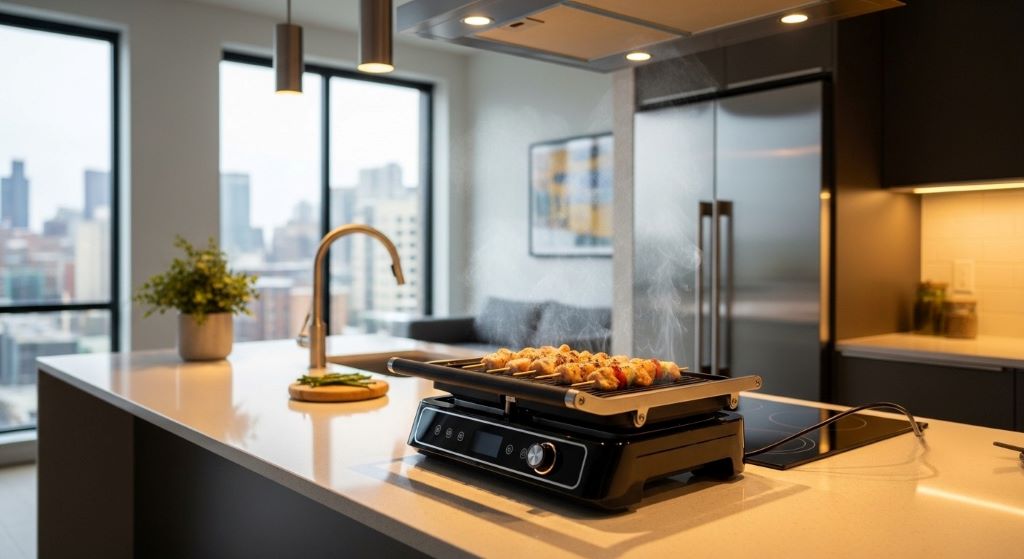
Proper ventilation remains important even with smoke-free grilling equipment. Open windows when possible to maintain fresh air circulation. Range hood fans also help remove any minimal cooking odors that may develop.
Position your contact grill away from smoke detectors when possible. Although these appliances produce minimal smoke, steam can sometimes trigger sensitive alarms. Place a towel or trivet under the unit to protect countertops from heat.
Keep cleaning supplies nearby for quick cleanup. Paper towels, spray cleaner, and a soft sponge handle most messes easily. Having these items accessible makes maintaining your cooking area much simpler.
Clear surrounding counter space before cooking. Contact grills need room for opening the lid and placing prepared ingredients. Furthermore, you need space for plates and serving dishes as food finishes cooking.
Techniques for Perfectly Grilled Indoor Meals
Preheating makes a significant difference in cooking results. Allow five to ten minutes for the grill to reach optimal temperature. This step ensures proper searing and prevents food from sticking to plates.
Pat food dry before placing it on the grill. Excess moisture creates steam and extends cooking time. Dry surfaces also develop better grill marks and caramelization.
Avoid overcrowding the cooking surface. Leave space between items for proper heat circulation. Crowding leads to steaming instead of grilling, producing less desirable textures.
Resist the urge to press down on food while cooking. This technique squeezes out flavorful juices and creates dry results. The top plate provides sufficient pressure for proper cooking.
Use a meat thermometer to verify doneness. Visual cues can be misleading, especially with thicker cuts. Internal temperature ensures food safety while maintaining optimal texture and moisture.
Marinating and Seasoning Strategies
Marinades add tremendous flavor to grilled foods. However, excess liquid can create smoke when it drips onto heating elements. Pat marinated items before grilling to remove surface moisture.
Dry rubs work exceptionally well for indoor grilling. They create flavorful crusts without excess liquid. Moreover, spices caramelize beautifully under contact grill pressure.
Oil-based marinades need careful application. Light coatings enhance flavor without creating smoke problems. Brush marinades on food rather than soaking items completely.
Timing matters with marinades. Acidic mixtures can break down proteins if left too long. Follow recommended marinating times for different protein types to achieve best results.
Cooking Different Foods on Your Contact Grill
Burgers cook quickly and evenly on contact grills. Form patties slightly larger than desired final size since they shrink during cooking. Additionally, create a small dimple in the center to prevent bulging.
Chicken breasts benefit from pounding to even thickness. Uniform pieces cook at the same rate, preventing dry edges and undercooked centers. Brining beforehand adds moisture and flavor.
Fish fillets require gentle handling and quick cooking times. The contact grill’s enclosed environment keeps delicate fish intact. Furthermore, the non-stick surface prevents flaking and sticking.
Vegetables develop excellent flavor on contact grills. Slice them uniformly for even cooking. Toss with small amounts of oil and seasonings before grilling for enhanced taste.
Sandwiches and paninis transform on contact grills. The pressure creates crispy exteriors while melting cheese perfectly. Brush bread with butter or oil for golden-brown results.
Maintaining Consistent Temperature Control
Temperature fluctuations create uneven cooking results. Allow the grill to reheat between batches when cooking multiple servings. This practice ensures consistent quality across all portions.
Thicker foods require lower temperatures and longer cooking times. Thin items need higher heat for quick searing. Adjust settings based on what you’re preparing.
Frozen foods need special consideration. Thaw items completely before grilling for even cooking. Partially frozen food creates temperature inconsistencies and potential food safety issues.
Preheating times vary with room temperature. Cold kitchens require slightly longer warmup periods. Plan accordingly when timing meal preparation.
Cleaning and Maintenance for Longevity
Clean your contact grill after every use. Food residue becomes harder to remove when left to harden. Therefore, tackle cleanup while plates are still warm but not hot.
Use appropriate cleaning tools for non-stick surfaces. Soft sponges and non-abrasive cleaners protect coatings. Metal utensils and harsh scrubbers damage surfaces and reduce lifespan.
Removable plates simplify deep cleaning. Soak them in warm soapy water to loosen stubborn residue. Many models feature dishwasher-safe components for ultimate convenience.
Empty and clean drip trays after each cooking session. Built-up grease can create odors and become a fire hazard. Regular maintenance prevents these problems.
Wipe down exterior surfaces regularly. Grease splatters can accumulate on housing and handles. A damp cloth with mild cleaner keeps your appliance looking new.
Troubleshooting Common Indoor Grilling Issues
Food sticking usually indicates insufficient preheating or damaged non-stick coating. Ensure proper warmup time and avoid metal utensils. Light oil application can help prevent sticking.
Uneven cooking suggests improper plate alignment or inconsistent food thickness. Check that plates close completely. Pound or trim food to uniform sizes.
Excessive smoke despite using a contact grill indicates several possible problems. Too much oil, extremely high temperatures, or buildup on heating elements can cause smoke. Adjust these factors accordingly.
Long cooking times might mean inadequate power supply or incorrect temperature settings. Verify your grill reaches proper temperatures. Consider electrical issues if problems persist.
Recipe Ideas to Get Started
Classic burgers showcase contact grill capabilities perfectly. Mix ground beef with seasonings, form patties, and cook for six to eight minutes. The result rivals any outdoor grill.
Grilled chicken fajitas come together quickly. Slice chicken and peppers, season with spices, and cook until done. Serve with warm tortillas and toppings.
Panini sandwiches offer endless variety. Layer meats, cheeses, and vegetables between bread slices. Grill until bread crisps and cheese melts beautifully.
Vegetable medleys provide healthy side dishes. Zucchini, bell peppers, and mushrooms develop sweet, caramelized flavors. Toss with olive oil and herbs before grilling.
Fish tacos become simple weeknight meals. Season white fish fillets, grill until flaky, and serve in tortillas with fresh toppings. The entire meal takes under fifteen minutes.
Maximizing Flavor Without Creating Smoke
Herbs and spices add tremendous flavor without excess moisture. Create custom spice blends for different proteins. Experiment with various combinations to find your favorites.
Wood plank cooking adapts surprisingly well to contact grills. Soak small cedar planks and place them on the cooking surface. Food picks up smoky notes without actual smoke production.
Infused oils enhance grilled foods beautifully. Garlic, rosemary, or chili-infused oils add depth. Use them sparingly to avoid excess dripping.
Post-cooking sauces and toppings elevate simple grilled items. Prepare salsas, chimichurri, or compound butters. These additions provide restaurant-quality finishes.
Energy Efficiency and Cost Savings
Contact grills use less energy than conventional ovens. They heat quickly and concentrate energy on food rather than an entire oven cavity. This efficiency translates to lower utility bills.
Cooking times decrease significantly compared to traditional methods. Two-sided cooking means food finishes faster. Therefore, you spend less time using electricity.
Year-round indoor use eliminates weather-related outdoor grilling limitations. You avoid gas or charcoal expenses associated with traditional grilling. The initial investment pays for itself over time.
Smaller appliances generate less ambient heat. This benefit becomes particularly valuable during summer months. Your air conditioning system works less hard to maintain comfortable temperatures.
Safety Considerations for Indoor Grilling
Always place contact grills on heat-resistant surfaces. Countertops and tables can suffer damage from prolonged heat exposure. Use trivets or heat-resistant mats for protection.
Keep the appliance away from water sources. Electrical safety requires dry operating conditions. Never submerge the base unit or power cord.
Supervise children around hot cooking appliances. Teach them about hot surface dangers. Consider placing the grill toward the back of counters for added safety.
Use oven mitts when opening the grill or removing drip trays. Steam escapes when you lift the lid, potentially causing burns. Handle all components carefully.
Unplug the unit when not in use. This simple step prevents accidental activation. Moreover, it eliminates standby power consumption.
Conclusion
Indoor grilling with contact grills opens up new culinary possibilities regardless of your living situation. These versatile appliances deliver delicious results without filling your home with smoke. By understanding proper techniques, maintenance, and cooking methods, you can enjoy grilled favorites year-round. The combination of convenience, efficiency, and consistent results makes contact grills an invaluable kitchen tool. Whether you’re cooking quick weeknight dinners or entertaining guests, mastering indoor grilling enhances your cooking repertoire significantly.
Frequently Asked Questions
Can I really grill indoors without any smoke at all?
Contact grills produce minimal to no smoke when used properly. The key is maintaining appropriate temperatures and ensuring proper draining of fats and oils. Pat food dry before cooking, avoid excessive oil, and clean the grill regularly. While you might notice slight cooking aromas, visible smoke should not occur.
How long does it take to cook different foods on a contact grill?
Cooking times vary by thickness and food type. Burgers typically take six to eight minutes, chicken breasts need eight to twelve minutes, and fish fillets cook in four to six minutes. Vegetables usually finish in five to seven minutes. Always verify doneness with a meat thermometer for proteins.
What’s the difference between a contact grill and a regular indoor grill pan?
Contact grills cook from both top and bottom simultaneously, while grill pans only heat from below. This two-sided cooking reduces time and creates more even results. Additionally, contact grills include drip trays and temperature controls that minimize smoke production better than stovetop pans.
Do I need to use oil on a non-stick contact grill?
Most non-stick contact grills don’t require oil, though a light coating can enhance browning and flavor. If food tends to stick, lightly brush the cooking surface with oil before preheating. Avoid excessive amounts, as unnecessary oil can drip and create unwanted smoke.
Can apartment residents use contact grills without violating lease agreements?
Generally, yes. Contact grills are standard kitchen appliances similar to toasters or coffee makers. They don’t involve open flames or produce significant smoke. However, always review your specific lease agreement. If restrictions mention “grilling,” they typically refer to outdoor grills with open flames, not enclosed contact grills.
Related Topics:
Heart-Shaped Beds: A Symbol of Love, Whimsy, and Unique Design
Mole negro recipe with Mexican chocolate


