Every September, London transforms into the most creative city on earth. The streets buzz with bold installations, museum corridors fill with groundbreaking design, and galleries fling open their doors to thousands of curious visitors. London Design Festival 2026, running from 12 to 20 September, marks the event’s 24th edition and promises to be its most ambitious yet. With over one million attendees expected and more than 2,000 participating organisations, this is not just a design fair. It is a city-wide celebration of creativity, innovation, and culture that places London firmly at the centre of the global design conversation.
What Is London Design Festival 2026?
London Design Festival, or LDF, is an annual cultural event that was founded in 2003 by Sir John Sorrell CBE and Ben Evans CBE. Since its very first edition, the festival has grown dramatically. By 2019, the festival had attracted 600,000 attendees, and today more than 2,000 design businesses, brands, universities, and organisations participate each year.
The festival presents forums, talks, product launches, open showrooms, exhibitions, installations, workshops, and parties over nine days. The programme’s hundreds of events explore fashion, architecture, interiors, furniture, technology, materiality, art, crafts, and digital design.
In short, LDF does not restrict itself to one corner of the creative world. Instead, it casts the widest possible net, welcoming professionals, students, families, and curious visitors who simply want to experience the power of great design. Whether you are an interior designer hunting for fresh inspiration or a first-time attendee eager to explore, the festival offers something genuinely meaningful at every turn.
Key Dates, Location and Admission
The 24th edition of London Design Festival takes place from 12 to 20 September 2026 at various venues across London. The main hub remains the iconic Victoria and Albert Museum in South Kensington, with satellite events spread across ten distinct design districts throughout the city.
General admission to the festival and its public installations is free, while specialised trade fairs and the Global Design Forum require tickets purchased via the official website. Public trails are free, while professional passes and VIP forum tickets represent the upper pricing tier.
Here is a quick reference for planning your visit:
- Festival Dates: 12 to 20 September 2026
- Duration: Nine days
- Central Hub: Victoria and Albert Museum, Cromwell Road, London SW7 2RL
- Admission: Free for most city-wide events and district trails
- Ticketed Events: Global Design Forum, select talks, and trade passes
- Official Website: londondesignfestival.com
The V&A Museum: Heart of the Festival
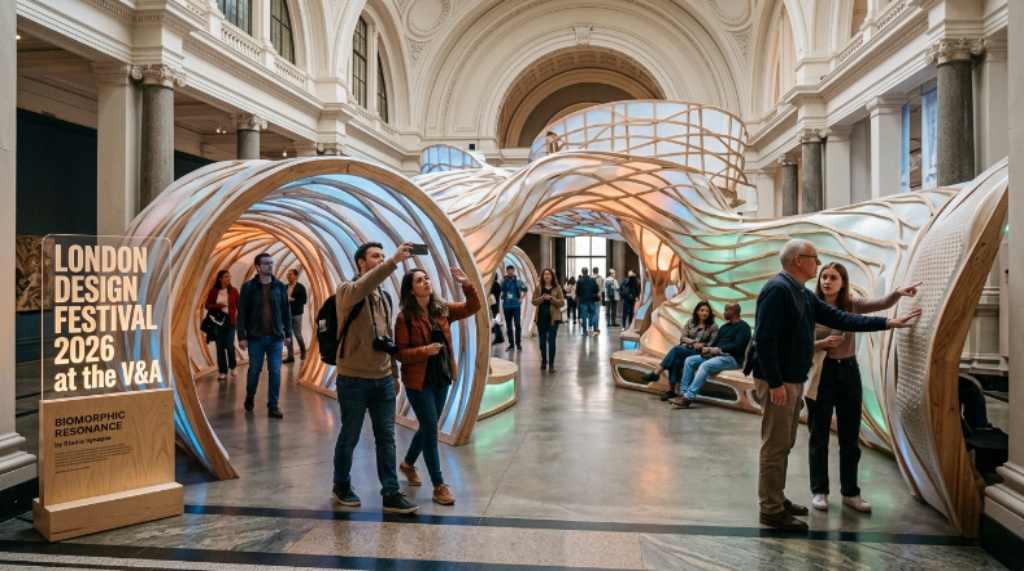
No venue defines London Design Festival quite like the Victoria and Albert Museum. The V&A acts as the central hub for key installations and exhibitions, celebrating and promoting the city as a design capital on the global stage.
Each year, the V&A commissions site-specific works from world-renowned designers. These landmark installations appear in the Grand Entrance, the John Madejski Garden, and other signature spaces throughout the building. Past commissions have included everything from towering typographic sculptures to immersive sensory environments, and the 2026 edition is expected to continue this tradition with fresh, thought-provoking work that visitors can experience entirely for free.
As the headquarters of the event, the Victoria and Albert Museum hosts a series of site-specific commissions and the prestigious Global Design Forum. The Global Design Forum is widely regarded as one of the most important talks programmes in the design calendar, bringing together leading voices from architecture, technology, sustainability, and creative culture for in-depth conversations. Seats for high-profile speakers are limited, so booking early is strongly advised.
Beyond the commissioned installations, the V&A’s own temporary exhibitions run in parallel with the festival. In 2026, the museum’s broader programme includes major exhibitions celebrating fashion, global culture, and design history, giving visitors even more reason to spend a full day within its walls. Pairing the festival programme with the museum’s permanent collection makes for one of the richest cultural days London can offer.
V&A East Museum: A Landmark New Addition to the Festival
One of the most exciting developments for London’s creative scene in 2026 is the opening of a brand-new venue: V&A East Museum. The museum opened in April 2026 on the East Bank in Queen Elizabeth Olympic Park. Co-created with young people, creatives, and those living, working, and studying in east London, V&A East includes galleries, creative commissions, and events spotlighting the people, ideas, and creativity shaping global culture right now.
The museum features two free permanent “Why We Make” galleries exploring global culture through fashion, visual art, photography, architecture, design, and performance. This new venue significantly expands the festival’s footprint eastward and gives attendees a compelling reason to venture beyond the traditional South Kensington hub.
For LDF 2026, V&A East is expected to host its own programme of commissions and events, adding a dynamic new chapter to the festival’s geography. Furthermore, its location within the Queen Elizabeth Olympic Park connects it naturally to a wider network of cultural institutions, including the London Stadium, Here East, and the Copper Box Arena. Together, this east London cluster presents a genuinely exciting alternative route through the festival for visitors who want to explore beyond the familiar centre.
The 10 Design Districts You Need to Explore
One of the most distinctive features of London Design Festival is its district structure. Rather than confining everything to a single exhibition hall, the festival activates entire neighbourhoods across the city. The participating districts include Bankside Design District, Brompton Design District, Chelsea Design District, Dalston to Stokey Design District, EC1 Design District, Fleet Street Quarter, Mayfair Design District, Park Royal Design District, Shoreditch Design Triangle, and William Morris Design Line.
Each district has its own character, curatorial identity, and programme. Together, they turn London into a living, breathing design gallery that rewards wandering as much as careful planning. Here is what to expect from the key districts:
Shoreditch Design Triangle
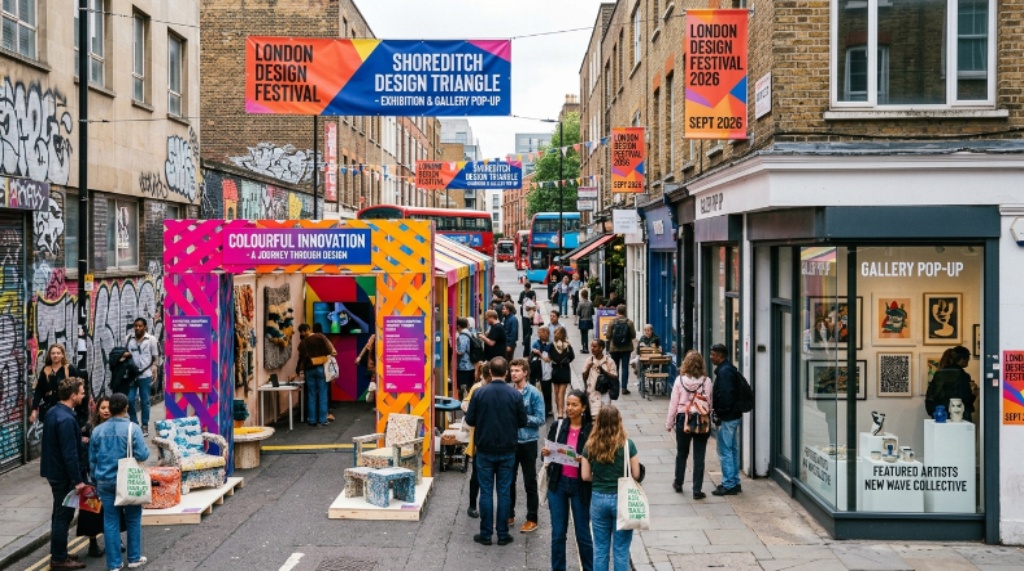
Shoreditch is arguably the most energetic district of the entire festival. At the previous edition, the creative director of the Shoreditch Design Triangle sensed “a renaissance in the UK design sector,” and that energy showed in every gallery and pop-up space across the neighbourhood. Expect independent studios, experimental galleries, and boundary-pushing installations that showcase the next generation of British design talent.
The Triangle covers a walkable area between Old Street, Shoreditch High Street, and Bethnal Green Road, making it easy to navigate on foot. Gallery pop-ups on Brick Lane, concept stores on Redchurch Street, and converted warehouse spaces off Hackney Road all contribute to the district’s buzzing, anything-goes atmosphere. Shoreditch rewards visitors who allow themselves time to wander without a rigid schedule.
Brompton Design District
Brompton Road is where high-end furniture showrooms, international design brands, and carefully curated gallery spaces come together. At the previous edition, Alex Tieghi-Walker made his debut as Brompton district curator, foregrounding a fresh mix of emerging voices. He is tipped to return for 2026, continuing to balance established names with rising talent in a way that keeps the district feeling fresh year after year.
Brompton is ideal for those interested in luxury interiors, contemporary furniture, and refined craft. The showrooms along Fulham Road and the surrounding streets offer a genuinely immersive retail and gallery experience, and many remain open into the evening throughout the festival week.
Mayfair Design District
Mayfair brings its characteristic elegance to the festival. Here you will find some of London’s most prestigious design galleries, couture-level craftsmanship, and exclusive product launches that draw collectors and architecture directors from across Europe. The district consistently attracts high-profile buyers and design directors looking for the finest work from both established masters and ambitious newcomers.
Consequently, Mayfair is also one of the best places to spot international design press covering the festival. Attending the private views and evening events in Mayfair, where they are open to the public, offers a glimpse into the commercial side of the design world at its most polished.
Bankside Design District
Bankside, located on the South Bank near Tate Modern, blends art and design in a way that feels entirely natural given its surroundings. The district often features collaborative projects between designers and artists, and its proximity to major cultural institutions makes it a rich area to explore for a full afternoon. Additionally, the South Bank’s riverside setting provides a genuinely beautiful backdrop for outdoor installations and public art.
EC1 and Fleet Street Quarter
The EC1 district sits at the heart of London’s architecture and design consultancy belt. During LDF, studios that are normally private open their doors for talks, exhibitions, and portfolio reviews. Fleet Street Quarter, meanwhile, reflects the creative regeneration happening across central London, with independent design businesses finding affordable space in what was once the heart of the British newspaper industry.
Landmark Installations and Major Exhibitions
Beyond the district trails, London Design Festival commissions a series of landmark projects that appear in major public spaces. Immersive, large-scale installations from world-renowned designers are placed in major public hubs like Trafalgar Square and the Southbank Centre, where they reach audiences who might not specifically seek out a design festival but stumble across extraordinary work simply by walking through the city.
These landmark projects are among the most photographed and discussed works of the entire festival. They are conceived specifically for their sites, responding to architecture, history, and the urban environment in ways that temporary exhibitions in gallery spaces often cannot. For families visiting London in September, these public commissions are a particularly accessible entry point into the festival’s broader programme.
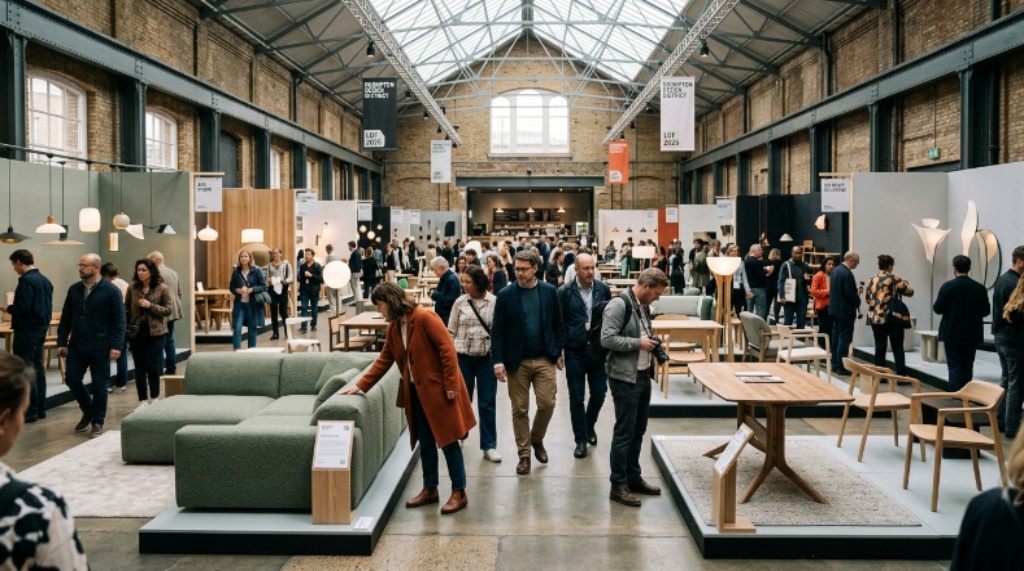
The festival also incorporates Design London, a dedicated trade fair component. Design London brings together international brands and architects to showcase the latest in high-end furniture and lighting innovation. For trade professionals, this is one of the most commercially important parts of the programme, offering the chance to discover new collections and forge connections with manufacturers, distributors, and clients in a focused environment.
The Global Design Forum
The Global Design Forum is the festival’s flagship talks programme and a genuine highlight for anyone who wants to go deeper than installations and showrooms. Held at the V&A, this curated series of conversations and keynote addresses gathers some of the most influential thinkers working in design today.
Topics at past editions have ranged from the ethics of artificial intelligence in design to the urgent challenge of sustainable materials, from the future of public space to the role of craft in a digital world. The forum draws architects, brand leaders, academics, and cultural commentators who bring sharp, often provocative perspectives to the biggest questions facing the field. Moreover, the V&A setting gives these conversations a weight and gravitas that few other venues could provide.
Tickets for the Global Design Forum and other specialised talks are sold directly through the London Design Festival website. These tickets usually go on sale a few months before the event begins and often include options for single sessions or full-day passes. It is recommended to book early, as seating capacity for high-profile speakers at the V&A is limited.
Sustainability and the Future of Design at LDF 2026
Sustainability is no longer a side conversation at London Design Festival. It now sits at the heart of the 2026 programme. Each edition of the festival aims to inspire collaboration, spark dialogue, and showcase innovation across multiple disciplines, including architecture, product design, fashion, technology, and sustainable design.
Designers, brands, and institutions participating in 2026 are increasingly focused on circular design principles, low-carbon materials, and systems thinking. You will find exhibitions dedicated to biomaterials, workshops exploring repair culture, and installations that use reclaimed or salvaged components as their primary medium. This edition places a significant emphasis on sustainable urban living and the role of design in shaping a resilient future.
For visitors who care about where design is heading, the sustainability strand of the programme offers some of the most intellectually stimulating experiences the festival provides. Additionally, many of the participating brands use LDF as the platform to announce their commitments to environmental standards, making the festival a genuine bellwether for the industry’s direction of travel.
Insider Tips for Getting the Most Out of LDF 2026
Attending London Design Festival for the first time can feel overwhelming. The programme is enormous, the city is vast, and there are always more events than any single person can realistically attend. Fortunately, a few simple strategies make the experience far more manageable and rewarding.
Plan by District, Not by Day
The best approach is to use the official festival map available on the website and choose one or two districts to visit per day. Because London is large, it is far more efficient to spend a full afternoon in a single area like Shoreditch or Brompton rather than travelling back and forth across the city. Trying to zigzag between districts in a single day leads to exhaustion and missed opportunities. Each district has enough content to fill four or five hours comfortably.
Visit on Weekday Afternoons
For a more relaxed experience, try visiting on weekday afternoons. You will enjoy fewer crowds, better lighting for photography, and a calmer, more contemplative atmosphere that suits the work on show. Weekends, especially the opening weekend of 12 to 14 September, tend to draw the largest crowds. If you can be flexible with timing, Tuesday through Thursday afternoons offer the most peaceful experience across the city.
Download the Bloomberg Connects App
The Bloomberg Connects app provides curated routes and insider commentary that go far beyond what a printed programme can offer. The app features district guides, audio commentary, and interactive maps updated throughout the festival. It is free to download and genuinely useful for first-time visitors who want structure without rigidity.
Book Ticketed Events Early
For the Global Design Forum, specialist workshops, and any ticketed talks, do not wait until the last minute. Popular sessions sell out weeks in advance, particularly those featuring internationally recognised speakers. Set a reminder for when tickets go on sale through the official website and act quickly once they become available.
Dress Practically for September Weather
Dress in layers, as September breezes by the river can be surprisingly chilly in the evenings. Bring a refillable water bottle, since design hubs like the V&A have café rest areas where you can recharge between venues. Comfortable shoes are essential if you plan to walk between showrooms and galleries within a district. September in London can deliver sunshine, showers, or both within the same afternoon, so a lightweight waterproof layer is always a sensible addition to your bag.
Use the Tube Strategically
Take the Northern line to Embankment or the District or Piccadilly line to South Kensington to reach the V&A and the surrounding Design Districts. Since events spread across the city, you will often need to combine a tube journey with a short walk or bus ride to reach your next destination. An Oyster card or contactless bank card makes navigating the transport network quick and painless, and you can plan journeys in real time using the free TfL Go app.
Attend the Free Events First
Most of the district trails, public installations, and open studios are entirely free. Build your itinerary around the free programme first, then layer in any ticketed events that genuinely excite you. You can have a thoroughly satisfying experience without spending a single pound beyond your travel and food costs, which makes LDF one of the most exceptional value cultural events anywhere in the world.
Who Should Attend London Design Festival 2026?
London Design Festival welcomes everyone, but certain groups find it especially valuable. Creative professionals, interior designers, architects, and students should attend to stay at the forefront of global trends and to network with the industry’s most influential figures. The festival provides a rare opportunity to enter private design studios, showrooms, and workshops that are not normally open to the public, and these behind-the-scenes experiences are often the most memorable parts of any visit.
Beyond trade professionals, the festival is genuinely enjoyable for anyone with a curiosity about how the world around them is designed. Families, international tourists, architecture enthusiasts, and casual visitors all find something meaningful across the nine days. The free access model ensures that great design remains genuinely inclusive and accessible to all, regardless of professional background or budget.
How London Design Festival Shapes the UK Creative Economy
The economic and cultural significance of LDF extends far beyond the nine days of the festival itself. By partnering with major cultural institutions like the V&A Museum, the festival ensures that high-level design remains accessible to the general public while providing a commercial platform for the UK’s creative economy.
The festival generates significant business activity through product launches, brand collaborations, and trade deals concluded during its run. Additionally, it raises the international profile of London as a creative destination, attracting media, buyers, and talent from across the globe. For emerging designers in particular, participation can be genuinely career-defining, opening doors to international exposure that would otherwise take years to achieve through conventional routes.
Conclusion
London Design Festival 2026 is shaping up to be the most compelling edition in the event’s remarkable 24-year history. From the landmark installations at Trafalgar Square to the intimate studio visits in Shoreditch, from the V&A’s flagship commissions to the groundbreaking new V&A East Museum in east London, the festival offers something genuinely extraordinary for every type of visitor. Whether you come for the Global Design Forum, the district trails, the free public art, or simply the electric creative atmosphere of a city fully alive with ideas, LDF 2026 will not disappoint.
Mark your calendar for 12 to 20 September 2026. Head to londondesignfestival.com to download the official programme as soon as it is announced, bookmark the sessions that matter to you most, and book your ticketed events as early as possible. Design has never felt more relevant, and London has never been a better place to experience it.
Frequently Asked Questions
When Is London Design Festival 2026?
London Design Festival 2026 takes place from 12 to 20 September 2026, spanning nine days across venues throughout London. The Victoria and Albert Museum in South Kensington serves as the central hub, with events also taking place across ten design districts and additional venues citywide, including the new V&A East Museum.
Is London Design Festival 2026 Free to Attend?
General admission to the festival and its public installations is entirely free. Specialised trade fairs and the Global Design Forum require tickets purchased via the official website. The vast majority of the district trails, open studios, and public installations cost nothing at all, making the festival genuinely accessible to everyone regardless of budget.
Which Venues Are Most Important at London Design Festival 2026?
The Victoria and Albert Museum is the primary hub, hosting landmark commissions and the Global Design Forum. The newly opened V&A East Museum in Queen Elizabeth Olympic Park is a major new addition for 2026. The Design Museum, Trafalgar Square, and the Southbank Centre also host key installations, alongside ten design districts spread across the city from Shoreditch to Mayfair.
How Do I Get Around London Design Festival Efficiently?
The best approach is to use the official festival map and plan visits to one or two districts per day rather than travelling across the entire city. The London Underground is the fastest way to move between areas. An Oyster card or contactless payment card keeps travel simple. The free Bloomberg Connects app provides curated routes and audio commentary for each district and is an essential planning tool for first-time visitors.
What Makes London Design Festival Different From Other Design Events?
London Design Festival turns the entire city into a playground of creativity, spanning exhibitions, installations, and talks across its most iconic spaces, from leading museums to emerging design districts. Unlike a traditional trade fair confined to a single convention centre, LDF activates the whole of London, blending public art, commercial showrooms, academic talks, and community workshops into a single sprawling nine-day programme. This city-wide format, combined with its free public access model, makes it unlike any other design event in the world.