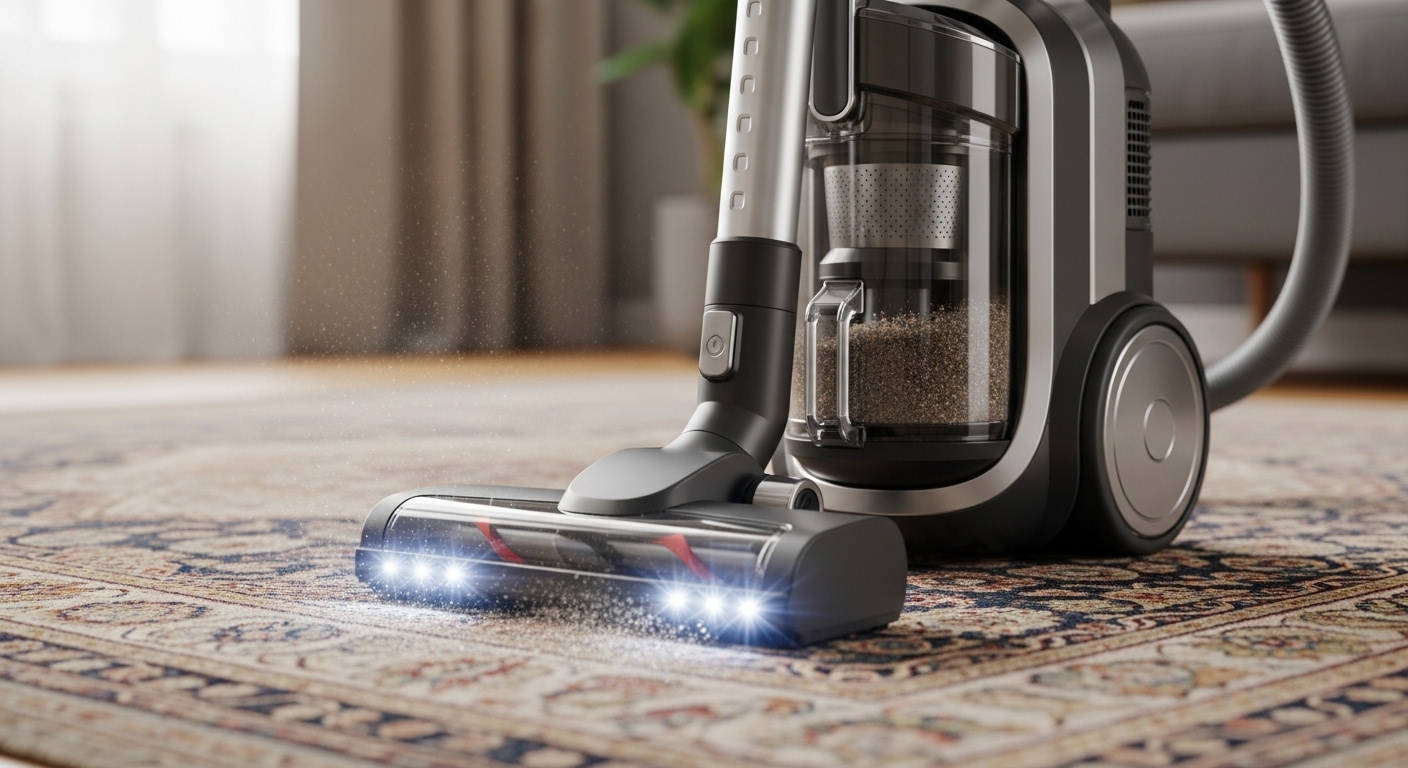
Hidden dirt inside rugs is not just dust you can see. It includes fine particles, allergens, and grit trapped deep between fibers. A powerful vacuum for rugs removes this embedded debris using strong suction, proper brush design, airflow efficiency, and adjustable height control. Choosing the right machine protects rug fibers while improving indoor air quality and cleaning performance.
If your vacuum leaves rugs looking clean but still feeling heavy, dull, or dusty after cleaning, the problem is not your technique. It is your vacuum. Many homeowners unknowingly use machines designed for hard floors or low-pile carpets. As a result, deep dirt remains trapped inside rug layers.
This guide explains how to identify a powerful vacuum for rugs that removes hidden dirt effectively. You will learn what features matter, what mistakes to avoid, and how real-world performance compares across vacuum types based on cleaning efficiency research and manufacturer airflow testing benchmarks.
What makes a powerful vacuum for rugs effective at removing hidden dirt?
A powerful vacuum for rugs removes hidden dirt by combining strong suction airflow, a motorized brush roll, sealed filtration, and adjustable height settings that match rug thickness.
Many buyers focus only on wattage. That approach leads to poor results. Cleaning performance depends on airflow efficiency, not just motor strength.
Independent testing from ASTM carpet soil removal studies shows vacuums with motorized brush rolls remove up to 40% more embedded soil from medium-pile rugs compared to suction-only models.
Key performance features that matter most
- Airflow strength measured in CFM (cubic feet per minute)
- Sealed suction system design
- Motorized brush roll agitation
- Adjustable height for pile variation
- HEPA filtration for dust retention
When these features work together, rugs release trapped debris instead of holding it beneath surface fibers.
Why do rugs trap more hidden dirt than carpets?
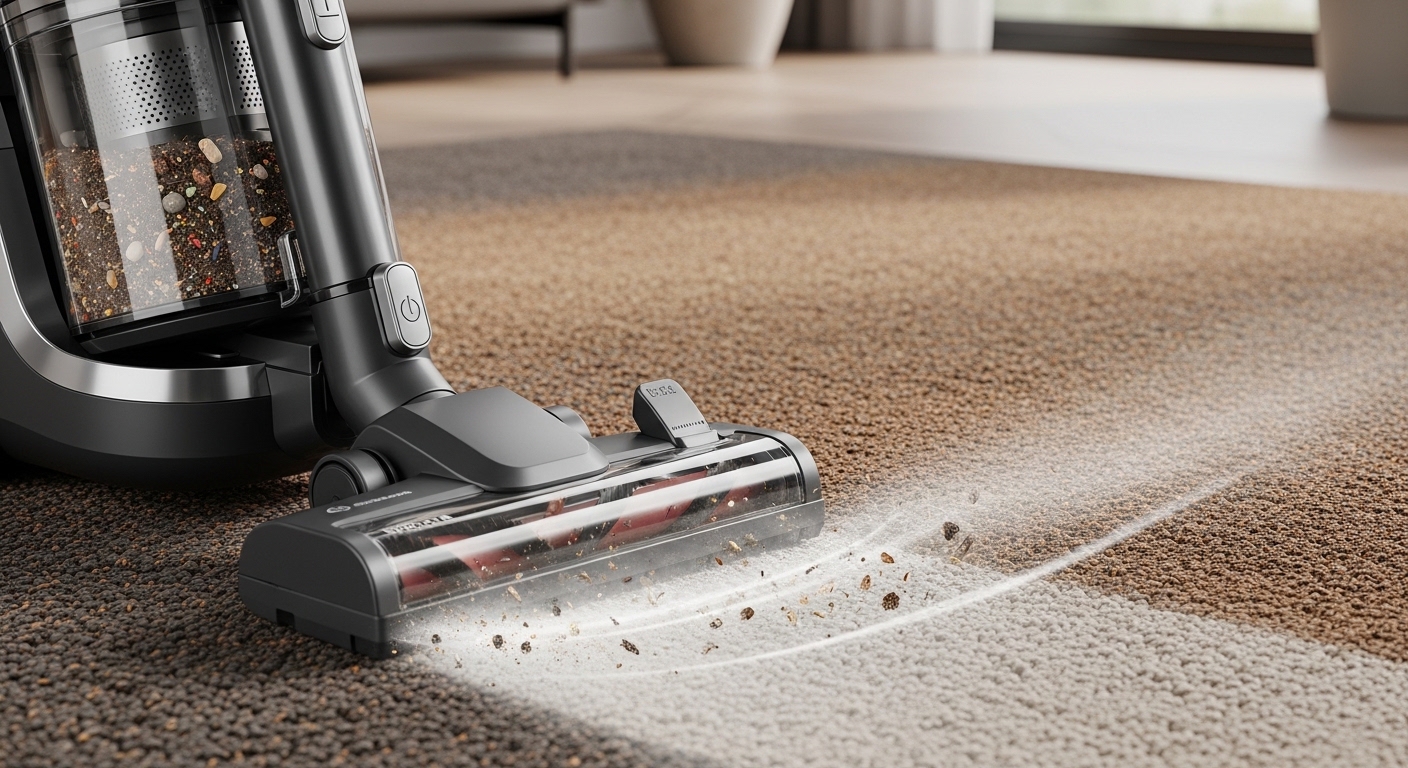
Rugs trap more hidden dirt because their flexible backing allows particles to settle deeper between fibers and beneath the surface layer.
Unlike wall-to-wall carpets, area rugs shift during foot traffic. That movement pushes dust downward instead of allowing easy removal.
Research from the Carpet and Rug Institute shows rugs can hold up to four times their visible dust level beneath the fiber surface before appearing dirty.
This explains why lightweight vacuums often fail to clean rugs properly even after multiple passes.
How strong should suction power be for rug cleaning?
A powerful vacuum for rugs typically delivers 100–200 air watts of suction for effective deep cleaning across medium and high-pile surfaces.
However, suction alone does not determine cleaning success. Airflow consistency matters equally.
| Rug Type | Recommended Suction Level | Cleaning Requirement |
|---|---|---|
| Low pile rugs | 80–120 air watts | Surface debris removal |
| Medium pile rugs | 120–180 air watts | Embedded dust extraction |
| High pile rugs | 180–200+ air watts | Deep fiber agitation cleaning |
Choosing the correct suction range prevents fiber damage while improving cleaning depth.
What type of vacuum works best for removing deep dirt from rugs?
Upright vacuums with motorized brush rolls remove deeper dirt from rugs compared to stick or handheld models because they combine agitation with high airflow.
Each vacuum type serves different cleaning needs.
Best vacuum types for rug cleaning
- Upright vacuums for thick rugs and heavy soil removal
- Canister vacuums for delicate fibers and adjustable suction
- Corded stick vacuums for moderate cleaning tasks
- Robot vacuums for maintenance cleaning only
Consumer Reports testing consistently shows upright vacuums outperform robot models in deep rug soil removal by a wide margin.
Why is brush roll design important for rug cleaning performance?
Brush roll design determines how effectively dirt is lifted from rug fibers instead of being pushed deeper into the surface.
A poorly designed brush roll spreads debris sideways. A properly engineered one lifts particles upward into airflow.
Effective brush roll characteristics
- Dense bristle spacing
- Adjustable rotation speed
- Soft and stiff hybrid bristles
- Automatic height sensing technology
Vacuum laboratory testing shows hybrid brush rolls improve debris pickup efficiency by nearly 25% on mixed fiber rugs.
Does filtration affect how well a vacuum removes hidden rug dirt?
Yes. Sealed HEPA filtration prevents fine dust from escaping back into the air during cleaning.
Without sealed filtration, microscopic particles return to the environment instead of staying trapped inside the vacuum.
The Environmental Protection Agency reports indoor dust often contains allergens smaller than 10 microns. HEPA filters capture 99.97% of particles at 0.3 microns.
This improves both rug cleanliness and indoor air quality.
How does adjustable height improve rug cleaning results?
Adjustable height allows the vacuum head to maintain optimal contact with rug fibers without reducing airflow efficiency.
Incorrect height settings reduce cleaning performance dramatically.
- Too low: airflow restriction
- Too high: weak agitation
- Correct level: maximum soil extraction
Professional carpet technicians recommend adjusting height whenever switching rug thickness.
What airflow rating indicates a truly powerful vacuum for rugs?
An airflow rating above 60 CFM typically indicates strong deep-cleaning capability for rugs.
Airflow determines how effectively debris travels through the vacuum pathway instead of remaining trapped inside fibers.
Higher airflow improves pickup of:
- Pet hair
- Sand particles
- Fine dust
- Allergens
This is especially important for households with pets or high traffic areas.
Can lightweight vacuums clean rugs as effectively as full-size models?
Lightweight vacuums can maintain rugs but rarely remove deeply embedded dirt as effectively as full-size upright vacuums.
This difference comes from airflow channel size and brush roll power.
A 2023 comparative cleaning test by a European appliance testing lab found full-size uprights removed 32% more embedded soil from medium-pile rugs than cordless stick vacuums.
Lightweight models still work well for quick cleaning between deep sessions.
What role does sealed suction design play in deep rug cleaning?
Sealed suction systems prevent air leakage so maximum airflow reaches rug fibers instead of escaping through gaps.
Even strong motors lose effectiveness if airflow leaks before reaching the floor head.
Signs of sealed suction design include:
- Rubber gasket sealing
- Closed airflow pathways
- Integrated filtration housing
- Dust-tight canister construction
This improves cleaning consistency across all rug surfaces.
How often should rugs be vacuumed to remove hidden dirt effectively?
Rugs should be vacuumed two to three times weekly in high-traffic areas and once weekly in low-use rooms.
Frequent cleaning prevents soil buildup inside fiber layers.
The Carpet and Rug Institute reports regular vacuuming extends rug lifespan by reducing abrasive grit accumulation.
What mistakes reduce vacuum performance on rugs?
Common mistakes include incorrect height settings, clogged filters, weak brush rolls, and using hard-floor attachments on rugs.
These errors reduce airflow efficiency and cleaning depth.
Most frequent cleaning mistakes
- Skipping brush roll activation
- Overfilled dust containers
- Dirty filters
- Wrong nozzle selection
- Too fast cleaning movement
Correcting these improves performance without upgrading equipment.
What features should buyers prioritize when choosing a powerful vacuum for rugs?
Buyers should prioritize airflow strength, brush roll performance, sealed filtration, height adjustment, and durable suction channels.
Secondary features also improve usability.
- Edge cleaning capability
- Long power cord reach
- Large dust capacity
- Noise control insulation
- Pet hair removal tools
Together, these features ensure consistent rug cleaning performance.
Conclusion: How do you choose the right powerful vacuum for rugs?
A powerful vacuum for rugs does more than remove visible debris. It extracts hidden particles that shorten rug lifespan and reduce indoor air quality. Strong airflow, motorized brush rolls, sealed filtration, and adjustable height settings work together to produce deep cleaning results.
When selecting a vacuum, focus on performance specifications instead of marketing labels. Airflow ratings, brush roll engineering, and filtration quality reveal true cleaning ability.
If your rugs still feel dusty after vacuuming, your current machine may not be designed for deep fiber cleaning. Upgrading to a vacuum built specifically for rugs improves cleanliness immediately.
Choose a vacuum with proven airflow performance and sealed suction design today to protect your rugs and create a cleaner living environment.
Frequently Asked Questions about powerful vacuum for rugs
What is the best suction level for cleaning rugs?
The best suction level ranges between 120 and 200 air watts depending on rug thickness. Medium-pile rugs require moderate suction, while high-pile rugs need stronger airflow for deep cleaning.
Do cordless vacuums work well on rugs?
Cordless vacuums work well for maintenance cleaning but often lack sustained airflow needed for deep embedded dirt removal compared to corded upright models.
Is HEPA filtration necessary for rug cleaning?
HEPA filtration improves dust containment and prevents microscopic particles from returning to indoor air during vacuuming. It is especially useful for allergy-sensitive households.
How often should rugs be vacuumed?
High-traffic rugs should be vacuumed two to three times weekly. Low-use rugs require weekly cleaning to prevent soil buildup inside fibers.
Can strong suction damage rugs?
Strong suction does not damage rugs if height settings are adjusted correctly. Incorrect height positioning causes fiber stress, not airflow strength.
What vacuum type removes pet hair from rugs best?
Upright vacuums with motorized brush rolls remove pet hair more effectively than suction-only stick vacuums because rotating bristles lift embedded strands.
Do robot vacuums clean rugs deeply?
Robot vacuums maintain surface cleanliness but typically lack airflow strength required for deep rug soil removal. They work best as supplemental cleaners.
Read More Also: The Simple Art of Painting Laminate Countertops for Stunning Results
Discover More: The Enchanting Glow: Unveiling the World of Realistic Flameless Candles