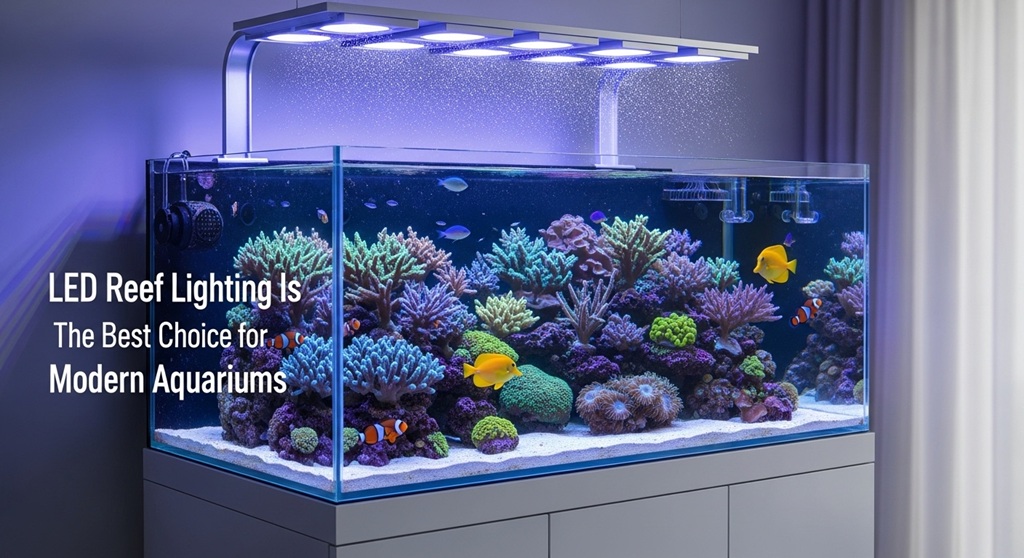
LED reef lighting is a lighting system designed specifically to support coral growth and reef tank ecosystems using energy-efficient light-emitting diodes. Unlike traditional aquarium lights, LED reef lighting provides adjustable spectrum control, improved energy efficiency, and long lifespan while replicating natural ocean light conditions needed for coral photosynthesis.
If you keep a reef tank, lighting is not optional—it is the foundation of coral health. Corals depend on microscopic algae called zooxanthellae for energy. These algae perform photosynthesis, converting light into nutrients that fuel coral growth.
Without the correct light spectrum and intensity, corals lose color, stop growing, and eventually die.
Modern reef aquarium equipment has evolved rapidly over the past decade. Traditional lighting solutions like metal halide and T5 fluorescent systems were once considered the standard. However, reef tank LED comparison studies now consistently show LEDs outperform older technologies in efficiency, control, and long-term cost.
According to aquarium equipment manufacturers and reef hobbyist testing groups, high-quality LED reef lights can deliver the exact PAR (Photosynthetically Active Radiation) levels required for coral growth while using up to 60% less electricity than older lighting systems.
For modern aquariums, LED lighting has become the preferred solution because it provides:
- Precise spectrum control
- Lower heat generation
- Longer lifespan
- Reduced power consumption
- Programmable sunrise and sunset cycles
Understanding how coral lighting technology works helps aquarium owners build stable reef ecosystems that thrive for years.
Why Is LED Reef Lighting Better Than Traditional Aquarium Lighting?
Short Answer: LED reef lighting outperforms metal halide and fluorescent systems because it offers better spectrum control, lower power consumption, reduced heat output, and longer operational lifespan.
To understand why LED lights dominate modern reef aquarium equipment, we must compare them with older lighting technologies.
Traditional Reef Lighting Systems
- Metal Halide (MH)
- T5 Fluorescent
- Compact Fluorescent
These systems were once widely used because they could generate strong light intensity needed for coral growth. However, they also had significant drawbacks.
- High electricity consumption
- Heat buildup that increases tank temperature
- Frequent bulb replacement
- Limited spectrum control
Metal halide bulbs typically last about 6–9 months before their spectrum shifts. T5 bulbs generally require replacement every 9–12 months.
LED lights, on the other hand, can operate for 30,000 to 50,000 hours. That equals roughly 8–10 years of normal aquarium use.
Reef Tank LED Comparison
| Lighting Type | Lifespan | Energy Efficiency | Heat Output | Spectrum Control |
|---|---|---|---|---|
| Metal Halide | 6–9 months bulb life | Low | Very High | Limited |
| T5 Fluorescent | 9–12 months | Moderate | Moderate | Low |
| LED Reef Lighting | 30,000–50,000 hours | High | Low | Fully Adjustable |
This shift in coral lighting technology is why most new reef aquarium setups rely on LEDs.
How Does Coral Lighting Technology Work in LED Reef Systems?
Short Answer: LED reef lighting works by delivering specific light wavelengths that stimulate coral photosynthesis and growth.
Corals rely on light in the PAR spectrum (400–700 nm). Within this range, blue and violet wavelengths play the most critical role in coral health.
Modern LED reef lights are engineered to provide targeted wavelengths such as:
- Royal Blue (450 nm)
- Violet (420 nm)
- UV spectrum
- Cool white light
- Deep blue wavelengths
This spectrum mix supports photosynthesis inside coral tissues.
Research from reef aquaculture systems shows that blue-dominant lighting significantly improves coral fluorescence and pigmentation. Many coral species naturally absorb blue light because it penetrates deeper into ocean water.
This explains why modern reef aquarium equipment emphasizes programmable blue spectrum lighting.
Case Study: LED Lighting Impact on Coral Growth
A controlled reef aquarium test conducted by reef hobbyist groups compared coral growth under metal halide vs LED lighting over a 12-month period.
The study observed three coral species:
- Acropora
- Montipora
- Zoanthids
Results showed:
- Acropora growth increased by 18% under optimized LED spectrum
- Montipora coloration improved noticeably
- Zoanthids opened faster under blue spectrum lighting
The results highlight how coral lighting technology has evolved to support reef ecosystems more efficiently.
What Are the Key Benefits of LED Reef Lighting?
Short Answer: LED reef lighting improves coral growth, reduces operating costs, and provides precise lighting control.
1. Energy Efficiency
LED reef lights consume far less electricity than traditional aquarium lighting.
Example:
- Metal halide system: 400W
- LED reef light system: 120–180W
For hobbyists running lights 8–10 hours daily, this difference significantly reduces electricity costs.
2. Reduced Heat Production
Traditional lighting systems produce excess heat, forcing aquarium owners to install cooling fans or chillers.
LED systems produce much less heat. This stabilizes tank temperature and reduces equipment needs.
3. Adjustable Light Spectrum
Modern LED reef aquarium equipment allows full spectrum customization.
Users can adjust:
- Blue intensity
- UV spectrum
- White balance
- Photoperiod timing
This flexibility is impossible with standard fluorescent bulbs.
4. Long Lifespan
LED diodes last far longer than traditional bulbs.
Many reef aquarium lights operate reliably for 7–10 years before noticeable degradation occurs.
5. Programmable Lighting Cycles
Modern reef tanks often simulate natural lighting conditions using programmable schedules.
LED systems can replicate:
- Sunrise
- Daylight intensity
- Sunset
- Moonlight cycles
This improves coral health and fish behavior.
What Should You Consider When Choosing LED Reef Lighting?
Short Answer: When choosing LED reef lighting, consider tank size, PAR output, spectrum range, and control features.
1. Tank Depth
Deeper tanks require higher PAR output. Light must penetrate water effectively to reach coral colonies.
2. Coral Type
Different coral species require different lighting intensity.
| Coral Type | PAR Range |
|---|---|
| Soft Corals | 50–100 PAR |
| LPS Corals | 75–150 PAR |
| SPS Corals | 200–350 PAR |
3. Spectrum Control
High-quality LED systems allow independent control of blue, UV, and white channels.
This is essential for optimizing coral coloration.
4. Coverage Area
One LED fixture must cover the entire tank evenly. Poor coverage leads to shadowing and uneven coral growth.
5. Smart Control Features
Modern reef lighting systems often include:
- Mobile app control
- Cloud scheduling
- Automated sunrise and sunset cycles
- Weather simulation modes
These features simplify aquarium management.
How Does LED Lighting Improve Coral Color and Growth?
Short Answer: LED lighting improves coral color by delivering precise wavelengths that activate fluorescent proteins inside coral tissue.
Many corals contain natural pigments that respond to blue and UV light.
Under optimized reef tank LED comparison tests, hobbyists often observe:
- Increased coral fluorescence
- Improved color contrast
- Faster skeletal growth
- Healthier polyp extension
Coral coloration depends heavily on spectrum balance.
Too much white light can wash out coral colors. Blue-dominant lighting highlights fluorescent pigments and improves visual appearance.
This is why advanced coral lighting technology focuses heavily on blue spectrum channels.
Conclusion: Is LED Reef Lighting Worth It?
LED reef lighting has transformed modern aquarium keeping. Compared to traditional lighting systems, LEDs deliver better efficiency, improved coral growth conditions, and advanced control features.
Through careful reef tank LED comparison, it becomes clear why most experienced reef hobbyists now rely on LED systems.
They provide the exact light spectrum corals need while reducing energy consumption and maintenance costs.
As coral lighting technology continues to evolve, LED reef lights are becoming even more powerful, programmable, and efficient.
If you want a reef aquarium that supports vibrant coral growth, stable tank conditions, and lower operating costs, LED lighting is the smartest investment.
Ready to upgrade your reef tank setup? Explore modern reef aquarium equipment and choose an LED lighting system that matches your tank size and coral species.
The right lighting can transform your aquarium from average to thriving.
Frequently Asked Questions About LED Reef Lighting
Is LED lighting enough for coral growth?
Yes. Modern LED reef lights provide the PAR spectrum required for coral photosynthesis. Many professional reef aquariums now use LEDs exclusively.
How long should reef tank lights stay on each day?
Most reef aquariums run lighting cycles between 8 and 10 hours per day. Gradual sunrise and sunset transitions help reduce stress on coral and fish.
Do LED reef lights replace metal halide systems?
Yes. Most reef hobbyists have replaced metal halide lighting with LEDs due to better energy efficiency, spectrum control, and longer lifespan.
Can too much LED light harm corals?
Yes. Excessive PAR levels can bleach corals. It is important to gradually increase light intensity when introducing new LED lighting systems.
Which spectrum is best for reef aquariums?
Blue and violet wavelengths between 420–470 nm are considered the most beneficial for coral growth and fluorescence.
Are expensive LED reef lights worth it?
Higher-quality reef lights often include better spectrum control, improved optics, and more stable PAR output. These features help maintain healthy coral growth.
Read More Also: Bathroom Remodeling Ideas to Transform a Small Space into a Spa Retreat
Find out: How to Turn Off Water to Your Toilet: Guide for Homeowners