Key Takeaways
- Poor attic ventilation accelerates shingle aging and shortens roof lifespan.
- Trapped heat and moisture create conditions for mold, rot, and ice dams.
- Balanced ventilation requires both intake and exhaust airflow.
- Warning signs often appear inside the attic before roof damage is visible.
- Fixing ventilation issues protects your roof and lowers energy costs.
Your attic does more than store boxes and holiday decorations. It plays a direct role in your roof’s health and lifespan. However, poor ventilation often goes unnoticed until damage appears. Therefore, understanding how airflow affects your roof helps you catch problems early. This guide covers the effects of poor attic ventilation and how to fix them.
Why Attic Ventilation Matters
Attic ventilation regulates temperature and moisture beneath your roof. This airflow prevents heat and humidity from building up in enclosed spaces. Additionally, proper ventilation supports your roof’s structural health year-round.
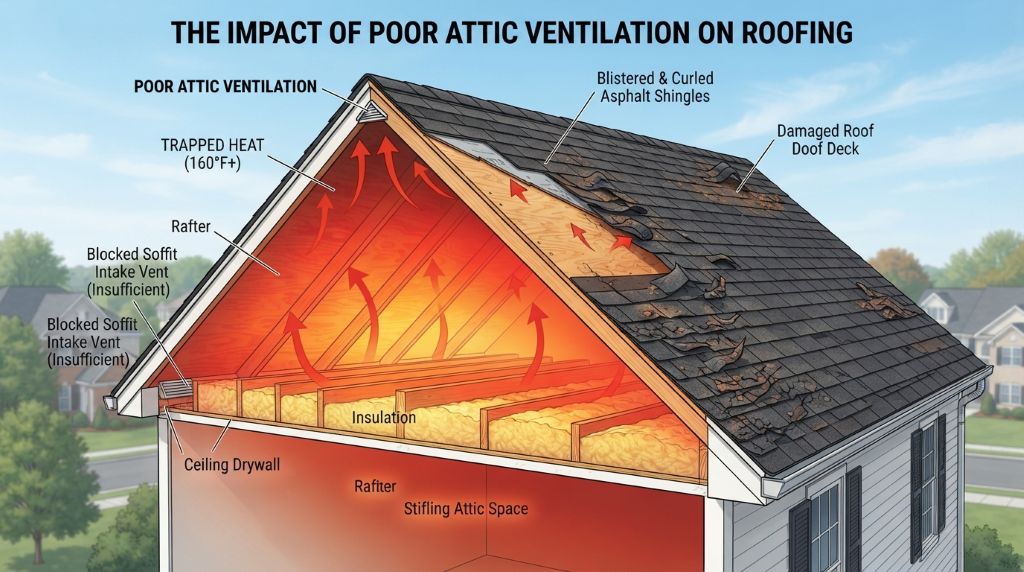
During summer, attics without adequate airflow can reach extremely high temperatures. This trapped heat radiates upward, affecting the shingles directly above. Therefore, excessive heat accelerates the natural aging process of roofing materials.
Winter brings a different challenge related to ventilation. Warm air escaping into the attic melts snow unevenly on the roof. Additionally, this uneven melting creates conditions for ice dams to form at the eaves.
According to the U.S. Department of Energy, proper attic ventilation helps regulate temperature and moisture, which protects roofing materials and improves energy efficiency. This connection makes ventilation an essential part of roof maintenance.
Consider these core functions that proper ventilation provides:
- Reducing summer heat buildup that damages shingles from underneath.
- Preventing moisture accumulation that leads to mold and wood rot.
- Minimizing ice dam formation during winter months.
- Supporting consistent indoor temperatures and lower energy costs.
- Extending the overall lifespan of roofing materials.
Ventilation works through a balanced system of intake and exhaust vents. Air enters through soffit vents near the roof’s edge and exits through vents near the peak. Therefore, this continuous airflow prevents stagnant, damaging conditions from developing.
Understanding this function helps homeowners recognize why ventilation deserves attention alongside other roof maintenance tasks. Therefore, treating ventilation as a priority protects your broader roofing investment.
How Poor Ventilation Damages Shingles
Shingles rely on consistent temperatures to maintain their protective properties. However, poor ventilation creates temperature extremes that accelerate deterioration. Additionally, this damage often starts from underneath, making it harder to notice early.
Excessive attic heat during summer causes shingles to age prematurely from below. This heat softens asphalt shingles and accelerates the breakdown of protective granules. Therefore, roofs with poor ventilation often show granule loss and brittleness sooner than expected.
Trapped heat also affects the roof deck itself, not just the shingles above it. Additionally, this constant heat exposure can warp or weaken wood decking over time. This structural impact compounds the damage already occurring to the shingles.
Watch for these signs that poor ventilation is affecting your shingles:
- Premature curling or cracking, especially compared to the roof’s age.
- Granule loss appearing faster than expected for the shingle’s warranty.
- Uneven aging, with attic-facing areas deteriorating faster than others.
- Blistering or bubbling on the shingle surface.
Manufacturers often specify ventilation requirements as part of shingle warranties. Therefore, inadequate ventilation can void warranty coverage if damage occurs prematurely. This financial consequence makes proper airflow an important consideration beyond just roof health.
Shingle damage from poor ventilation often appears gradually, making it easy to attribute to normal aging. However, comparing your roof’s condition to its expected lifespan helps identify this connection. Addressing ventilation issues can slow this accelerated deterioration significantly.
Moisture, Mold, and Wood Rot
Beyond heat, poor ventilation traps moisture within the attic space. This trapped humidity creates conditions favorable for mold growth and wood decay. Additionally, this damage often develops out of sight, making early detection difficult.
Moisture enters attics through various sources, including cooking, showering, and everyday breathing. Without proper ventilation, this humidity has nowhere to escape. Therefore, it condenses on cooler surfaces like the roof deck and rafters.
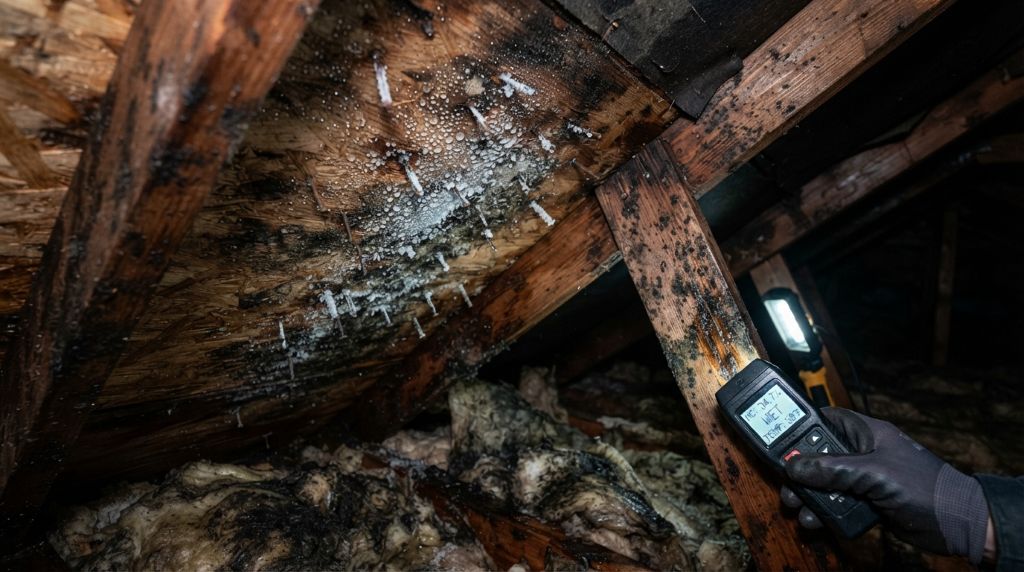
Condensation on wood surfaces creates the perfect environment for mold spores to grow. Additionally, prolonged moisture exposure gradually weakens wood through rot and decay. This structural damage can compromise your roof’s supporting framework over time.
Recognize these signs of moisture-related attic damage:
- Visible mold or mildew on rafters, decking, or insulation.
- Musty odors when entering the attic space.
- Damp or discolored insulation, especially near the roof deck.
- Wood that appears soft, dark, or crumbly to the touch.
- Rusted nails protruding through the roof deck.
Rusted nail tips are a subtle but telling sign of chronic moisture buildup. Additionally, this corrosion indicates humidity levels have remained high for an extended period. Therefore, noticing this detail during an attic check helps confirm a ventilation problem.
Addressing moisture issues early prevents more extensive wood rot and mold remediation later. Therefore, improving airflow often resolves these problems without requiring structural repairs. This proactive approach protects both your roof and indoor air quality.
Ice Dams and Winter Damage
Poor ventilation creates specific problems during colder months that differ from summer heat issues. Ice dams represent one of the most damaging winter consequences of inadequate airflow. Additionally, this problem can lead to significant interior water damage.
Ice dams form when heat escaping into the attic melts snow on the upper roof sections. This melted water then refreezes once it reaches the colder eaves. Therefore, this repeated cycle builds up ice that blocks proper drainage.
As ice dams grow, they create a barrier that traps additional melting snow behind them. This trapped water has nowhere to go except backward, under the shingles. Additionally, this backward flow often leads directly to interior leaks and water stains.
Watch for these winter warning signs related to poor ventilation:
- Icicles forming along the roof edge after snowfall.
- Visible ice buildup or ridges near the gutters.
- Uneven snow melting patterns across the roof surface.
- Water stains appearing on ceilings during or after winter storms.
According to the Federal Emergency Management Agency, proper attic insulation and ventilation are among the most effective ways to prevent ice dam formation. This guidance highlights ventilation’s role alongside insulation in winter roof protection.
Uneven snow melting, where the upper roof clears while eaves remain snow-covered, often indicates heat escaping unevenly. Therefore, this visual pattern helps homeowners identify a ventilation problem before ice dams fully form. Addressing this issue before winter arrives offers the best prevention.
Combining proper ventilation with adequate attic insulation provides the most effective ice dam prevention. Therefore, both elements work together to maintain consistent roof surface temperatures throughout winter.
Warning Signs of Poor Ventilation
Recognizing the signs of inadequate ventilation helps you address the problem before significant damage occurs. These signs often appear both inside the attic and throughout your home. Additionally, catching these signals early prevents cascading roof problems.
Temperature extremes in the attic offer one of the clearest indicators of poor airflow. Additionally, this issue often correlates with uncomfortable temperatures in upper-floor rooms as well. Therefore, noticing these patterns helps connect comfort issues to ventilation problems.
Visible condensation on the underside of the roof deck also signals inadequate airflow. This moisture appears as water droplets, especially during temperature transitions. Additionally, this sign often precedes mold growth if left unaddressed.
Identify these common signs of poor attic ventilation:
- Extremely hot attic temperatures during summer months.
- Condensation or frost on the underside of the roof deck.
- Musty smells or visible mold growth within the attic.
- Ice dams forming repeatedly each winter.
- Higher than expected energy bills for heating and cooling.
Comparing your attic’s condition across different seasons helps establish whether ventilation problems exist. Therefore, checking both summer heat levels and winter moisture provides a complete picture. This seasonal awareness helps you recognize patterns that single inspections might miss.
Homeowners noticing several of these signs together should prioritize a professional ventilation assessment. Therefore, addressing multiple related symptoms often points to a systemic airflow problem requiring correction.
Improving Attic Ventilation
Fixing poor ventilation often involves a combination of adding, repairing, or balancing existing vents. Understanding your options helps you address this issue effectively. Additionally, some improvements are simple, while others require professional installation.
Soffit vents, located under the roof’s eaves, provide the intake airflow ventilation systems need. Additionally, these vents are sometimes blocked by insulation, reducing their effectiveness. Therefore, checking for proper clearance around soffit vents matters during any ventilation assessment.
Ridge vents, installed along the roof’s peak, provide the exhaust half of a balanced system. This continuous vent allows hot air to escape efficiently along the entire roofline. Additionally, this option often works more effectively than smaller, individual roof vents.
Consider these common solutions for improving attic ventilation:
- Clear insulation blocking soffit vents to restore proper airflow.
- Install or upgrade ridge vents for more effective exhaust ventilation.
- Add additional roof vents if current coverage proves insufficient.
- Seal air leaks between living spaces and the attic.
- Ensure proper balance between intake and exhaust vent areas.
Sealing air leaks between your home’s living space and the attic also reduces heat and moisture transfer. Additionally, this step complements ventilation improvements by reducing the source of the problem. Therefore, addressing both airflow and leakage together offers the most complete solution.
A professional roofing contractor can calculate whether your current ventilation meets recommended standards for your attic size. Therefore, this assessment helps determine exactly what improvements your specific home needs. This tailored approach ensures effective, appropriately sized solutions.
Conclusion
Poor attic ventilation affects far more than comfort; it directly impacts your roof’s health. From premature shingle aging to ice dams and mold growth, the consequences add up over time. Additionally, addressing ventilation issues often prevents multiple related roof problems simultaneously. Therefore, treating airflow as a priority protects your roofing investment long-term. Along with proper ventilation, how to select the right roofing materials for your home can also make a significant difference in your roof’s durability, energy efficiency, and ability to withstand local weather conditions. A professional assessment can confirm whether your attic ventilation and roofing materials meet your home’s needs.
Concerned about your attic ventilation? Contact a licensed roofing contractor today for a professional assessment and solution.
Frequently Asked Questions
How can I tell if my attic has poor ventilation?
Look for excessive heat, musty odors, visible mold, or condensation on the roof deck.
Does poor ventilation really shorten my roof’s lifespan?
Yes, trapped heat and moisture accelerate shingle aging and can void manufacturer warranties.
Can poor ventilation cause ice dams?
Yes, escaping heat melts snow unevenly, creating the freeze-thaw cycle that forms ice dams.
What is the difference between soffit and ridge vents?
Soffit vents bring air in at the eaves, while ridge vents let hot air escape at the peak.
Can I improve attic ventilation myself?
Some tasks, like clearing blocked vents, are DIY-friendly, but major upgrades need a professional.