Weeds. They’re the uninvited guests at every garden party, muscling in on space, hogging resources, and generally making a nuisance of themselves. For decades, the go-to solution often involved reaching for a bottle of potent chemical herbicide. But as awareness grows about the environmental impact and potential health concerns associated with synthetic chemicals, more and more gardeners are seeking gentler, more natural alternatives. The desire for a thriving garden that’s also safe for kids, pets, and the planet is driving innovation and a return to traditional methods. Enter the world of natural weed killers – but are they truly effective, and what’s the best approach? Let’s dig in.
Demystifying “Natural” Weed Killers
Before we dive into recipes, it’s important to understand what “natural” means in this context. Generally, a natural weed killer is derived from plant-based sources (like vinegar or essential oils), minerals (like salt), or simple compounds found in nature, rather than being synthetically manufactured in a lab like glyphosate (the active ingredient in many commercial herbicides). Many natural options are considered biodegradable, meaning they break down more readily in the environment.
However, “natural” doesn’t automatically equate to “harmless” or “selective.” Many natural herbicides work as contact killers – they damage or kill the parts of the plant they directly touch, primarily the leaves and stems. This differs from systemic herbicides, which are absorbed by the plant and transported down to the roots, killing the entire weed. Furthermore, most natural solutions are non-selective, meaning they can harm or kill any plant they contact, including your prized flowers or lawn grass, not just the weeds. Understanding these distinctions is crucial for using them effectively and safely.
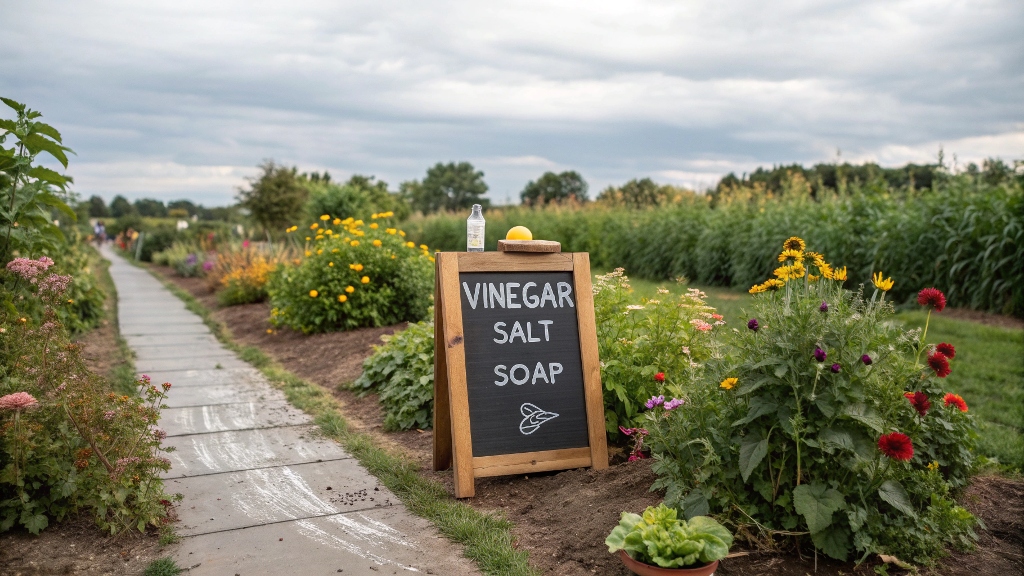
The Go-To DIY Natural Weed Killer: Vinegar, Salt & Soap
One of the most widely discussed and utilized DIY natural weed killer recipes involves a simple combination of three common household ingredients: vinegar, salt, and dish soap. It’s lauded for its accessibility and perceived eco-friendliness, but it’s vital to know how it works and where to use it.
The Recipe:
- 1 gallon White Vinegar: Standard household vinegar contains about 5% acetic acid. This concentration can work on very young, small weeds but may only temporarily damage more established ones. For more punch, especially on tougher weeds, horticultural vinegar (containing 10-20% or even 30% acetic acid) is much more potent. Handle higher concentrations with care – wear gloves and eye protection, as they can be corrosive.
- 1 cup Salt: Regular table salt (sodium chloride) or rock salt works. Salt is a key player in this mix but also the most concerning for soil health (more on that later).
- 1 tablespoon Liquid Dish Soap: Choose a basic soap without degreasers or bleach. The soap acts as a surfactant.
Instructions:
- Combine the vinegar and salt in a large jug or bucket. Stir well until the salt is completely dissolved. This might take a few minutes.
- Add the liquid dish soap and stir gently to mix without creating excessive foam.
- Carefully pour the mixture into a garden sprayer or spray bottle. Label it clearly.
Application:
- Timing is Key: Apply on a warm, sunny, dry day with little to no wind. Sunshine helps accelerate the process. Rain will wash the solution off before it can work effectively, and wind can cause overspray onto desirable plants.
- Target Carefully: Spray the solution directly onto the weeds, thoroughly coating the leaves. Avoid soaking the soil, especially if using salt.
- Best Locations: This mixture is best suited for weeds growing in sidewalk cracks, driveways, gravel paths, between patio pavers, or in areas where you do not plan to grow anything else, due to the potential for soil damage from salt. Avoid using it directly on lawns or in garden beds near plants you want to keep.
How It Works:
Each ingredient plays a role:
- Vinegar (Acetic Acid): This is the primary “burner.” Acetic acid is a desiccant, meaning it draws moisture out of the plant’s leaves. This disruption causes the leaf cells to rupture, leading to browning, wilting, and dieback of the foliage. Higher concentrations mean more potent desiccation.
- Salt (Sodium Chloride): Salt also works through desiccation, further drawing moisture out of the plant tissues. It disrupts the plant’s internal water balance and can inhibit water uptake from the soil if it reaches the root zone.
- Dish Soap (Surfactant): Many plant leaves have a natural waxy coating that can cause liquids to bead up and roll off. Dish soap reduces the surface tension of the mixture, allowing it to spread more evenly across the leaf surface and stick longer, giving the vinegar and salt more time to be absorbed and do their work.
The Bright Side: Pros of Going Natural (with this recipe)
Why has this simple concoction become so popular? It certainly has its advantages:
- Accessibility & Cost: Vinegar, salt, and soap are inexpensive and readily available in most households or supermarkets. Compared to specialized herbicides, the cost is minimal.
- Reduced Synthetic Chemical Use: For those seeking to minimize or eliminate synthetic chemicals like glyphosate in their garden, this offers an alternative using familiar ingredients. It aligns with a more organic gardening approach.
- Quick Visual Results: You can often see the effects relatively quickly. Treated weeds typically start to wilt, brown, and shrivel within hours, especially on a sunny day, providing satisfyingly fast feedback.
- Perceived Safety: Many feel more comfortable using kitchen staples in their yard than complex chemicals, especially if children or pets are present. Vinegar breaks down relatively quickly in the environment. However, this perceived safety needs careful consideration (see Cons).
The Reality Check: Cons and Caveats of Vinegar-Salt Mix
While appealing, the vinegar-salt-soap recipe comes with significant drawbacks and requires careful consideration:
- It’s Non-Selective: This is perhaps the biggest limitation. The mixture doesn’t know the difference between a dandelion and a daisy. It will damage or kill any plant life it comes into significant contact with. This makes it unsuitable for weeding lawns (it will kill the grass) or garden beds where it might drift onto flowers or vegetables.
- Surface Level Action (Contact Killer): This mix primarily kills the top growth – the leaves and stems it touches. It often doesn’t penetrate deep enough to kill the robust root systems of established perennial weeds (like dandelions, bindweed, or thistle). While the top may die back, the plant can often regenerate from the surviving roots.
- Repeat Applications Likely Needed: Because it doesn’t always kill the roots, weeds frequently regrow, requiring repeated treatments throughout the growing season to keep them suppressed. This can become time-consuming.
- Soil Health Concerns (The Salt Problem): This is a critical environmental consideration. Salt (sodium chloride) does not readily break down. When it washes into the soil, it accumulates, increasing salinity. High soil salinity damages soil structure, prevents plants (even desirable ones) from absorbing water and nutrients, and can render the soil infertile for long periods. Repeated applications, especially in garden beds, can cause significant, lasting harm to soil health. Use salt-containing recipes very sparingly, if at all, in areas intended for future planting.
- Vinegar Potency & Hazards: Standard 5% household vinegar often lacks the strength to kill anything beyond the smallest seedlings or very sensitive weeds. While more effective, horticultural vinegar (10-30% acetic acid) is significantly more acidic and requires careful handling. It can cause skin burns, severe eye damage if splashed, and irritation to the respiratory tract if inhaled. Treat it with the same respect you would any strong chemical.
Exploring Other Avenues: Alternative Natural Weed Control
The vinegar-salt mix isn’t the only natural option. Often, an integrated approach using several methods yields the best long-term results:
- Boiling Water: Incredibly simple and cost-effective. Carefully pouring boiling water directly onto weeds (especially in cracks and crevices) effectively scalds and kills them, often down to the root. Be extremely cautious to avoid burns.
- Mulching: Applying a thick layer (2-3 inches) of organic mulch (like wood chips, straw, or shredded leaves) blocks sunlight, preventing many weed seeds from germinating. It also conserves soil moisture and improves soil health as it decomposes.
- Hand-Pulling: Good old-fashioned elbow grease! Pulling weeds by hand, especially after rain when the soil is soft, is highly effective if you get the entire root. Tools like dandelion diggers can help with tap-rooted weeds. It’s labor-intensive but precise and non-toxic.
- Corn Gluten Meal: This is a pre-emergent treatment. Applied in spring, it inhibits seed germination, preventing many annual weeds (like crabgrass) from starting. It won’t kill existing weeds but helps reduce future populations. It also adds nitrogen to the soil.
- Flame Weeding: Using a specialized propane torch tool to briefly pass a flame over weeds causes the plant cells to rupture from the intense heat. Effective on young weeds, but requires extreme caution regarding fire safety.
- Commercial Natural Herbicides: Several products are available based on concentrated vinegar, citrus oils, essential oils (like clove or cinnamon), or chelated iron (which selectively targets broadleaf weeds in lawns). Read labels carefully for ingredients and proper use.
People Also Ask: Answering Your Natural Weed Killer FAQs
Q: Is the vinegar and salt weed killer really safe?
A: “Safe” is relative. It avoids synthetic herbicides, but it’s not risk-free. It’s non-selective (kills desired plants), salt damages soil long-term, and concentrated horticultural vinegar is corrosive and can cause skin/eye irritation. Careful, targeted application away from desired plants and garden soil is crucial.
Q: How quickly does vinegar weed killer work?
A: You’ll typically see visible results like wilting and browning on the foliage within a few hours to 24 hours, especially in full sun. However, this indicates top-kill; the roots may still be alive.
Q: Will vinegar and salt kill weeds permanently?
A: Rarely. Because it mainly kills the parts it touches, perennial weeds with deep roots often regrow. Permanent kill is unlikely without repeated applications. Excessive salt use can make the soil permanently hostile to all plant growth, which is usually undesirable.
Q: What is the strongest natural weed killer?
A: High-concentration (20-30%) horticultural vinegar is very potent but non-selective and requires careful handling. Some commercial natural herbicides use potent plant oils. However, “strongest” often comes with trade-offs. An integrated approach (pulling, mulching, prevention) is often the most sustainable long-term strategy.
Q: Can I just use regular table salt?
A: Yes, table salt (sodium chloride) can be used in the recipe. Rock salt is also effective. Remember the significant downside: salt persists in the soil and can damage its structure and fertility, harming future plant growth and potentially impacting nearby desirable plants through runoff.
Read More Also: Garden Tools for Elderly or Disabled: A Comprehensive Guide
Conclusion: A Balanced Approach to Weeding Naturally
The popular DIY vinegar, salt, and dish soap recipe offers a readily accessible, inexpensive, and synthetic-chemical-free way to tackle some weed problems. It acts quickly on contact and can be effective for spot-treating weeds in hardscapes like driveway cracks or gravel paths where soil health isn’t a primary concern.
However, its significant drawbacks – its non-selective nature, its failure to reliably kill perennial roots, and especially the long-term soil damage caused by salt – mean it should be used judiciously and is generally unsuitable for lawns or garden beds. “Natural” doesn’t always mean harmless to the broader garden ecosystem.
Ultimately, the “best” natural weed control often involves a thoughtful, integrated strategy. Combining methods like timely hand-pulling, preventative mulching, using boiling water in safe spots, and perhaps targeted application of a DIY or commercial natural contact spray only where appropriate, will likely yield more sustainable and garden-friendly results than relying solely on one potentially damaging quick fix.