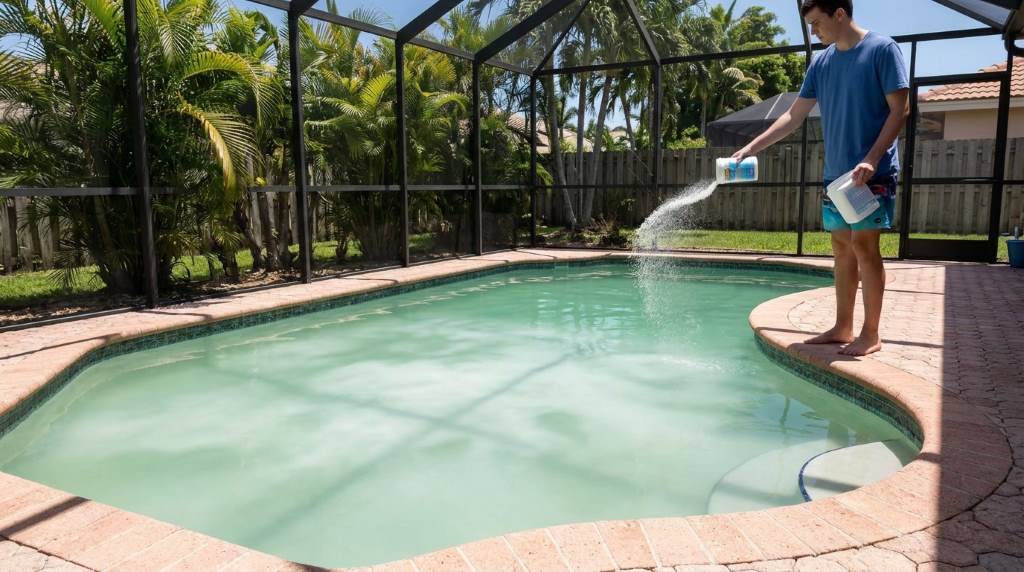
Cloudy pool water can spoil a relaxing swim and increase maintenance costs over time. According to industry estimates, poor water balance causes most residential pool clarity problems each year. Many homeowners also overlook simple maintenance steps like the backwash pool pump system, which keeps filtration working efficiently. This guide explains practical solutions that restore clear water quickly while protecting your pool equipment.
Why Pool Water Turns Cloudy in Miami
Miami’s warm climate encourages algae growth and increases swimmer activity throughout the year. As a result, pool water often loses clarity faster than cooler regions.
Heavy rainfall also introduces dirt, pollen, and organic debris into swimming pools. In addition, frequent sunshine reduces chlorine effectiveness during the day.
Poor filtration creates another common problem because tiny particles remain suspended. Learning about concrete pool structural design also helps owners understand how proper construction supports long term water quality.
Identify the Cause Before Adding Chemicals
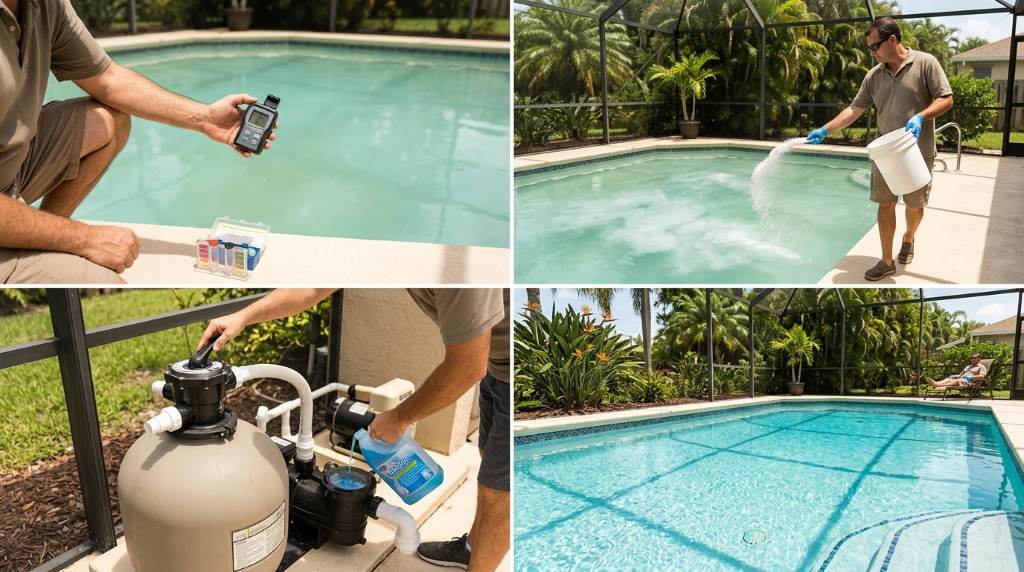
Testing the water saves both time and money before applying any treatment. Therefore, always confirm the actual cause instead of making random adjustments.
Check Water Chemistry
Use a reliable test kit to measure chlorine, pH, alkalinity, and calcium hardness. Balanced chemistry creates the foundation for consistently clear water.
Recommended ranges include:
- Free chlorine: 2 to 4 ppm
- pH: 7.2 to 7.6
- Total alkalinity: 80 to 120 ppm
- Calcium hardness: 200 to 400 ppm
Inspect the Filter
A dirty filter cannot remove microscopic particles effectively from circulating water. Consequently, cloudy water remains even after chemical treatments.
Clean cartridge filters regularly and backwash sand or DE filters when pressure rises. Following routine maintenance improves circulation and filtration performance.
Step by Step Process to Clear Cloudy Pool Water Fast
Once you identify the problem, follow a structured cleaning process for better results. Each step supports the next and speeds overall water recovery.
Brush Every Pool Surface
Brush the walls, floor, ladders, and corners before adding treatment products. This process loosens algae, dirt, and biofilm hiding beneath surfaces.
Vacuum the Pool Thoroughly
Vacuuming removes settled debris before it returns into circulation through swimmer movement. Many owners also compare options using a budget pool vacuum guide before upgrading cleaning equipment.
Shock the Water Correctly
Apply pool shock during the evening because sunlight quickly weakens available chlorine. Always follow manufacturer directions for safe and effective treatment.
Run the pump continuously for at least twenty four hours after shocking the pool. Continuous circulation distributes chemicals evenly throughout the water.
Use a Pool Clarifier
Clarifiers bind tiny particles into larger clusters that filters capture more easily. Therefore, water becomes noticeably clearer within one or two days.
Use only the recommended dosage because excessive clarifier may reduce effectiveness. Accurate measurements always produce more reliable results.
Maintain Proper Chlorine Levels
Chlorine destroys bacteria, algae, and contaminants that reduce water clarity over time. Maintaining the correct level prevents recurring cloudy conditions.
If sanitizer readings remain low, review this guide about pool chlorine levels for practical troubleshooting advice. Balanced chlorine improves both swimmer safety and water appearance.
Watch Stabilizer Levels
Too much stabilizer reduces chlorine efficiency and slows sanitizing performance considerably. Test cyanuric acid regularly to prevent hidden chemical problems.
Test Water Frequently
Check pool chemistry at least twice each week during heavy swimming periods. Frequent testing catches small problems before they become expensive repairs.
Common Mistakes That Keep Water Cloudy
Many homeowners accidentally create longer recovery times through simple maintenance mistakes. Avoiding these habits keeps your pool cleaner throughout the season.
- Adding chemicals without testing water first.
- Ignoring clogged filters for several weeks.
- Running the pump for too few hours.
- Skipping regular brushing and vacuuming.
- Overusing clarifiers or algaecides.
Prevent Cloudy Pool Water All Year
Consistent maintenance requires less effort than correcting severe water quality problems later. Small weekly tasks deliver lasting improvements throughout the swimming season.
Create a simple maintenance schedule that includes testing, cleaning, brushing, and filter inspections. Following the same routine reduces unexpected water issues.
Keep leaves and organic debris out by using a quality skimmer every day. Clean surroundings also reduce contaminants entering the swimming pool.
When Professional Help Makes Sense
Some cloudy pools result from hidden equipment failures or severe algae outbreaks. Professional inspections identify problems beyond standard maintenance routines.
Seek expert assistance if water remains cloudy after completing every recommended treatment step. Experienced technicians can diagnose filtration or circulation problems accurately.
Final Thoughts
Clear pool water depends on balanced chemistry, effective filtration, and consistent maintenance habits. Every step works together to improve water quality quickly and safely.
Start testing your water today, clean the filtration system, and follow this guide carefully. Regular maintenance keeps your Miami pool sparkling and ready for every swim.
Frequently Asked Questions
Why does my pool stay cloudy after shocking?
Your filter may need cleaning or your water chemistry may still be unbalanced.
How long does cloudy pool water take to clear?
Most pools become clear within twenty four to forty eight hours after proper treatment.
Can rain make my pool cloudy?
Yes, rainfall adds contaminants and dilutes important pool chemicals.
Should I run my pump continuously during treatment?
Yes, continuous circulation helps filters remove suspended particles more efficiently.
How often should I test my pool water?
Test your water at least twice weekly and after heavy rain or frequent swimming.