Interior designers don’t place objects randomly. They control spacing, color balance, height variation, and negative space with intention. When you apply the same system, even everyday dishes can look curated instead of crowded.
This guide explains exactly how professionals style open shelves so they feel structured, practical, and visually calm. You’ll learn how to choose items, arrange layers, balance color, avoid clutter mistakes, and maintain the look without constant effort.
Follow the steps below and your kitchen shelves will shift from storage surfaces to design features that improve the entire room.
How do interior designers style open kitchen shelves step by step?
Interior designers style open kitchen shelves by limiting items to essentials, repeating colors and materials, layering objects in groups of three, mixing functional and decorative pieces, and preserving negative space. This creates balance, prevents clutter, improves accessibility, and makes everyday kitchen storage look intentional instead of accidental.
Snippet Answer: Interior designers style open kitchen shelves by selecting a limited color palette, grouping items in odd numbers, mixing functional dishes with decorative accents, layering heights, repeating materials, and leaving breathing space between objects. This structured arrangement keeps shelves practical, balanced, visually calm, and easy to maintain daily.
Professional shelf styling begins before objects touch the surface. Designers first decide what belongs on display and what should stay hidden in cabinets.
The goal is controlled visibility. Shelves should show attractive, frequently used items rather than everything you own.
Start by removing everything. Then return only essentials that meet three criteria: usefulness, visual consistency, and proportion.
- Daily-use dishes
- Neutral storage jars
- Small plants
- Cookbooks
- Wood boards
- Ceramic bowls
Next comes grouping. Designers avoid spreading items evenly across shelves. Instead, they create visual clusters.
Clusters make shelves feel styled rather than stored.
Finally, spacing matters. Empty space is not wasted space. It highlights the objects around it and keeps shelves readable from across the room.
What items should you display on open kitchen shelves?
Answer Block: Display items that combine function and visual consistency, such as plates, bowls, jars, cutting boards, cookbooks, and small plants. Avoid mismatched plastics, bulky appliances, and rarely used tools. Shelves should hold objects you use daily and enjoy seeing regularly.
Designers treat open shelving as curated storage, not overflow storage.
Every object must justify its visibility.
Start with functional anchors. These are items used every day. Plates, mugs, and bowls are ideal because repetition creates rhythm across shelves.
Next add texture. Texture prevents shelves from looking flat or sterile.
- Wood cutting boards
- Stoneware bowls
- Glass jars
- Linen containers
Then introduce small decorative accents. These soften the structure created by dishes.
- Mini herb plants
- Ceramic vases
- Framed recipe cards
- Neutral cookbooks
Avoid placing appliances like blenders or mixers on open shelves unless they match your palette and are used daily.
The rule is simple: visible equals intentional.
How do you choose the right color palette for shelf styling?
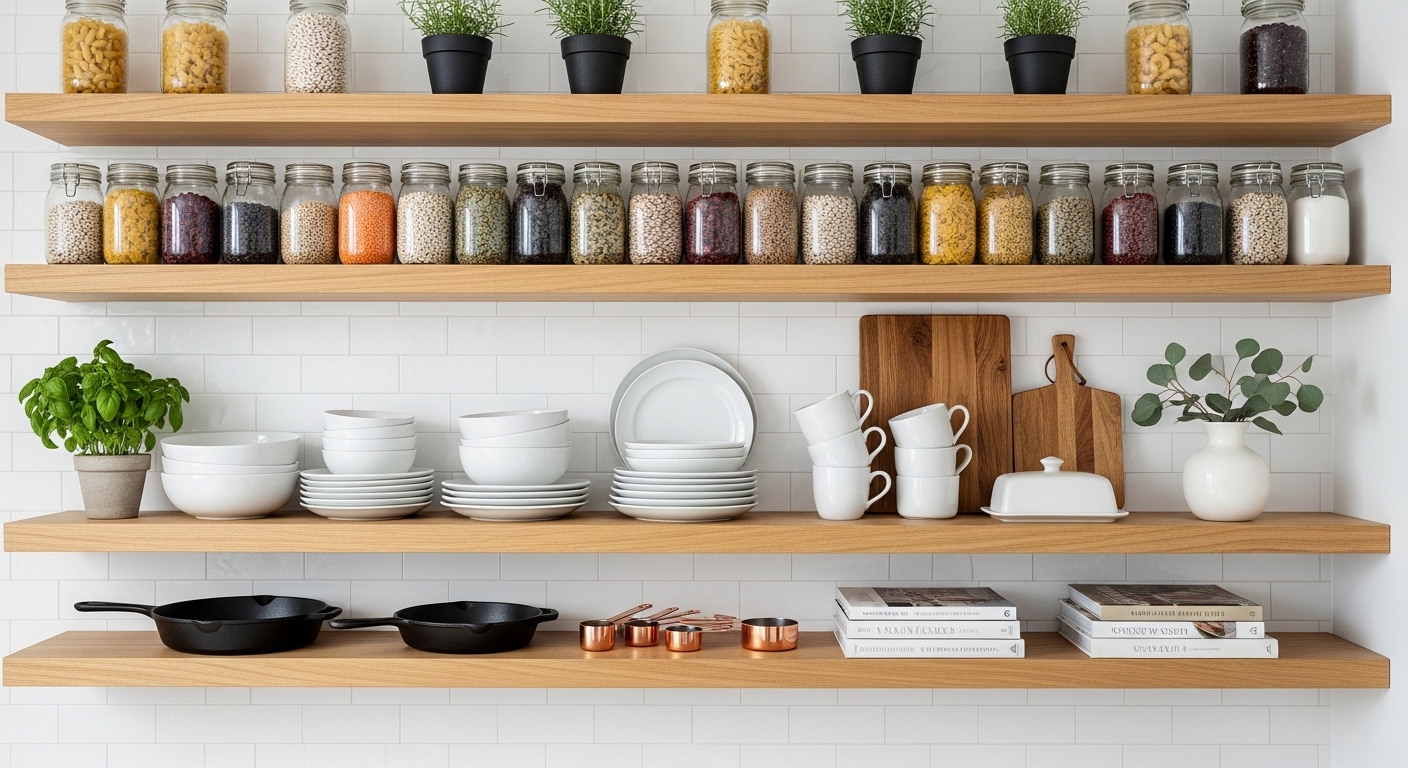
Answer Block: Choose a palette of two to three core colors and repeat them across dishes, jars, and accessories. Neutral bases like white, beige, or wood create cohesion. Limited color variation prevents visual clutter and helps shelves blend naturally with surrounding cabinetry and walls.
Color repetition is the fastest way to make shelves look professional.
Interior designers rarely mix more than three dominant tones.
A reliable formula looks like this:
- Primary base color (white or cream)
- Secondary texture tone (wood or glass)
- Accent color (green, black, or brass)
White plates reflect light and make kitchens feel larger. Wood adds warmth. Green plants introduce contrast without overwhelming the composition.
If your kitchen already has strong cabinet colors, echo them subtly through shelf accessories.
This creates continuity between storage zones and architectural surfaces.
Consistency across shelves matters more than individual object beauty.
How should you arrange objects to create balance and height variation?
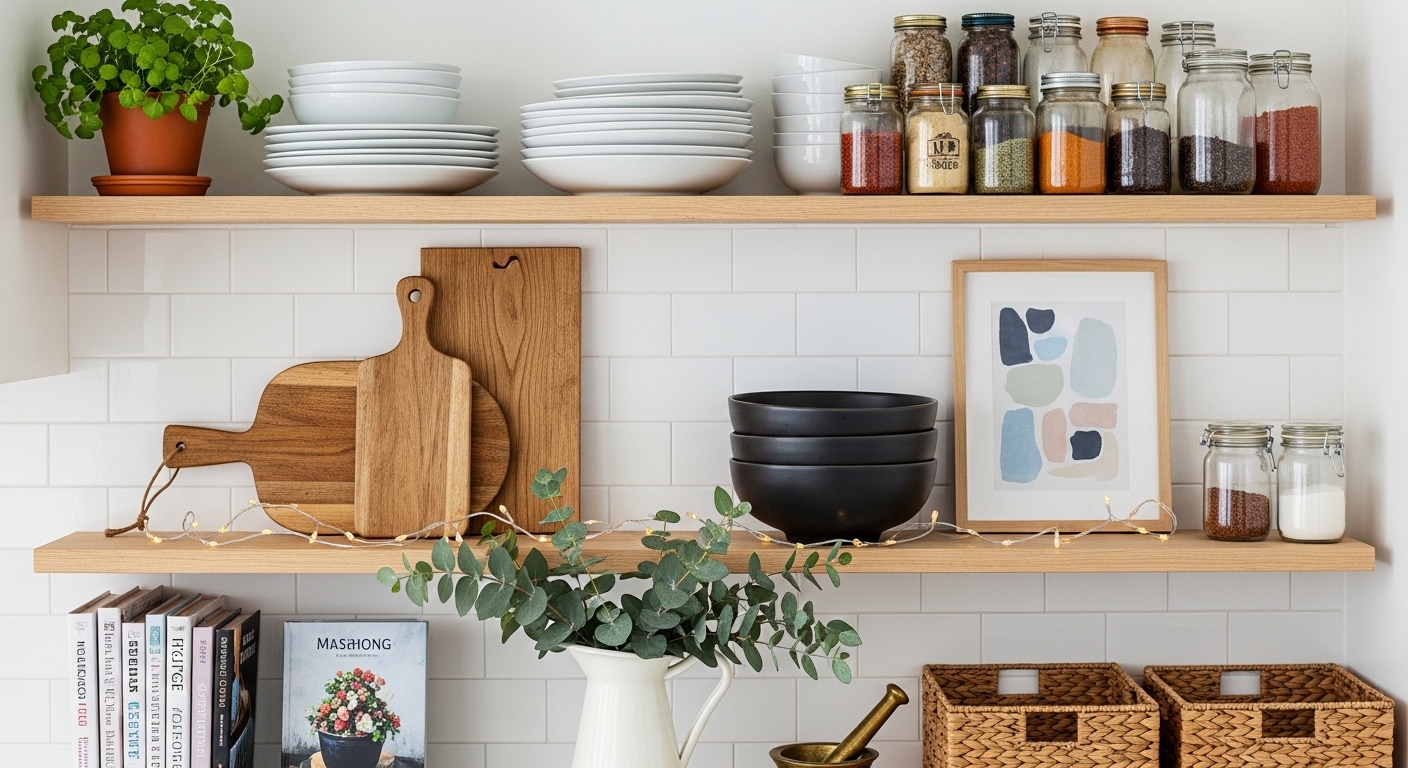
Answer Block: Arrange objects using layered heights, stacked dishes, leaning boards, and grouped clusters of three. Place taller items toward shelf ends or corners and shorter pieces near the center. This creates movement across the shelf and prevents flat, crowded visual lines.
Flat arrangements look accidental.
Layered arrangements look intentional.
Start by placing the tallest object first. Usually this is a cutting board, cookbook stack, or tall jar.
Then add medium-height elements beside it. Bowls or canisters work well here.
Finish with smaller accents in front or beside those objects.
This creates depth without increasing clutter.
Follow the “triangle principle.” Objects should visually connect in triangular groupings rather than straight rows.
Example structure:
- Tall board leaning in back
- Medium jar beside it
- Small bowl in front
This structure creates layered perspective similar to magazine styling.
How much empty space should open shelves include?
Answer Block: Leave at least 30 percent of each shelf empty to maintain clarity and prevent visual overload. Negative space improves readability, highlights featured objects, and makes shelves easier to clean. Overfilled shelves quickly lose their styled appearance and feel cluttered instead.
Most shelf styling problems come from overcrowding.
Designers intentionally stop before shelves feel full.
Negative space acts like punctuation in visual design. It separates ideas so each object can stand out.
Try this spacing formula:
- Left cluster
- Open center space
- Right cluster
This layout creates symmetry without rigidity.
Spacing also improves usability. You can remove dishes without disturbing nearby objects.
If shelves begin looking busy again after a few weeks, remove one item from each section.
Reduction restores structure faster than rearranging.
Which materials make open shelves look more expensive?
Answer Block: Natural materials such as wood, ceramic, stoneware, glass, and metal accents make shelves appear more refined. Avoid plastic containers and mismatched packaging. Replacing visible storage with consistent jars and textured surfaces instantly upgrades the perceived quality of open shelving.
Material choice influences shelf appearance more than object quantity.
Even simple kitchens look elevated when visible items share natural textures.
| Material | Visual Effect | Best Use |
|---|---|---|
| Wood | Adds warmth | Cutting boards, utensils |
| Ceramic | Creates softness | Bowls, mugs |
| Glass | Reflects light | Storage jars |
| Stoneware | Feels premium | Serving dishes |
| Brass | Adds contrast | Small accents |
Replacing branded packaging with matching jars is one of the fastest transformations possible.
Consistency signals intention.
How do you mix decorative and functional objects correctly?
Answer Block: Combine everyday dishes with small decorative accents like plants, framed prints, or textured containers. Maintain a ratio of about 70 percent functional items to 30 percent decorative pieces. This balance keeps shelves practical while still creating a styled appearance.
Pure decoration feels artificial in kitchens.
Pure function feels unfinished.
The balance between the two creates authenticity.
Start by placing functional anchors first. Plates and bowls establish structure.
Then insert decorative accents between clusters.
Example combinations:
- Stacked plates beside a small plant
- Glass jars next to framed recipe cards
- Cookbooks paired with ceramic bowls
Decor should never block access to daily-use items.
If removing something becomes inconvenient, the arrangement needs adjustment.
How do you maintain styled open shelves without daily effort?
Answer Block: Maintain styled shelves by returning items to assigned positions, limiting new objects, and wiping surfaces weekly. Keeping a fixed arrangement system prevents clutter buildup. Consistency is more important than frequent restyling for long-term visual balance.
Maintenance determines whether styling lasts one week or one year.
Designers rely on systems instead of constant adjustments.
Create zones on each shelf:
- Dish zone
- Jar zone
- Accent zone
When items always return to the same location, shelves stay structured automatically.
Seasonal refreshes help maintain interest without full redesign.
Rotate cookbooks, plants, or serving bowls every few months instead of replacing everything.
This keeps shelves dynamic while preserving cohesion.
Conclusion: How can you transform open kitchen shelves into a designer feature?
Open shelves become design assets when they follow structure instead of convenience alone. Limiting visible items, repeating materials, layering heights, and preserving empty space creates shelves that feel intentional rather than improvised.
Professional styling does not require expensive accessories. It requires selection discipline and consistent placement logic.
Start by removing excess objects. Keep only daily-use pieces that match your palette. Add texture through wood and ceramics. Maintain spacing between clusters. Return items to assigned zones after use.
These small adjustments transform shelves from storage surfaces into visual anchors that elevate your entire kitchen.
If you apply even three of these principles today, your shelves will immediately look calmer, more structured, and easier to maintain. Choose one shelf, restyle it using this method, and build the rest gradually for lasting results.
Frequently Asked Questions
Are open kitchen shelves harder to maintain than cabinets?
Open shelves require more visual discipline but not more effort. When items return to fixed positions and unnecessary objects are removed, maintenance becomes simple weekly wiping rather than constant rearranging.
How many items should be on one kitchen shelf?
A standard shelf looks balanced with three to five grouped elements rather than evenly spaced individual objects. Clusters improve visual structure while preventing overcrowding.
Can small kitchens use open shelving effectively?
Yes. Open shelves reflect light and reduce visual heaviness compared to upper cabinets. Limiting displayed items keeps small kitchens feeling larger and more organized.
Should all dishes match for open shelving?
Matching dishes create the cleanest appearance, but coordinated tones also work. Consistency in color or material matters more than identical shapes.
What is the biggest mistake when styling kitchen shelves?
The most common mistake is overcrowding. Too many visible objects reduce clarity and make shelves appear cluttered instead of curated.
Do open shelves work in modern kitchens?
Yes. Open shelving fits modern kitchens when items follow a limited palette and clean material selection like glass, wood, and neutral ceramics.
How often should open shelves be restyled?
Restyling every season keeps shelves fresh without disrupting structure. Small rotations of plants or cookbooks are usually enough.
Read More Also: How to Turn Off Water to Your Toilet
Find out: Does a Jacuzzi Bathtub Add Value to Your Home? A Deep Dive