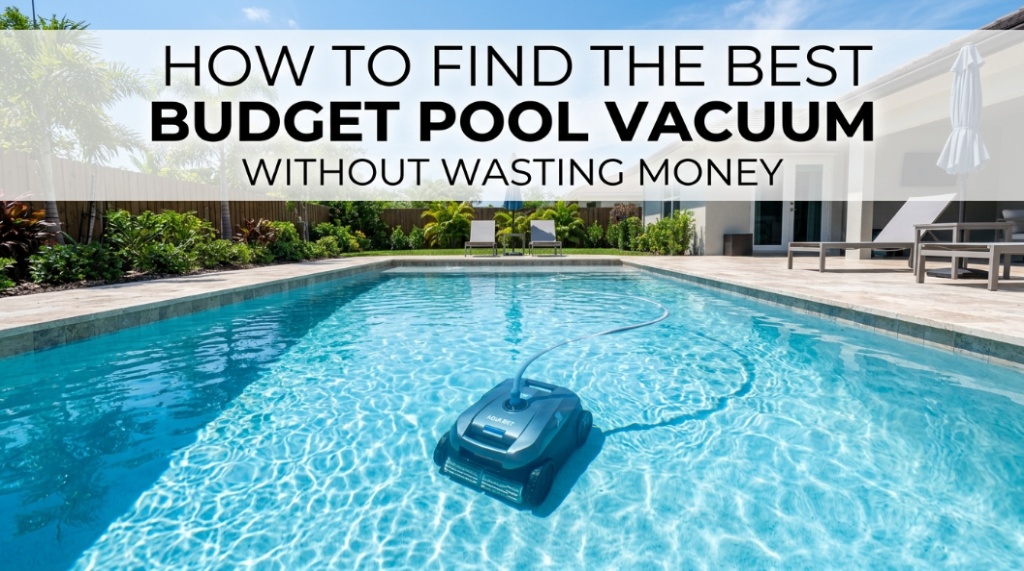
The best budget pool vacuum is one that matches your pool type, cleaning needs, and maintenance routine while delivering reliable performance under $150–$300 without unnecessary features.
Why Most People Waste Money on Pool Vacuums
You don’t need to spend hundreds—or even thousands—on a pool vacuum to keep your pool clean. Yet many pool owners end up overspending on features they never use, buying the wrong type, or replacing cheap units that break within months. The result? Frustration, wasted money, and a pool that still isn’t properly cleaned.
The reality is simple: the best budget pool vacuum isn’t the cheapest option—it’s the one that fits your pool and cleaning habits. Choosing incorrectly leads to poor suction, missed debris, and constant maintenance headaches.
This guide breaks down exactly how to choose a cost-effective pool vacuum that actually works. You’ll learn what features matter, what to avoid, and how to get the best performance without overspending. Whether you own an above-ground pool or an in-ground system, this guide will help you make a smart, efficient investment.
What types of budget pool vacuums are available?
Budget pool vacuums fall into three main categories: manual, suction-side, and robotic, each offering different levels of automation and cost.
Manual Pool Vacuums: Are they worth it?
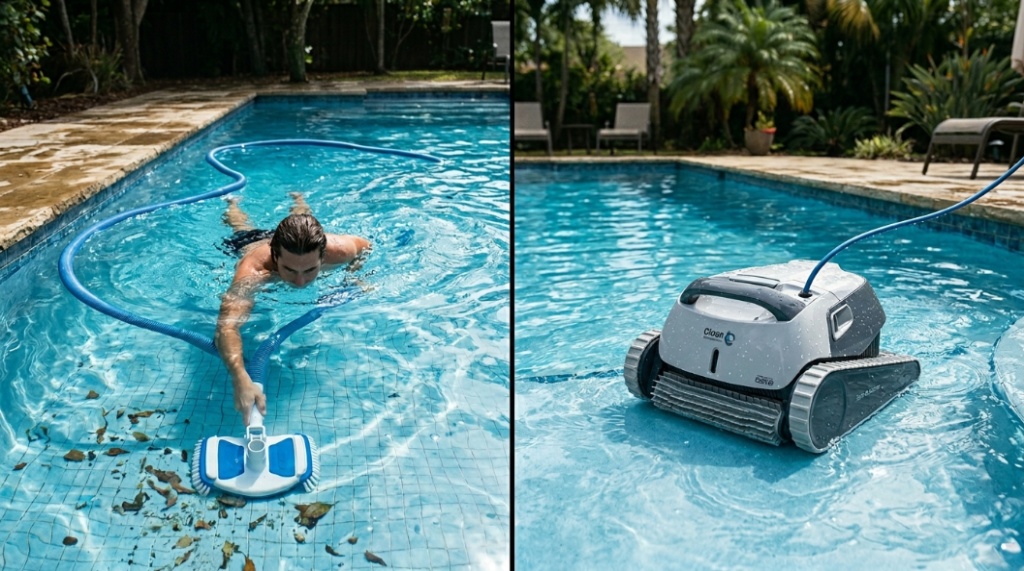
Manual vacuums are the cheapest option and require you to clean the pool yourself using a telescopic pole and hose.
- Lowest cost (often under $100)
- Full control over cleaning
- Time-consuming and labor-intensive
Suction-Side Pool Vacuums: Best value for money?
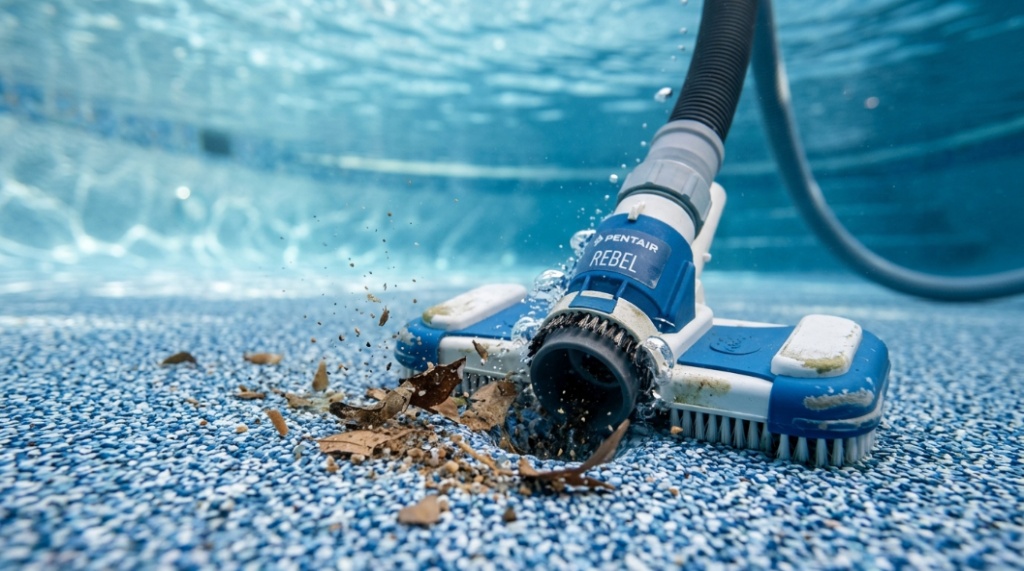
Suction-side vacuums connect to your pool’s filtration system and automatically move around the pool.
- Affordable automation
- Uses existing pump system
- May reduce filtration efficiency
Robotic Pool Vacuums: Are budget models reliable?
Entry-level robotic vacuums operate independently and offer hands-free cleaning but cost more upfront.
- Independent operation
- Better debris handling
- Higher initial cost ($200–$400 for budget models)
Which type of pool vacuum is best for your budget?
The best type depends on how much time you’re willing to spend and how large or complex your pool is.
| Type | Best For | Price Range | Pros | Cons |
|---|---|---|---|---|
| Manual | Small pools, tight budgets | $30–$100 | Cheap, simple | Labor-intensive |
| Suction-side | Medium pools | $80–$200 | Affordable automation | Relies on pump |
| Robotic | Busy owners | $200–$400 | Hands-free cleaning | Higher upfront cost |
What features should you look for in the best budget pool vacuum?
The most important features are suction power, ease of use, compatibility, and durability—not advanced automation or smart controls.
How important is suction power?
Suction determines how effectively debris is removed. Weak suction leads to repeated cleaning cycles.
Does compatibility matter?
Yes. Your vacuum must match your pool type (above-ground or in-ground) and filtration system.
What about durability?
Low-cost vacuums often fail due to cheap plastic parts. Look for reinforced hoses and solid construction.
How much should you spend on a budget pool vacuum?
A realistic budget ranges from $80 to $250 for a reliable vacuum that balances cost and performance.
- Under $80: Basic manual tools
- $80–$150: Decent suction-side options
- $150–$250: Entry-level robotic models
According to industry data, most homeowners replace low-quality vacuums within one year—spending more in the long run. Investing slightly more upfront often saves money.
What are the most common mistakes when buying a budget pool vacuum?
The biggest mistakes include choosing the wrong type, ignoring pool size, and focusing only on price.
- Buying based on price alone
- Ignoring pool shape and size
- Overlooking maintenance costs
- Choosing incompatible models
Do cheap pool vacuums actually work?
Yes, but only when matched correctly to your pool and used properly.
A $100 suction-side vacuum can outperform a $300 robotic model if used in the right environment. Effectiveness depends more on compatibility than price.
How do you maintain a budget pool vacuum for long-term use?
Regular cleaning, proper storage, and part replacement can extend the lifespan significantly.
- Rinse after every use
- Check hoses for leaks
- Clean filters weekly
- Store away from direct sunlight
Maintenance can increase lifespan by 30–50%, according to pool equipment manufacturers.
Is a robotic pool vacuum worth it on a budget?
Yes, if you prioritize convenience and can afford a higher upfront cost.
Robotic vacuums reduce manual labor and improve cleaning consistency, making them a good investment for busy pool owners.
What size pool requires which vacuum type?
Pool size directly affects the vacuum type you should choose.
- Small pools: Manual or basic suction models
- Medium pools: Suction-side vacuums
- Large pools: Robotic vacuums
Conclusion: How to Avoid Wasting Money on a Pool Vacuum
The best budget pool vacuum is not the cheapest—it’s the smartest choice for your specific needs. By focusing on compatibility, durability, and essential features, you can avoid the common traps that lead to wasted money.
Manual vacuums work well for small pools and tight budgets. Suction-side models offer the best balance of cost and automation. Robotic vacuums provide convenience but require a higher initial investment.
If you take one thing away, let it be this: match the vacuum to your pool—not your assumptions. That single decision determines whether your purchase becomes a long-term solution or a recurring expense.
Take a moment to assess your pool size, cleaning habits, and budget. Then choose wisely—you’ll save time, money, and frustration.
FAQ: Best Budget Pool Vacuum Questions Answered
What is the best budget pool vacuum for beginners?
A suction-side vacuum is the best option for beginners because it offers automation without complex setup or high costs.
Can I use a pool vacuum without a pump?
Only robotic and manual vacuums can operate without a pool pump. Suction-side models require a filtration system.
How often should I vacuum my pool?
You should vacuum your pool at least once a week, or more frequently during heavy use or debris buildup.
Are robotic pool vacuums expensive to maintain?
No. Maintenance is relatively low, usually limited to filter cleaning and occasional part replacement.
What is the lifespan of a budget pool vacuum?
Most budget pool vacuums last 2–5 years with proper maintenance.
Do budget pool vacuums clean algae?
Yes, but effectiveness depends on suction power and brush design. Some models may require manual assistance.
Is it better to vacuum or use a pool cleaner?
A pool cleaner (automatic vacuum) is better for regular maintenance, while manual vacuuming is ideal for deep cleaning.
👉 Check this guide: use a handheld vacuum for sofa cleaning like a pro
👉 Explore find a powerful vacuum for rugs that removes hidden dirt