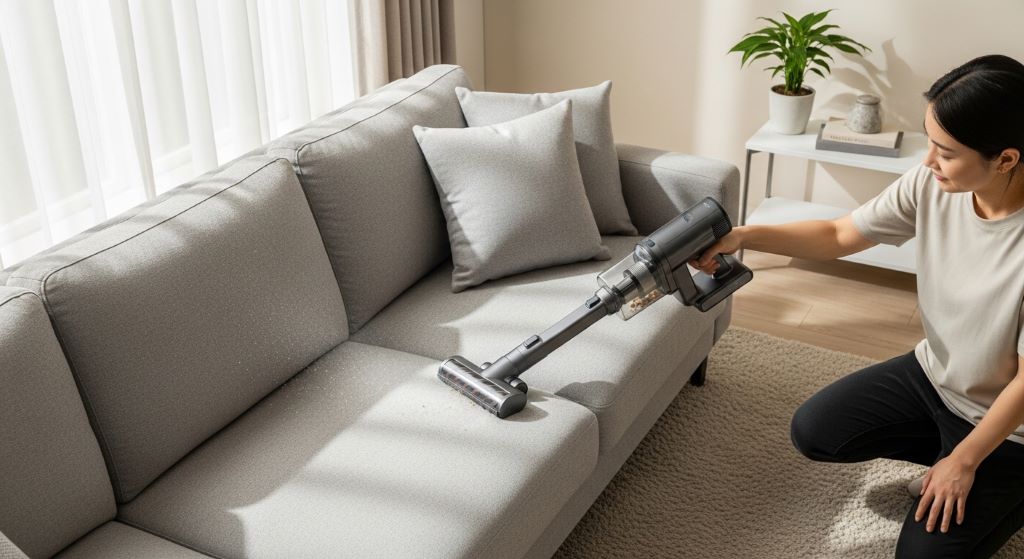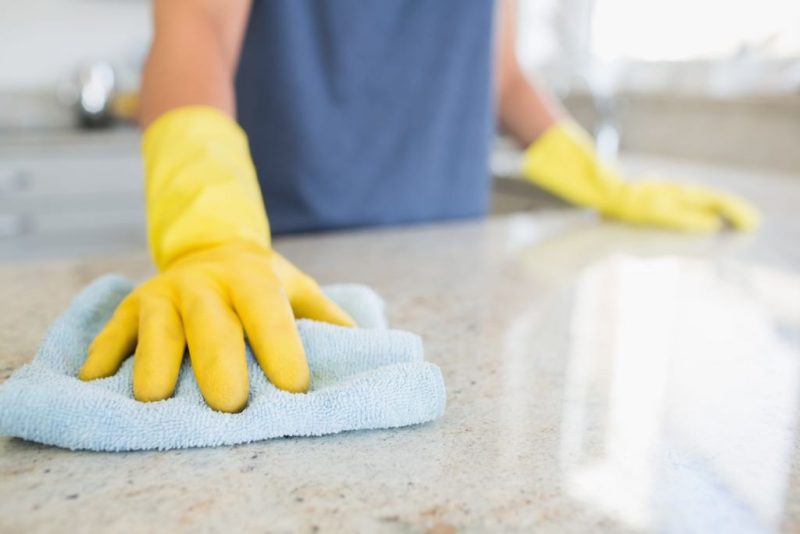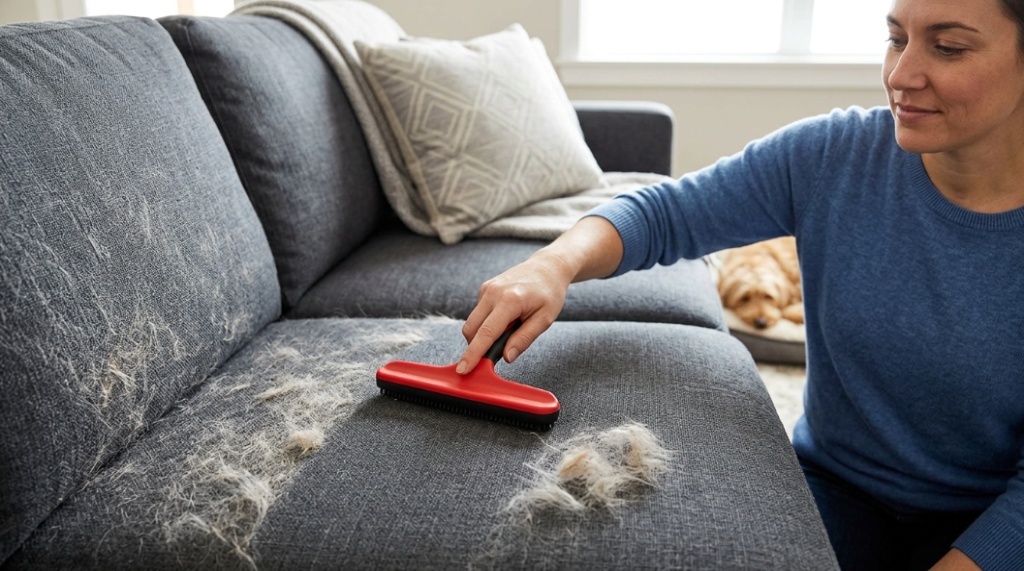
The safest way to remove pet hair from a sofa without damaging fabric is to use a lint roller, rubber glove, or upholstery-safe vacuum attachment first, then follow with a damp microfiber cloth for residue. These methods lift embedded fur without pulling fibers, fading upholstery, or weakening stitching.
Why Is Pet Hair So Hard to Remove from Sofas?
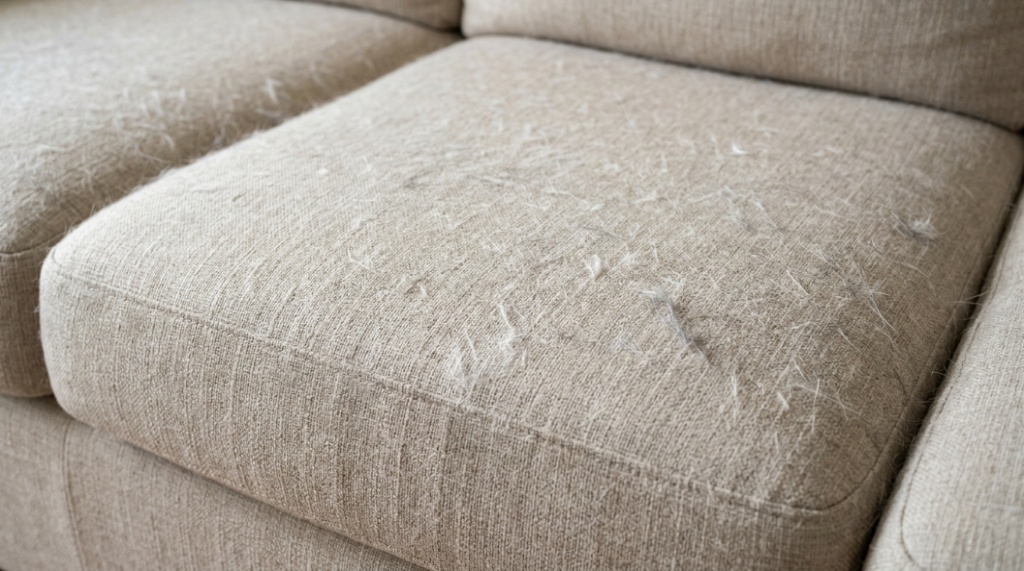
Pet hair sticks to sofas because upholstery fibers create static electricity that traps loose fur deep inside the fabric. The longer it sits, the harder it becomes to remove—and aggressive cleaning can permanently damage upholstery.
If you live with dogs or cats, you already know the problem. Hair builds up quickly on cushions, armrests, and seams. Brushing it off by hand rarely works. Worse, using the wrong tool—like stiff brushes or harsh scraping—can fray fabric or fade color. Many people accidentally shorten their sofa’s lifespan while trying to clean it.
Removing pet hair from a sofa safely means choosing low-friction tools that lift fur instead of pulling fibers. In this guide, you’ll learn practical, fabric-safe techniques that work on cotton, microfiber, leather, velvet, and synthetic upholstery—plus prevention strategies to reduce buildup long term.
What Is the Safest Way to Remove Pet Hair from a Sofa?
The safest method is using a rubber glove or microfiber cloth followed by a vacuum with an upholstery attachment.
Rubber creates static friction that pulls pet hair into clumps without stressing upholstery threads. A microfiber cloth captures remaining strands. Finish with a vacuum designed for upholstery to remove embedded fur from seams.
- Works on microfiber, cotton, polyester, and velvet
- Safe for delicate upholstery
- Removes surface and embedded hair
- Requires no chemicals
Professional cleaners often recommend this combination because it balances effectiveness with fabric protection.
Can a Vacuum Remove Pet Hair Without Damaging Upholstery?
Yes, a vacuum with a soft upholstery attachment safely removes pet hair if used with light pressure and slow passes.
According to cleaning equipment manufacturers like Shark and Dyson, upholstery tools with soft bristles prevent fiber pull while increasing suction efficiency on embedded fur.
Best vacuum technique for sofas
- Use low or medium suction settings
- Attach upholstery brush head
- Move in one direction
- Vacuum seams separately
- Avoid rotating brush bars on delicate fabric
Vacuuming weekly can reduce visible pet hair buildup by more than 70% compared to monthly cleaning routines.
Does a Rubber Glove Really Remove Pet Hair from Sofas?
Yes, slightly damp rubber gloves create static friction that lifts pet hair quickly from upholstery.
This method works especially well on microfiber sofas because the rubber surface gathers loose strands into easy-to-remove clusters.
How to use a rubber glove effectively
- Wear standard kitchen rubber gloves
- Lightly dampen fingertips
- Rub in one direction
- Collect hair into piles
- Dispose after each pass
This approach is widely recommended by professional upholstery cleaners because it avoids abrasive contact.
Is a Lint Roller Safe for Removing Pet Hair from Sofas?
Yes, lint rollers safely remove pet hair from most sofa fabrics without damaging fibers.
Lint rollers are especially effective for daily maintenance cleaning. Adhesive sheets lift loose fur from cushions before it embeds deeper into upholstery.
When lint rollers work best
- Light shedding situations
- Synthetic upholstery fabrics
- Armrests and seat edges
- Velvet surfaces
However, lint rollers are less effective on heavily embedded hair compared to rubber tools or vacuums.
Can Fabric Type Change How You Remove Pet Hair?
Yes, different upholstery materials require different cleaning approaches to avoid damage.
| Fabric Type | Best Method | Avoid |
|---|---|---|
| Microfiber | Rubber glove + vacuum | Hard brushes |
| Cotton | Lint roller | Excess moisture |
| Leather | Dry microfiber cloth | Vacuum brush rollers |
| Velvet | Soft lint roller | Scrubbing |
| Polyester blends | Vacuum attachment | Abrasive tools |
Matching cleaning tools to upholstery material prevents fading, pilling, and thread breakage.
Does a Damp Microfiber Cloth Remove Embedded Pet Hair?
Yes, a slightly damp microfiber cloth lifts remaining hair strands that vacuums leave behind.
Microfiber traps hair through electrostatic attraction. Unlike cotton cloths, it captures particles instead of spreading them across cushions.
Use gentle circular motions across the sofa surface, especially near seams and corners.
Is Using Tape a Good Emergency Solution for Pet Hair Removal?
Yes, household tape can remove pet hair temporarily when lint rollers are unavailable.
Wrap tape around your hand with adhesive facing outward. Press gently onto upholstery surfaces. This works well for quick cleanups before guests arrive.
However, repeated tape use may leave residue on delicate fabrics, so reserve it for occasional use.
Can Baking Soda Help Remove Pet Hair from Sofas?
Yes, baking soda loosens embedded pet hair and neutralizes odors before vacuuming.
Sprinkle a thin layer across cushions. Wait 10–15 minutes. Then vacuum thoroughly using an upholstery attachment.
This method works especially well for:
- Dog shedding seasons
- Multi-pet households
- Odor-prone sofas
- Deep-fabric upholstery
Veterinary hygiene studies suggest baking soda also helps reduce allergens trapped in upholstery fibers.
How Often Should You Remove Pet Hair from Your Sofa?
You should remove pet hair at least twice per week to prevent buildup and fabric wear.
Frequent removal stops hair from embedding into weave patterns. It also reduces allergens like pet dander, which affects nearly 10–20% of the global population.
Recommended cleaning schedule
- Daily: lint roller touch-ups
- Twice weekly: vacuum upholstery
- Weekly: microfiber wipe-down
- Monthly: deep cleaning session
This routine extends sofa lifespan and improves indoor air quality.
What Household Tools Remove Pet Hair Without Damaging Fabric?
The safest household tools include rubber gloves, microfiber cloths, lint rollers, tape, and upholstery vacuums.
- Rubber gloves create static lift
- Microfiber traps fine hair
- Lint rollers remove loose fur
- Tape works for quick fixes
- Vacuum attachments extract embedded hair
Avoid metal brushes or stiff bristles unless the manufacturer recommends them for your upholstery type.
How Can You Prevent Pet Hair from Sticking to Your Sofa?
Regular grooming, washable covers, and anti-static sprays reduce pet hair buildup significantly.
According to the American Kennel Club, brushing dogs 2–3 times weekly can reduce shedding inside the home by up to 60%.
Best prevention strategies
- Brush pets regularly
- Use throw blankets
- Apply fabric-safe anti-static spray
- Vacuum weekly
- Choose tightly woven upholstery
Prevention reduces cleaning time and protects upholstery fibers.
Are Pet Hair Removal Brushes Safe for Sofas?
Yes, silicone pet hair brushes are safe when used gently on upholstery surfaces.
Unlike stiff bristle brushes, silicone tools lift hair without snagging threads. Many upholstery-safe versions are designed specifically for fabric furniture.
Always test on a hidden area first to confirm compatibility.
Conclusion: What Is the Best Long-Term Strategy for Keeping Sofas Hair-Free?
The most effective long-term strategy combines weekly vacuuming, rubber-glove cleaning, and preventive grooming of pets.
Pet hair doesn’t have to ruin your furniture. When you match cleaning tools to upholstery type and remove hair regularly, sofas stay cleaner longer and fabrics last years beyond their expected lifespan.
Start with the rubber glove method today. Add vacuum maintenance twice weekly. Then introduce prevention habits like washable throws and grooming routines. Small changes create noticeable results fast.
If pet hair is a daily challenge in your home, build a simple cleaning routine using the methods above and protect your upholstery investment long term.
FAQ: How to Remove Pet Hair from Sofa Without Damaging Fabric
What removes pet hair from a couch the fastest?
A lint roller removes surface-level pet hair fastest, while a rubber glove works best for embedded strands.
Can I use a steam cleaner to remove pet hair from a sofa?
Steam cleaners loosen trapped hair but should only be used on upholstery labeled steam-safe.
Does vinegar help remove pet hair from sofas?
Vinegar reduces static buildup but works best combined with microfiber wiping rather than used alone.
How do I remove pet hair from sofa seams?
Use a vacuum crevice attachment followed by a rubber glove to pull remaining hair from tight stitching areas.
Is a pumice stone safe for removing pet hair from upholstery?
Pumice stones can damage fabric and should only be used on heavy-duty upholstery like carpets.
Why does pet hair stick more to microfiber sofas?
Microfiber creates static electricity that attracts loose fur more strongly than smooth fabrics.
Can dryer sheets help remove pet hair from furniture?
Yes, dryer sheets reduce static and help loosen hair before vacuuming.
Read More Also: Solar panel blanket created by schoolgirl
Discover More: Ways to Implementing Modern House Interior Color Schemes