Sleep quality directly affects your health, mood, and daily performance. Yet many people struggle to achieve restful sleep due to dry air in their homes. Low humidity causes irritated sinuses, dry skin, and respiratory discomfort that disrupts sleep throughout the night. Adding moisture to your sleeping environment can resolve these issues and improve your rest significantly.
However, not all humidity-adding devices are created equal. Some models produce distracting sounds that defeat their purpose entirely. The whirring, bubbling, or humming noises can keep you awake or cause frequent nighttime disturbances. Therefore, selecting the right device requires careful consideration of noise levels alongside other important features.
Finding a unit that operates quietly while effectively moisturizing your air transforms your sleep experience. This guide will help you navigate the selection process and identify the perfect device for peaceful, comfortable nights.
Understanding How Noise Affects Sleep Quality
Sound sensitivity varies considerably between individuals. What one person finds soothing might disturb another’s rest completely. Research shows that even low-level noise can fragment sleep patterns and reduce sleep quality. Your brain continues processing sounds throughout the night, even when you’re not consciously aware of them.
Sudden sounds or irregular patterns prove most disruptive to sleep. Consistent, predictable sounds like white noise can actually help some people sleep better. However, mechanical sounds from appliances typically fall into the disruptive category. These include clicking, gurgling, or fluctuating fan noises.
Decibel levels provide a measurable way to compare device volumes. Normal breathing measures around 10 decibels, while whispers reach approximately 30 decibels. Most experts recommend keeping bedroom noise below 40 decibels for optimal sleep. Understanding these measurements helps you evaluate product specifications accurately.
Additionally, noise tolerance changes throughout different sleep stages. Light sleep stages make you more vulnerable to disturbances. Deep sleep provides some protection, but loud or sudden sounds can still wake you. REM sleep falls somewhere in between regarding sound sensitivity.
Personal factors also influence noise tolerance. Age, hearing sensitivity, and stress levels all play roles. Furthermore, people who live in noisy urban areas may adapt differently than those from quiet rural settings. Consider your individual circumstances when evaluating acceptable noise levels.
Types of Humidifiers and Their Noise Profiles
Different humidifier technologies produce varying noise levels. Understanding these distinctions helps narrow your options effectively. Each type has unique characteristics that affect both performance and sound output.
Evaporative humidifiers use fans to blow air through wet wicks or filters. The fan creates most of the noise these units produce. However, modern designs have significantly reduced this sound through improved motor technology. These models tend to be moderately priced and energy-efficient.
Ultrasonic humidifiers use high-frequency vibrations to create mist. These vibrations occur above human hearing range, making them naturally quieter. Additionally, they lack fans entirely, eliminating that noise source. Many people consider ultrasonic models the quietest option available. They work efficiently and often include useful features like adjustable mist settings.
Steam vaporizers boil water to create steam. The heating element and bubbling water can produce noticeable sounds. Moreover, the fan that disperses steam adds another noise layer. While effective at killing bacteria, these units typically rank as the loudest option.
Impeller humidifiers use rotating disks to fling water at diffusers. This creates a fine mist similar to ultrasonic models. The rotating mechanism produces some sound, though generally less than evaporative fans. These models fall in the middle range for noise levels.
Cool mist versus warm mist technologies also affect sound production. Warm mist requires heating elements that can create gurgling or bubbling sounds. Cool mist options eliminate heating-related noises entirely. Therefore, cool mist models generally operate more quietly.
Key Features That Reduce Operational Noise
Several design elements contribute to quieter operation. Identifying these features helps you select truly quiet models. Manufacturers employ various strategies to minimize sound production.
Motor quality significantly impacts noise levels. Premium motors run smoother and quieter than budget alternatives. Additionally, properly balanced motors reduce vibration that creates sound. Look for products that specifically mention quiet motor technology.
Insulation and housing design contain sound effectively. Thick, well-designed casings prevent sound from escaping the unit. Furthermore, vibration-dampening materials absorb operational noise. Higher-quality units typically incorporate these sound-reducing features.
Tank design affects water-related sounds considerably. Tanks that minimize water movement reduce sloshing and gurgling. Additionally, smooth water flow prevents bubbling noises. Well-engineered tanks maintain consistent water levels quietly.
Fan blade design determines airflow noise in relevant models. Optimized blade shapes move air efficiently with minimal turbulence. Moreover, slower fan speeds naturally produce less sound. Variable speed settings let you balance output with noise levels.
Electronic controls operate more quietly than mechanical alternatives. Digital interfaces eliminate clicking switches and turning knobs. Touch controls provide silent operation for adjusting settings. These conveniences enhance the overall quiet experience.
Evaluating Decibel Ratings and Specifications
Product specifications provide valuable information for comparing models. However, understanding how to interpret these numbers proves essential. Marketing claims sometimes exaggerate actual performance, requiring careful evaluation.
Decibel ratings should be clearly stated in product descriptions. Look for specific numbers rather than vague claims like “whisper-quiet.” Additionally, check whether ratings apply to the lowest or highest settings. Some manufacturers only list the quietest possible operation level.
Testing conditions affect measured noise levels significantly. Laboratory testing in soundproof rooms produces lower numbers than real-world use. Furthermore, distance from the device changes perceived volume. Specifications should indicate measurement distance for accuracy.
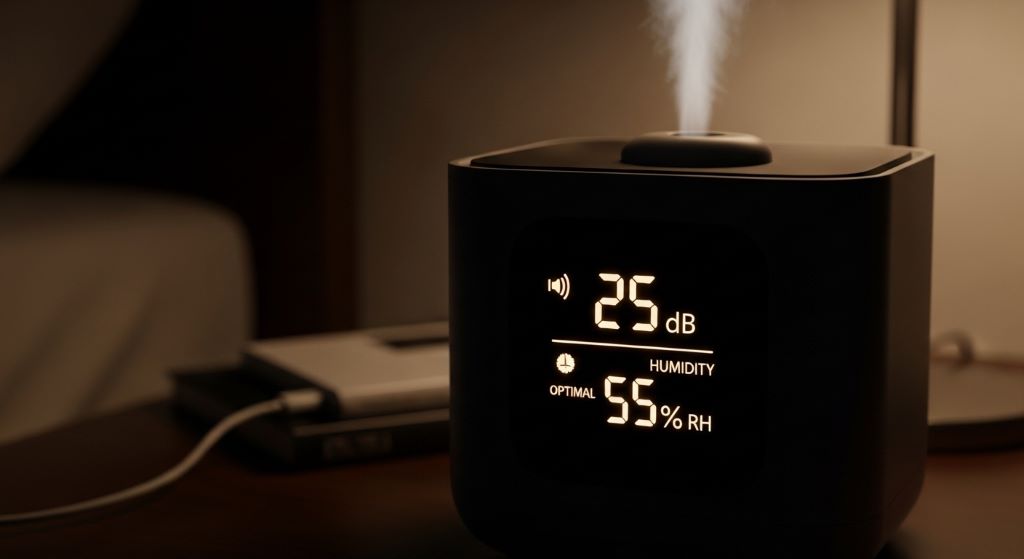
Comparative ratings help contextualize decibel numbers. Knowing that 25 decibels equals a quiet library helps you visualize the sound level. Similarly, understanding that 40 decibels resembles a refrigerator hum provides useful reference points. These comparisons make abstract numbers more meaningful.
Customer reviews offer real-world noise assessments. Multiple reviews mentioning quiet operation confirm manufacturer claims. Conversely, complaints about unexpected noise suggest specification inaccuracies. Pay special attention to reviews from light sleepers or noise-sensitive individuals.
Independent testing results provide unbiased performance data. Consumer advocacy organizations sometimes test appliances for noise levels. These third-party evaluations eliminate manufacturer bias. Seek out these resources when available for your shortlisted models.
Size Considerations for Bedroom Use
Room size directly affects humidifier performance and appropriate model selection. Matching capacity to your space ensures effective operation without excessive noise. Oversized units may run too powerfully, while undersized ones struggle inefficiently.
Calculate your bedroom’s square footage before shopping. Measure length and width, then multiply for total area. Manufacturers specify coverage areas for their products. Choose a model rated for slightly more than your actual space.
Ceiling height also impacts capacity requirements. Standard calculations assume eight-foot ceilings. Taller ceilings increase room volume and require more powerful units. Adjust your capacity needs accordingly for non-standard ceiling heights.
Placement flexibility depends partly on unit size. Smaller devices fit easily on nightstands or dressers. Larger models may require floor placement. Consider available space in your bedroom when selecting size.
Output capacity determines how quickly humidity levels rise. Higher output helps achieve desired humidity faster. However, this often correlates with louder operation. Balance your need for speed with noise tolerance.
Tank size affects runtime between refills. Larger tanks mean fewer interruptions but add weight and bulk. Smaller tanks require more frequent filling but offer better portability. Determine which factor matters more for your situation.
Additional Features That Enhance Bedroom Comfort
Modern humidifiers include various features beyond basic moisture production. These additions can significantly improve your sleep environment. However, they also affect price, complexity, and sometimes noise levels.
Humidistats measure and maintain target humidity levels automatically. This prevents over-humidification that creates stuffiness or condensation. Additionally, automatic shut-off when reaching desired levels saves energy. These features promote optimal bedroom comfort throughout the night.
Timers allow scheduled operation that matches your sleep schedule. Set the unit to start before bedtime and stop after you wake. This conserves water and energy while ensuring comfort when needed. Furthermore, timers prevent running the device when you’re away.
Night lights provide gentle illumination for nighttime navigation. However, bright displays can disrupt sleep for some people. Look for models with dimmable or turn-off-able lights. This customization accommodates different light sensitivity levels.
Aromatherapy capabilities let you add essential oils for enhanced relaxation. Pleasant scents can promote better sleep and create a spa-like atmosphere. However, ensure the unit is specifically designed for oils. Using oils in incompatible models causes damage and voiding warranties.
Remote controls enable adjustments without leaving bed. This convenience proves especially valuable during cold nights. Additionally, smart home integration allows voice control through digital assistants. These modern features add significant convenience to daily use.
Filter indicators remind you when maintenance is due. Clean filters ensure efficient, quiet operation over time. Moreover, they prevent reduced performance that might cause the unit to work harder and louder. Regular filter changes maintain optimal function.
Maintenance Requirements for Long-Term Quiet Operation
Proper maintenance preserves quiet operation throughout the device’s lifespan. Neglected units become progressively louder and less efficient. Following manufacturer guidelines prevents premature wear and performance degradation.
Daily maintenance typically involves refilling the water tank. Use distilled or filtered water to minimize mineral buildup. Tap water contains minerals that accumulate and create noise-producing deposits. Additionally, these deposits reduce efficiency and can damage components.
Weekly cleaning prevents bacterial and mold growth. Empty the tank completely and rinse with clean water. Wipe all surfaces accessible during refilling. This simple routine maintains hygiene and prevents odors.
Deep cleaning should occur every one to two weeks. Use vinegar or manufacturer-recommended solutions to remove mineral deposits. Soak removable parts according to instructions. Thorough cleaning ensures all components function smoothly and quietly.
Filter replacement schedules vary by model and usage. Most filters need changing every one to three months. Clogged filters force the unit to work harder, increasing noise levels. Therefore, timely replacement maintains quiet operation and efficiency.
Off-season storage requires proper preparation. Clean and dry all components thoroughly before storing. Empty tanks completely to prevent mold growth. Store in a cool, dry location protected from dust. Proper storage ensures the unit operates quietly when needed again.
Budget Considerations and Value Assessment
Price ranges for humidifiers vary dramatically based on features and quality. Understanding what drives costs helps you make informed decisions. The cheapest option rarely provides the best long-term value, especially for sleep quality.
Entry-level models typically cost between twenty and forty dollars. These basic units provide humidity but often lack advanced features. Additionally, they may produce more noise than premium alternatives. However, they work adequately for occasional use or small spaces.
Mid-range options fall between fifty and one hundred dollars. These models usually include better motors, larger tanks, and useful features. Furthermore, they tend to operate more quietly than budget alternatives. This price range offers good value for most users.
Premium humidifiers exceed one hundred dollars and can reach several hundred. These units feature advanced technologies, superior materials, and extensive features. Moreover, they typically provide the quietest operation available. For people prioritizing sleep quality, this investment often proves worthwhile.
Operating costs extend beyond initial purchase price. Energy consumption varies between models and affects monthly utility bills. Additionally, filter replacements and cleaning supplies add ongoing expenses. Calculate total ownership costs over the expected lifespan.
Warranty coverage indicates manufacturer confidence and protects your investment. Longer warranties suggest better build quality and durability. Furthermore, good warranties provide peace of mind and potential cost savings. Consider warranty terms alongside purchase price.
Health Benefits of Proper Bedroom Humidity
Maintaining appropriate humidity levels provides numerous health advantages. These benefits extend beyond simple comfort, affecting various aspects of wellness. Understanding these impacts motivates investing in quality humidity control.
Respiratory health improves significantly with optimal humidity. Dry air irritates nasal passages and throat tissues. This irritation causes discomfort and increases susceptibility to infections. Conversely, properly humidified air keeps mucous membranes healthy and functional.
Skin and hair benefit from adequate moisture levels. Low humidity draws moisture from skin, causing dryness and irritation. Hair becomes brittle and prone to breakage in dry conditions. Therefore, humidified air helps maintain healthy skin and hair naturally.
Allergy and asthma symptoms often improve with proper humidity. Extremely dry air can trigger respiratory issues and worsen existing conditions. However, excessive humidity encourages dust mites and mold growth. Finding the right balance proves crucial for respiratory health.
Sleep quality improves when breathing remains comfortable throughout the night. Dry air causes snoring, mouth breathing, and nighttime coughing. These disturbances fragment sleep and reduce rest quality. Silent humidifier operation solves this problem without creating new disturbances.
Virus transmission potentially decreases in properly humidified environments. Research suggests moderate humidity levels help airborne viruses settle faster. Additionally, healthy mucous membranes provide better defense against infections. These factors may reduce illness frequency.
Troubleshooting Common Noise Issues
Even quality humidifiers sometimes develop noise problems over time. Identifying and addressing these issues restores quiet operation. Many common problems have simple solutions that don’t require professional service.
Gurgling sounds usually indicate water flow issues. Check that the tank sits properly on the base. Additionally, ensure the tank cap seals correctly. Improperly seated components allow air bubbles that create gurgling noises.
Rattling or vibrating noises suggest loose parts or uneven placement. Verify the unit sits on a level, stable surface. Tighten any accessible screws or connections. Furthermore, ensure the tank is fully seated and locked into position.
Whistling sounds often result from restricted airflow. Check that all vents remain unobstructed by furniture or walls. Clean or replace filters if clogged. Additionally, verify that all covers and panels fit securely.
Grinding noises indicate mechanical problems requiring attention. This might signal motor issues or mineral buildup on moving parts. Deep clean the unit following manufacturer instructions. If grinding persists, contact customer service or consider replacement.
Increased noise over time suggests maintenance neglect. Mineral deposits accumulate on components, causing friction and resistance. Implement a thorough cleaning routine to restore quiet operation. Regular maintenance prevents most progressive noise issues.
Making the Final Selection Decision
Choosing the perfect humidifier requires balancing multiple factors. No single model suits everyone’s needs perfectly. Prioritizing your specific requirements leads to the most satisfying choice.
Create a checklist of must-have features before shopping. Include room size coverage, maximum acceptable noise level, and budget constraints. Additionally, note desired extras like humidistats or timers. This organized approach prevents impulse purchases.
Research specific models that meet your criteria. Read professional reviews from reputable sources. Moreover, examine customer feedback across multiple platforms. Look for consistent patterns in both praise and complaints.
Compare specifications side-by-side for top contenders. Note differences in decibel ratings, tank capacity, and coverage area. Additionally, consider warranty terms and brand reputation. This systematic comparison reveals the best value.
Consider trying models with good return policies. Some retailers allow returns within thirty days. This lets you test actual noise levels in your bedroom environment. Real-world testing provides certainty that specifications alone cannot offer.
Trust your research but remain realistic about expectations. Even the quietest models produce some sound. However, finding a device that operates below your disturbance threshold ensures bedroom comfort and better sleep quality.
Conclusion
Selecting a quiet humidifier significantly improves sleep quality and overall bedroom comfort. Dry air causes numerous problems that disrupt rest and affect health. The right humidity-adding device solves these issues without creating new disturbances through excessive noise.
Understanding different humidifier types helps identify naturally quieter options. Ultrasonic models typically operate most quietly, while steam vaporizers tend toward louder operation. Additionally, specific features like quality motors and sound-dampening design reduce operational noise significantly.
Proper sizing ensures effective performance without overworking the unit. Matching capacity to your room prevents excessive runtime and associated noise. Furthermore, appropriate humidity levels provide maximum health benefits without over-humidification problems.
Maintenance plays a crucial role in long-term quiet operation. Regular cleaning prevents mineral buildup that increases noise levels. Additionally, timely filter replacement maintains efficiency and quiet performance throughout the device’s lifespan.
Investing in quality equipment pays dividends through better sleep and improved health. While premium models cost more initially, they provide superior quiet operation and durability. Consider total value rather than just purchase price when making your final decision.
Frequently Asked Questions
What humidity level is best for sleeping comfort?
Most sleep experts recommend maintaining bedroom humidity between 30 and 50 percent. This range keeps air comfortable without feeling damp or stuffy. Levels below 30 percent cause dryness that irritates respiratory passages and skin. Conversely, humidity above 50 percent promotes mold growth and dust mites. A hygrometer measures your room’s current humidity level accurately and costs very little.
How often should I clean my bedroom humidifier?
Empty and rinse the water tank daily to prevent bacterial growth. Perform a thorough cleaning with vinegar or specialized cleaner every one to two weeks. Replace filters according to manufacturer recommendations, typically every one to three months. This maintenance schedule ensures hygienic operation and prevents mineral buildup that increases noise. Neglecting cleaning allows bacteria and mold to develop, creating health risks.
Can I use tap water in my humidifier?
While tap water works in most humidifiers, distilled water is strongly recommended. Tap water contains minerals that accumulate as white dust on furniture and create deposits in the unit. These mineral deposits reduce efficiency, increase noise levels, and shorten device lifespan. Distilled water costs more initially but saves money by extending equipment life and reducing cleaning frequency.
Will a humidifier make my bedroom feel cold?
Cool mist humidifiers may create a slight cooling sensation initially. However, proper humidity actually helps your body retain heat more efficiently. Additionally, humidified air feels warmer at the same temperature as dry air. Warm mist models actively add heat to your room. Choose based on your climate and personal temperature preferences for maximum comfort.
How close to my bed should I place the humidifier?
Position the humidifier at least three feet from your bed for optimal performance. This distance prevents excessive moisture from settling on bedding while allowing even distribution throughout the room. Place the unit on a water-resistant surface away from walls and furniture. Additionally, ensure good air circulation around all sides of the device for best results and quietest operation.
Related Topics: