Choosing the right microwave for your kitchen involves more than picking the first model that fits your budget. Modern kitchens demand appliances that blend seamlessly with your décor while delivering reliable performance for daily cooking tasks. The countertop microwave market has evolved significantly, offering features and designs that cater to both aesthetic preferences and practical needs.
Today’s consumers face an overwhelming array of options when shopping for kitchen appliances. Understanding what separates a mediocre microwave from an exceptional one helps you make an informed decision. This guide walks you through everything you need to know about selecting a countertop microwave that enhances both the functionality and appearance of your kitchen.
Whether you’re replacing an old unit or furnishing a new home, the right microwave can transform your cooking experience. From quick reheating to sophisticated cooking programs, these appliances have become indispensable tools in contemporary kitchens. Let’s explore how to find the perfect balance between style and performance.
Understanding Your Kitchen Needs
Before diving into specific features and models, take time to assess your actual requirements. Different households have vastly different microwave usage patterns. A busy family with children will have different needs than a single professional or a couple who rarely cook at home.
Consider how often you use a microwave and for what purposes. Some people rely heavily on their microwave for daily meal preparation, while others use it occasionally for reheating beverages or leftovers. Your usage patterns directly influence which features matter most.
Space constraints play a crucial role in your decision. Measure the area where you plan to place your new microwave, including height clearance and depth. Remember that microwaves need ventilation space around them to function properly. Additionally, ensure you have a nearby outlet that can handle the appliance’s power requirements.
Think about your cooking habits and preferences. If you frequently prepare frozen meals or use preset cooking functions, you’ll want a model with comprehensive programming options. Conversely, if you mainly reheat coffee and warm up leftovers, simpler controls might better suit your needs.
Size and Capacity Considerations
Microwave capacity is measured in cubic feet, and this measurement directly affects what you can fit inside. Compact kitchen appliances typically range from 0.5 to 2.2 cubic feet for countertop models. The size you choose should align with your cooking needs and available counter space.
Smaller microwaves, around 0.7 to 1.0 cubic feet, work well for individuals or couples. They handle standard coffee mugs, dinner plates, and small bowls easily. These models take up minimal counter space, making them ideal for apartments, dorm rooms, or offices.
Mid-size options between 1.1 and 1.6 cubic feet accommodate most family needs. You can fit larger dinner plates, casserole dishes, and standard-size microwave popcorn bags. These models strike a good balance between capacity and counter space usage.
Larger microwaves exceeding 1.7 cubic feet suit families or serious home cooks. They can handle multiple plates simultaneously, large serving dishes, and even some small whole chickens. However, they require significant counter space and consume more energy.
Interior turntable diameter matters as much as total capacity. A spacious interior with a small turntable still limits what dishes you can use. Check the turntable size if you frequently use large square or rectangular dishes.
Power Output and Cooking Performance
Wattage determines how quickly and evenly your microwave cooks food. Most countertop models range from 600 to 1,200 watts. Higher wattage generally means faster cooking times and more even heating.
Microwaves with 700 to 900 watts handle basic reheating tasks adequately. They work fine for warming beverages, defrosting small items, and heating pre-cooked meals. However, they may struggle with cooking raw ingredients or larger portions.
Models offering 1,000 to 1,200 watts provide superior performance. They heat food more quickly and evenly, reducing cold spots and improving texture. These higher-powered units excel at defrosting, cooking frozen meals, and even some light cooking tasks.
Consider that higher wattage means higher energy consumption. If you use your microwave frequently throughout the day, this can impact your electricity bill. Balance your performance needs against energy efficiency concerns.
Power levels adjustment capability adds versatility. Good microwaves offer multiple power settings, letting you use lower power for delicate tasks like melting butter or higher power for quick reheating. This flexibility improves cooking results across various foods.
Design and Aesthetic Appeal
The appearance of your microwave matters because it occupies prominent counter space. A stainless steel microwave has become increasingly popular due to its sleek, professional appearance and durability. This finish complements most kitchen styles, from traditional to contemporary.
However, stainless steel isn’t your only option. Black stainless finishes offer a modern twist with better fingerprint resistance. White or cream models create a clean, classic look. Black finishes provide a bold statement and hide smudges well.
Consider how the microwave’s design coordinates with your other appliances. Matching finishes create a cohesive, intentional appearance. Many manufacturers offer appliance suites with consistent styling across different products.
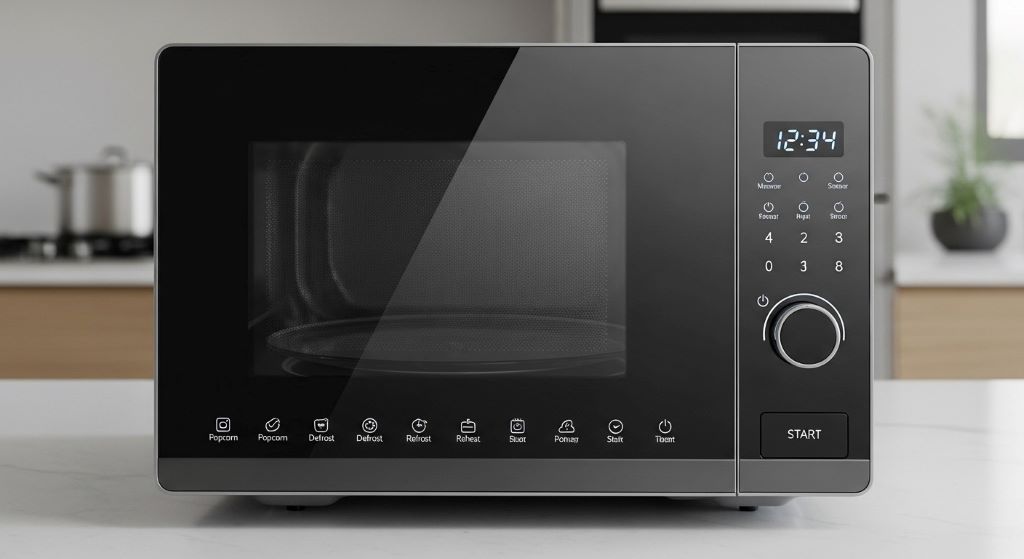
Control panel design affects both aesthetics and usability. Some microwaves feature sleek touch controls that blend into the door, while others have traditional button panels. Touch controls look modern but can be harder to clean. Dial controls offer tactile feedback and often prove more intuitive.
Handle style and door opening mechanism influence the overall look. Traditional pull handles are easy to use but protrude from the cabinet. Push-button releases create a streamlined appearance. Some models feature handles that double as design elements.
Essential Features for Daily Use
Modern microwave ovens come packed with features that enhance convenience and cooking results. Understanding which features you’ll actually use prevents paying for unnecessary extras.
Pre-programmed settings automate cooking for common foods like popcorn, pizza, beverages, and frozen vegetables. These one-touch options save time and guesswork. Quality microwaves include sensor cooking that adjusts time and power based on steam released from food.
Defrost functions have improved significantly in recent years. Weight-based defrosting calculates the right time and power level based on food weight. This feature prevents partially cooked edges while the center remains frozen.
Quick-start or add-30-seconds buttons let you instantly start the microwave at full power. This convenience feature is perfect for those quick reheating tasks when you don’t want to program specific times.
Child safety locks prevent curious youngsters from operating the microwave unsupervised. This essential safety feature gives parents peace of mind in homes with small children.
Interior lighting quality varies between models. Bright, even lighting helps you monitor cooking progress without opening the door. LED lights last longer and provide better illumination than traditional bulbs.
Smart Technology Integration
Technology has transformed how we interact with kitchen appliances. Many 2026 microwaves feature connectivity options that enhance convenience and control.
Wi-Fi enabled microwaves connect to your home network, allowing remote operation through smartphone apps. You can start, stop, or adjust cooking from anywhere in your home. This feature proves useful when multitasking or when you want to time cooking precisely.
Voice control integration with platforms like Alexa or Google Assistant adds hands-free convenience. You can start the microwave, set timers, or adjust power levels using voice commands while your hands are busy with other tasks.
Recipe integration sends cooking instructions directly to your microwave. Some apps suggest recipes based on ingredients you have, then automatically program the correct settings. This technology helps less experienced cooks achieve better results.
However, smart features add to the purchase price. Evaluate whether you’ll actually use these capabilities before paying extra for them. A well-designed traditional microwave often serves most households perfectly well.
Firmware updates keep smart microwaves current with the latest features and improvements. Manufacturers can fix bugs, add functions, or improve performance without requiring a new purchase.
Energy Efficiency and Operating Costs
Energy efficiency affects both environmental impact and operating expenses. While microwaves generally use less energy than conventional ovens, efficiency still varies between models.
Energy Star certification indicates a microwave meets specific efficiency standards. These models use less standby power and operate more efficiently during cooking. The savings may seem small per use but accumulate significantly over years of operation.
Standby power consumption, also called phantom power, occurs when the microwave is plugged in but not actively cooking. Digital displays and clocks draw continuous power. Energy-efficient models minimize this drain through better design.
Inverter technology provides more consistent power delivery compared to traditional transformers. This innovation improves cooking results while reducing energy waste. Inverter microwaves maintain steady power levels rather than cycling on and off.
Timer accuracy and automatic shutoff features prevent energy waste from forgotten cooking sessions. Quality microwaves turn off promptly when cooking completes and alert you with clear signals.
Consider the microwave’s expected lifespan when evaluating energy costs. A slightly more expensive but more efficient model often costs less over its lifetime than a cheaper, energy-hungry alternative.
Ease of Cleaning and Maintenance
Microwave interiors get dirty quickly from splatters and spills. Choosing a model that’s easy to clean saves time and frustration.
Interior coatings make a significant difference. Smooth, non-porous surfaces resist staining and allow easy wiping. Some microwaves feature special coatings that resist fingerprints and make cleaning almost effortless.
Removable turntables and support rings simplify cleaning. Being able to take these components to the sink or dishwasher is much easier than wiping them in place. Check that replacement parts are readily available if something breaks.
Fingerprint-resistant exteriors maintain a clean appearance with minimal effort. This feature particularly matters for stainless steel and dark-colored finishes that otherwise show every touch.
Grease filters in over-the-range microwaves require regular cleaning, but countertop models generally need less maintenance. However, ventilation grilles should be kept clear of dust for optimal performance.
Flatbed microwaves without turntables offer more interior space and easier cleaning. These models use different technology to distribute microwave energy evenly without rotation.
Safety Features and Certifications
Safety should never be compromised when selecting any kitchen appliance. Reputable microwaves include multiple safety features and certifications.
Door interlock systems prevent the microwave from operating when the door is open. This essential safety feature protects against exposure to microwave radiation. Quality models use multiple interlocks for redundancy.
Thermal cutoffs prevent overheating that could lead to fires. These automatic shutoffs activate if the microwave’s internal temperature exceeds safe limits.
UL or ETL certification indicates the microwave has been tested and meets recognized safety standards. These independent certifications provide assurance that the product is safe for home use.
Ventilation requirements ensure safe operation. Countertop microwaves need clearance around them for heat dissipation. Check manufacturer specifications for required spacing.
Cord length and placement affect safety and convenience. The cord should reach your outlet without stretching or creating a tripping hazard. Some models feature cord storage to keep excess length tidy.
Budget Considerations and Value
Microwave prices range from under one hundred dollars to over five hundred for premium models. Understanding what you get at different price points helps you find the best value for your needs.
Budget models under 150 dollars provide basic functionality. They handle simple reheating and defrosting adequately but may lack advanced features, have lower build quality, and shorter lifespans. These work fine for light users or temporary situations.
Mid-range options between 150 and 300 dollars offer the best value for most households. They include useful features like sensor cooking, inverter technology, and attractive finishes. Build quality typically ensures several years of reliable service.
Premium microwaves exceeding 300 dollars deliver exceptional performance, advanced features, and superior aesthetics. They’re built to last and often include extended warranties. Consider these if you use your microwave extensively or want cutting-edge technology.
Warranty coverage provides important protection for your investment. Better microwaves typically include longer warranties and better customer service. Read warranty terms carefully to understand what’s covered.
Long-term value considers purchase price, operating costs, lifespan, and reliability. A slightly more expensive microwave that lasts twice as long and costs less to operate often proves more economical than a cheap model requiring frequent replacement.
Brand Reputation and Reliability
Brand selection significantly influences your ownership experience. Established manufacturers with good reputations typically deliver better products and support.
Research customer reviews focusing on long-term reliability rather than just initial impressions. Look for patterns in complaints or praise across multiple sources. Pay attention to how companies respond to problems.
Availability of replacement parts matters if something breaks outside the warranty period. Major brands typically stock parts longer and have more service centers. This availability can extend your microwave’s useful life significantly.
Customer service quality varies dramatically between manufacturers. Good companies make warranty claims easy and respond promptly to questions. Poor service can turn a minor issue into a major headache.
Manufacturing origin sometimes indicates quality levels, though this isn’t always reliable. Many reputable brands manufacture in multiple countries. Focus on the company’s quality control reputation rather than production location.
Installation and Placement Tips
Proper installation ensures optimal performance and safety. Even countertop microwaves require careful positioning.
Ventilation clearances specified by the manufacturer must be maintained. Typically, you need several inches of space on the sides and back, plus clearance above the unit. Restricted airflow causes overheating and reduces lifespan.
Counter surface should be level and sturdy enough to support the microwave’s weight when loaded. Uneven placement can cause the turntable to malfunction or create excessive noise.
Proximity to water sources requires consideration. While microwaves shouldn’t be placed where they could get splashed frequently, having them near the sink for convenient food preparation proves practical.
Electrical outlet location influences placement options. Microwaves draw significant power and require grounded outlets. Avoid using extension cords, which can create fire hazards with high-wattage appliances.
Height placement affects usability. The microwave should be at a comfortable level for loading and unloading hot dishes safely. This consideration is especially important for households with children or elderly members.
Testing Before Purchase
Whenever possible, examine microwaves in person before buying. Online shopping offers convenience, but seeing the actual product reveals details photos miss.
Door operation should feel smooth and solid. Flimsy doors suggest overall build quality issues. The door should close securely with a satisfying click.
Control responsiveness indicates quality. Press buttons or test touch controls to ensure they register inputs reliably. Sticky or unresponsive controls become frustrating quickly.
Interior examination reveals build quality. Look for smooth welds, even coating application, and sturdy construction. The turntable should rotate smoothly without wobbling.
Noise level during operation varies between models. If possible, listen to the microwave running. Excessive noise can be annoying in open-plan kitchens or during early morning or late evening use.
Display readability from different angles and lighting conditions affects daily usability. Make sure you can easily read the display from normal standing positions.
Conclusion
Finding the best countertop microwave for 2026 requires balancing style preferences with performance needs. The market offers extensive choices across all price ranges, from basic compact kitchen appliances to feature-rich smart models. A stainless steel microwave remains a popular choice for its durability and timeless appearance, though many other attractive finishes are available.
Focus on the features you’ll actually use rather than being swayed by impressive specifications you don’t need. Consider size, power output, ease of cleaning, and safety features as fundamental criteria. Modern microwave ovens deliver impressive performance, making it possible to find excellent options at various price points.
Remember that the best microwave for you depends on your specific situation. A small household with limited counter space has different requirements than a large family with ample kitchen real estate. Take time to assess your needs honestly before shopping.
Research brands, read reviews, and examine products in person when possible. Your microwave will likely serve you for many years, making it worth the effort to choose wisely. By following the guidance in this article, you’ll find a countertop microwave that enhances both your kitchen’s appearance and your daily cooking experience.
Invest in quality, prioritize the features that matter to you, and don’t overlook practical considerations like warranty coverage and customer service. With careful selection, your new microwave will prove to be a valuable kitchen companion for years to come.
Frequently Asked Questions
What size microwave is best for a family of four?
A microwave with 1.4 to 1.8 cubic feet capacity works well for most families of four. This size accommodates large dinner plates, casserole dishes, and multiple items simultaneously. Look for models with at least 1,000 watts of power to ensure efficient cooking and reheating. The turntable should be at least 12 inches in diameter to fit standard-size dishes comfortably.
Are inverter microwaves worth the extra cost?
Inverter technology provides more even cooking and better defrosting results compared to traditional microwaves. They maintain consistent power levels rather than cycling on and off, which improves food texture and reduces overcooked edges. If you frequently defrost meat, cook delicate foods, or use your microwave extensively, the investment typically proves worthwhile. However, for basic reheating tasks, a standard microwave performs adequately.
How long should a quality countertop microwave last?
A well-made countertop microwave should last seven to ten years with regular use and proper maintenance. Higher-end models often exceed this lifespan, while budget options may need replacement after five years. Factors affecting longevity include build quality, usage frequency, and maintenance habits. Regular cleaning and following manufacturer guidelines extends your microwave’s useful life significantly.
Do smart microwaves require a constant internet connection?
Smart microwaves function as regular microwaves without internet connectivity, but you lose remote control and app-based features. The basic cooking functions work normally offline. Once connected to Wi-Fi, you gain access to voice control, remote operation, recipe integration, and firmware updates. If your home internet is unreliable, consider whether the smart features justify the additional cost.
What’s the difference between stainless steel and black stainless finishes?
Traditional stainless steel offers a classic, professional appearance but shows fingerprints and smudges easily. Black stainless steel provides a modern, sophisticated look with significantly better fingerprint and smudge resistance. Black stainless requires less frequent cleaning to maintain its appearance. However, it costs more and may be harder to match with existing appliances unless you’re updating your entire kitchen suite.
Related Topics:
Ideas for keeping kitchen organised
Best Pasta Rollers Under $100: KitchenAid vs. Competitors