Garage door insulation is the process of adding thermal barriers to your garage door to reduce heat transfer, improve energy efficiency, and maintain a more stable indoor temperature. A properly insulated garage can lower energy bills, protect stored items, and make attached rooms more comfortable.
If your garage feels freezing in winter or extremely hot in summer, the garage door is often the main reason. Most standard metal garage doors have little or no insulation, allowing outside air to easily affect indoor temperatures.
According to the U.S. Department of Energy, air leaks and poor insulation can account for 25–30% of energy loss in homes with attached garages. This is why insulating a garage door is a simple upgrade with measurable benefits.
The good news is you don’t need expensive professional installation. With simple materials like foam boards, reflective insulation, or weather stripping, you can insulate your garage door on a budget while still improving thermal performance.
This guide explains affordable methods, tools you need, and step-by-step instructions so you can complete the job quickly and effectively.
Why Should You Insulate a Garage Door?
Quick answer: Insulating your garage door reduces heat transfer, lowers energy costs, minimizes noise, and improves overall comfort in the garage and nearby rooms.
Many homeowners overlook the garage door when thinking about insulation. However, garage doors are typically made of thin metal or wood panels, which offer minimal thermal resistance.
Key Benefits of Garage Door Insulation
- Improves temperature control in the garage
- Reduces heating and cooling costs
- Protects tools, vehicles, and stored items
- Minimizes outside noise
- Enhances overall home energy efficiency
Case studies from energy retrofit programs show that insulating garage doors can improve garage temperature stability by 10–20°F depending on climate. Homes with attached garages often see noticeable comfort improvements in rooms located above the garage.
What Are the Cheapest Ways to Insulate a Garage Door?
Quick answer: The most affordable garage door insulation options include foam board panels, reflective insulation kits, fiberglass batts, and weather stripping.
Each option varies in cost, installation difficulty, and insulation performance. Choosing the right one depends on your garage door type and budget.
Budget Garage Door Insulation Options
| Insulation Type | Average Cost | R-Value | Difficulty |
|---|---|---|---|
| Foam board insulation | $20–$50 | R-4 to R-6 | Easy |
| Reflective insulation | $30–$70 | R-3 to R-5 | Easy |
| Fiberglass batts | $40–$80 | R-8 to R-13 | Moderate |
| Garage door insulation kits | $50–$120 | R-6 to R-8 | Easy |
Foam board insulation is typically the best balance between cost, performance, and simplicity for DIY projects.
How Do You Insulate a Garage Door Using Foam Boards?
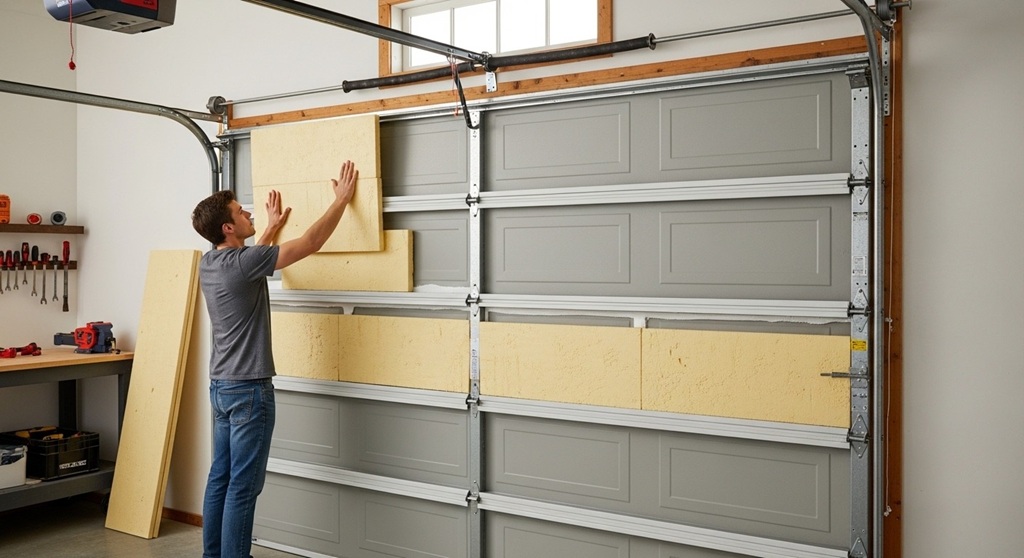
Quick answer: Measure the door panels, cut foam boards to size, secure them inside the panels, and seal edges with foil tape.
Tools and Materials Needed
- Foam board insulation panels
- Utility knife
- Measuring tape
- Foil insulation tape
- Adhesive or retaining clips
Step-by-Step Installation
1. Measure Each Door Panel
Most garage doors have rectangular panels. Measure each panel individually to ensure accurate foam board cuts.
2. Cut the Foam Board
Use a utility knife and straight edge to cut insulation boards slightly smaller than the panel opening.
3. Insert the Panels
Place the foam boards into the recessed areas of the garage door panels.
4. Secure the Insulation
Use adhesive, retaining clips, or double-sided tape to keep the insulation firmly in place.
5. Seal the Edges
Apply foil tape along the edges to prevent air gaps and improve insulation performance.
This entire process typically takes 1–2 hours for a standard single garage door.
Can Reflective Insulation Work for Garage Doors?
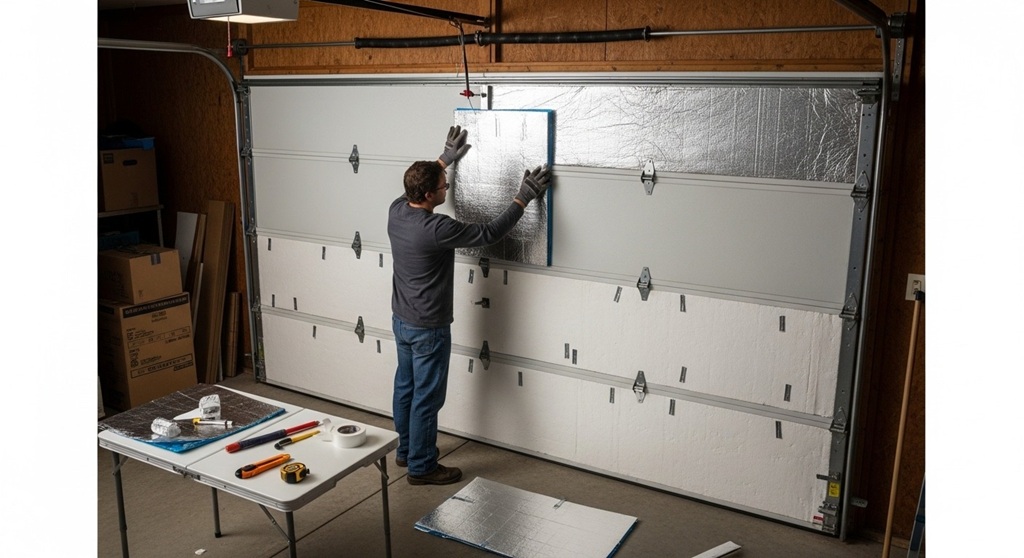
Quick answer: Yes. Reflective insulation works by reflecting radiant heat and can help reduce temperature buildup inside garages.
Reflective insulation is made from aluminum foil layered with polyethylene bubbles. It does not provide high R-value but performs well in hot climates where radiant heat is the main problem.
When Reflective Insulation Works Best
- Hot climates
- Metal garage doors exposed to sunlight
- Garages used as workshops
- Homes seeking quick DIY solutions
Field tests from building efficiency programs show reflective insulation can reduce garage heat gain by up to 45% in sunny environments.
Should You Use a Garage Door Insulation Kit?
Quick answer: Yes, if you want an easy all-in-one solution that includes insulation panels, adhesives, and installation hardware.
Garage door insulation kits are designed specifically for DIY homeowners. They include pre-cut insulation materials and step-by-step instructions.
Advantages of Insulation Kits
- Simplified installation
- Pre-cut insulation panels
- Includes adhesives and clips
- Balanced insulation performance
The average installation time for most kits is under 90 minutes.
How Do You Seal Garage Door Air Leaks?
Quick answer: Install weather stripping around the door frame and replace worn bottom seals to block air leaks.
Even with insulation panels installed, air leaks around the edges of the garage door can reduce energy efficiency.
Areas to Seal
- Side door frames
- Top frame
- Bottom rubber seal
- Panel seams
Weather stripping costs around $10–$20 and can significantly reduce drafts.
How Much Money Can Garage Door Insulation Save?
Quick answer: Insulating a garage door can reduce household energy costs by 5–15% depending on climate and garage usage.
According to energy efficiency research from residential retrofit programs:
- Homes with attached garages lose heat through garage doors
- Insulating the door reduces temperature swings
- Energy savings accumulate over multiple seasons
For example, a retrofit study in colder climates found that insulated garage doors reduced heating energy demand by up to 12% in homes with rooms above the garage.
Does Garage Door Insulation Improve Noise Reduction?
Quick answer: Yes. Insulation materials help absorb sound and reduce outside noise entering the garage.
This can be useful if you use the garage as:
- A workshop
- A gym
- A music practice area
- A home office
Foam insulation and fiberglass batts both provide sound-dampening benefits in addition to thermal insulation.
What Mistakes Should You Avoid When Insulating a Garage Door?
Quick answer: Avoid adding excessive weight, leaving air gaps, or blocking door mechanisms.
Common DIY Insulation Mistakes
- Using insulation that is too heavy
- Ignoring weather sealing
- Installing uneven insulation panels
- Blocking hinges or tracks
- Using low-quality adhesives
Garage door springs are calibrated to the door weight. Adding excessive insulation weight may affect door balance.
For lightweight doors, foam board insulation is usually the safest option.
Conclusion: Is Budget Garage Door Insulation Worth It?
Insulating a garage door is one of the simplest home improvement projects that can deliver real benefits. Even a small investment in foam board panels or reflective insulation can significantly improve temperature control inside the garage.
Better insulation means reduced energy loss, lower utility bills, and improved comfort for rooms connected to the garage.
The best part is that this project requires minimal tools and can be completed in under two hours. With materials costing as little as $30–$60, it is one of the most cost-effective upgrades homeowners can make.
If your garage feels too hot in summer or too cold in winter, insulating the door is a practical solution worth considering.
Take action today: measure your garage door panels, choose an affordable insulation method, and complete this DIY project to improve comfort and energy efficiency in your home.
Frequently Asked Questions (FAQs)
1. What is the best budget insulation for garage doors?
Foam board insulation is usually the best budget option because it provides good thermal resistance, is lightweight, and costs between $20 and $50.
2. Can I insulate my garage door without professional help?
Yes. Most garage door insulation methods are DIY friendly. Homeowners can install foam boards, reflective insulation, or insulation kits using simple tools.
3. Does garage door insulation really make a difference?
Yes. Insulation reduces heat transfer, improves temperature stability, and can lower energy bills, especially in homes with attached garages.
4. How long does it take to insulate a garage door?
Most DIY garage door insulation projects take between one and two hours depending on the size of the door and the insulation material used.
5. Is reflective insulation good for cold climates?
Reflective insulation works best in hot climates where radiant heat is the main issue. In colder climates, foam board or fiberglass insulation usually performs better.
6. Can insulation make my garage door too heavy?
Yes, heavy insulation materials may affect the door balance. Lightweight foam insulation panels are recommended for most garage doors.
7. Should I insulate the garage walls too?
If the garage is attached to the home, insulating both the garage door and walls provides better overall energy efficiency.
Read More Also: How to Turn Off Water to Your Toilet: Guide for Homeowners
Find out: Transforming Your Bathroom Oasis: Decoding the Costco Jacuzzi Bath Remodel Cost