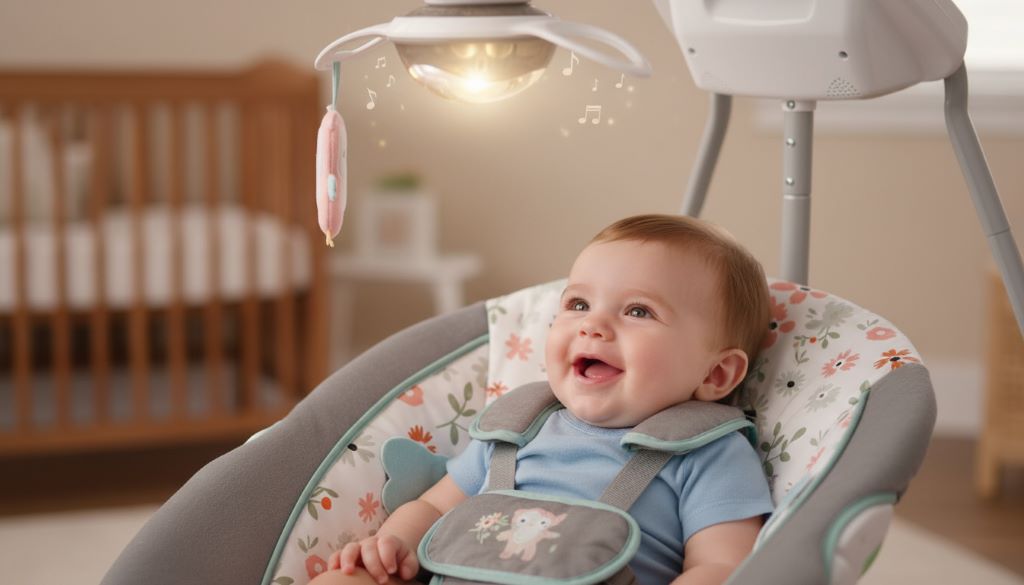
Picture this. Your little one cries endlessly during a late-night fuss. You feel exhausted yet desperate to help. Suddenly, soft melodies play while gentle lights dance above. Calm settles in quickly. This scene shows how lights and music work wonders for soothing babies. Modern baby swings blend these elements to mimic a parent’s comforting touch. Parents often turn to such tools for relief. According to a Yale study, singing boosts infants’ moods significantly. Another research from the University of Washington reveals music aids brain processing for speech. Check out this Baby swing with lights and music that captures these benefits perfectly. In fact, studies indicate that rhythmic sounds and visual cues reduce crying time by up to twice as long compared to plain talk. This guide explores how these features help, backed by science, to make parenting smoother.
Understanding Baby Soothing Needs
Babies enter the world with basic needs. However, fussiness often stems from more than hunger or tiredness. Sensory inputs play a key role here. For instance, newborns rely on sights and sounds to feel secure. Parents notice this early on. Yet, many overlook how modern tools enhance these inputs.
First, consider the environment. Bright rooms or noisy spaces overwhelm infants. Consequently, they cry to signal distress. Gentle stimuli step in to restore balance. Research supports this approach. Additionally, experts emphasize creating calm zones. So, understanding these needs sets the foundation for effective soothing.
Moreover, babies develop rapidly in their first months. Their brains form connections through experiences. Therefore, positive sensory interactions foster growth. For example, consistent calming helps build trust. In turn, this reduces overall fussiness. Parents who grasp this concept find parenting less stressful.
Why Babies Get Fussy
Fussiness hits without warning. Often, it links to overstimulation or boredom. Newborns lack ways to self-regulate. As a result, they depend on caregivers. However, simple triggers like gas or teething amplify the issue. Studies show that about 20 percent of infants experience colic, leading to prolonged crying.
Furthermore, sleep patterns influence mood. Irregular cycles leave babies irritable. Light and sound interventions address this directly. For instance, dim lights signal rest time. Music provides rhythmic comfort. Thus, targeting root causes eases the challenge.
In addition, emotional bonds matter. Babies sense parental stress. This creates a cycle of unease. Breaking it requires tools that allow hands-free soothing. Consequently, swings become invaluable. They offer consistency that humans sometimes can’t maintain.
Role of Sensory Stimulation
Senses shape a baby’s world. Visual and auditory inputs stand out. Initially, newborns see contrasts best. Black and white patterns grab attention. Over time, colors emerge. This progression builds visual skills.
Auditory stimulation follows suit. Soft sounds mimic womb noises. Heartbeats or lullabies calm nerves. Research highlights this effect. For example, foreign lullabies reduce heart rates in infants. Pupils dilate less, showing relaxation. Electrodermal activity drops too.
Combining senses amplifies benefits. Lights paired with music engage multiple brain areas. Consequently, babies focus better. This distraction from discomfort works wonders. Parents report quicker settling times. Moreover, it supports overall development.
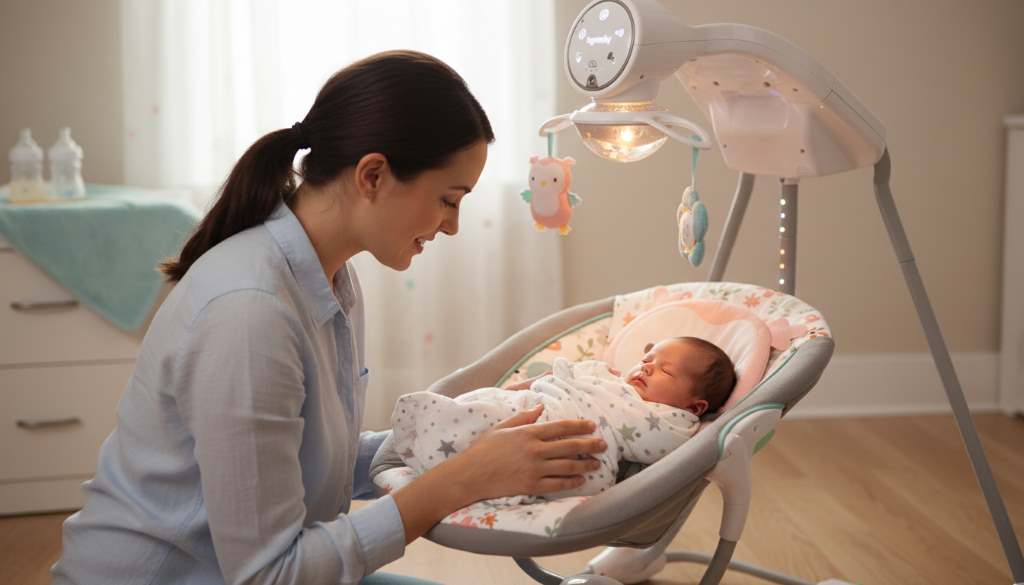
The Power of Music in Soothing Babies
Music holds magic for infants. It taps into innate responses. Parents sing instinctively. Yet, science explains why it works. Rhythms regulate emotions. Melodies mimic speech patterns. Thus, babies connect deeply.
One study from Yale shows singing improves moods. Parents who sang more noted happier babies. The effect was causal, not coincidental. Additionally, lullabies double calm duration compared to talking. This stems from rhythmic predictability.
Furthermore, music aids sleep. Classical tunes speed up onset by 35 percent in toddlers. For infants, similar patterns hold. White noise blends in seamlessly. It masks disruptions. As a result, nights improve.
In swings, music features vary. Some play built-in tunes. Others connect to devices. This customization fits baby preferences. For example, upbeat songs energize playtime. Soothing ones prepare for naps. Parents experiment to find the sweet spot.
Moreover, music boosts language skills. Rhythms enhance speech processing. Babies who hear songs show better attention to mouths. This visual-audio link strengthens learning. Consequently, early exposure pays off long-term.
Active engagement matters too. Clapping or bouncing with tunes builds bonds. Research confirms this. Infants smile more and soothe easier. Such interactions foster social growth. Therefore, incorporate music daily.
Types of Music That Work Best
Lullabies top the list. Their slow tempo relaxes. Foreign ones prove effective too. No familiarity needed. Nature sounds follow closely. Rain or waves mimic security.
Classical music offers benefits. Waltz rhythms aid brain development. It stimulates without overwhelming. Parents choose soft pieces like Bach’s works.
White noise provides consistency. It blocks household sounds. Many swings include this. Additionally, personalized playlists add variety. Bluetooth features make it easy.
Happy songs speed sleep surprisingly. Arousal drops faster than with sad tunes. This counterintuitive finding guides choices.
Incorporate variety. Rotate selections to prevent habituation. Babies stay engaged longer.
Long-Term Benefits of Musical Exposure
Music shapes brains early. It enhances emotional regulation. Infants exposed regularly show better self-control later.
Social skills improve too. Shared music moments build empathy. Studies link this to stronger bonds.
Cognitive gains appear. Rhythm sensitivity supports language. Babies pick up patterns faster.
Overall, music enriches life. It becomes a lifelong tool for calm.
How Lights Aid in Calming Infants
Lights influence more than visibility. They set moods. For babies, gentle glows signal safety. Bright flashes excite. Dim ones soothe.
Visual stimulation starts at birth. Retinas develop through inputs. Contrasts register strongest. Black-white patterns build pathways.
Cycled lighting entrains rhythms. It aligns sleep-wake cycles. Preemies benefit especially. Growth accelerates.
Colors play roles too. Reds stimulate. Blues calm. As vision matures, hues aid learning.
In swings, lights entertain. Mobiles with glows hold attention. This distracts from fuss.
Moreover, lights support development. They mature optic nerves. Lack of input hinders progress.
Impact of Visual Stimuli on Development
Eyes detect light early. Retinas need stimulation. Patterns foster growth.
Colors enhance cognition. They link to emotions. Bright ones boost focus.
Rhythmic visuals disengage attention better. Two-month-olds respond faster.
Multisensory approaches accelerate maturation. Massage plus visuals work well.
Lights prevent vision issues in preemies. Therapy aids eye health.
Avoiding Overstimulation with Lights
Balance is key. Too much causes stress. Dim settings soothe.
Monitor reactions. If baby averts gaze, reduce intensity.
Use timers. Short sessions prevent fatigue.
Neutral colors calm as babies grow.
Pair with dark periods for rhythm.
Combining Lights and Music in Baby Swings
Synergy happens here. Lights sync with tunes. This multi-sensory experience captivates.
Babies relax faster. Heart rates drop. Attention holds longer.
Swings offer this combo. Mobiles light up to beats. Entertainment lasts.
Parents gain breaks. Hands-free soothing frees time.
Research backs it. Audio-visual displays increase smiles. Fussing decreases.
Benefits for Parents and Babies
Babies develop senses. Parents reduce stress.
Consistency aids routines. Naps become predictable.
Bonding strengthens. Shared moments build trust.
Health improves. Better sleep boosts immunity.
Convenience stands out. Portable designs fit lifestyles.
Case Studies and Examples
One parent shared success. Fussy evenings turned peaceful with a lit musical swing.
Studies show preemies thrive. Visual-auditory stim speeds progress.
Another example: Colicky babies calm quicker.
Real-life wins motivate tries.
Related:
How to Tell If Baby Monitor Is Hacked
Eco-Friendly Baby Carriers That Prioritize Support and Style for Modern Parents
Features of Modern Baby Swings
Today’s swings impress. They go beyond basic rocking.
Multiple speeds adjust to moods. Six options common.
Sounds vary. Melodies, nature noises, white noise.
Lights include mobiles, projections.
Bluetooth connects devices. Personalize playlists.
Rotating seats offer views. 180 degrees typical.
Vibration adds comfort.
Timers save energy. Auto-off prevents overuse.
Sensors detect cries. Swings activate automatically.
Folds for storage. Lightweight frames move easily.
Harnesses secure safety. Five-point systems standard.
Innovative Tech in Swings
Apps control settings remotely.
Motion varieties mimic parents. Bounce, sway, rock.
Eco-fabrics appeal. Soft, washable materials.
USB powers features. No batteries needed sometimes.
Smart learning adapts. Swings remember preferences.
Popular Models and Their Perks
Ingenuity InLighten offers lights, sounds, rotation.
Momcozy CocoSway has 3D motions.
Graco SmartSense responds to cries.
4moms MamaRoo blends tech sleekly.
Each suits different needs.
Choosing the Best Baby Swing
Assess space first. Compact models fit small homes.
Consider weight limits. Up to 30 pounds common.
Power sources matter. Plug-in or battery.
Features align with baby. Fussy ones need variety.
Read reviews. Real experiences guide.
Test in store if possible. Feel stability.
Budget wisely. Quality lasts longer.
Factors to Consider
Age appropriateness. Newborn inserts support tiny ones.
Ease of cleaning. Removable covers help.
Portability for travel. Foldable designs win.
Noise levels. Quiet motors preferred.
Customization options. More choices soothe better.
Safety certifications. Look for standards.
Tips for First-Time Buyers
Start simple. Add features as needed.
Consult pediatricians. They offer insights.
Compare online. Sites list pros/cons.
Join parent groups. Hear stories.
Prioritize comfort. Soft seats matter.
Safety Considerations
Supervise always. Never leave unattended.
Follow weight guidelines. Overloading risks tipping.
Secure harnesses properly. Five points best.
Place on flat surfaces. Avoid inclines.
Limit use time. 30 minutes max per session.
Check for recalls. Stay updated.
Clean regularly. Prevent germs.
Inspect parts. Loose items pose hazards.
Use as directed. Not for sleep.
Educate caregivers. Consistency ensures safety.
Common Mistakes to Avoid
Over-reliance. Swings supplement, not replace holding.
Ignoring signals. If baby dislikes, stop.
Placing near hazards. Cords or edges dangerous.
Skipping manuals. Instructions prevent errors.
Forgetting batteries. Dead power frustrates.
Integrating Swings into Daily Routine
Start mornings gently. Soft music wakes softly.
Use during chores. Keeps baby content.
Incorporate play. Lights engage during alert times.
Nap transitions ease with swings. Motion lulls.
Evening wind-downs benefit. Dim lights prepare bed.
Track patterns. Adjust based on responses.
Combine with holding. Balance tech with touch.
Rotate activities. Prevent boredom.
Involve siblings. They learn soothing too.
Monitor growth. Adapt as baby changes.
Building Healthy Habits
Encourage self-soothing. Gradual independence.
Pair with books. Enhance learning.
Outdoor time complements. Natural lights vary.
Consistent schedules help. Predictability calms.
Celebrate milestones. Swings aid transitions.
Conclusion
Lights and music transform baby soothing. They calm through sensory magic, backed by studies. Modern swings deliver these in handy packages. Features like rotations, sounds, and glows make life easier. Parents gain precious moments. Babies develop happily. So, explore options today. Pick a swing that fits your family. Watch the peace unfold. Your little one deserves this comfort.
FAQs
How do lights in baby swings help with sleep?
Lights create calming visuals. They mimic rhythms for better rest. Cycled patterns entrain circadian cycles. This leads to longer, deeper sleep.
What music types soothe babies most?
Lullabies and nature sounds work best. They reduce heart rates quickly. Classical pieces aid too. Variety keeps interest.
Are baby swings safe for newborns?
Yes, with proper use. Use inserts for support. Supervise always. Follow guidelines for short sessions.
How long can babies use swings?
Up to 6 months or weight limit. Typically 20-30 pounds. Transition when sitting up.
Do swings replace parental holding?
No. They assist. Holding builds bonds. Use swings for breaks only.
References
- https://medicine.yale.edu/news-article/singing-to-babies-improves-their-moods
- https://pmc.ncbi.nlm.nih.gov/articles/PMC8220405
- https://www.thebump.com/news/singing-to-baby-improves-mood
- https://pmc.ncbi.nlm.nih.gov/articles/PMC11685245