Stainless steel cookware has become a favorite among home cooks and professional chefs alike. Its durability, even heating, and versatility make it an excellent investment for any kitchen. However, many people struggle with food sticking to the surface when they first start using these pans. The experts at The Funky Kitchen understand this challenge and have discovered that margarine can be your secret weapon for achieving perfect results.
Margarine offers unique advantages when working with stainless steel surfaces. Unlike butter, which contains milk solids that can burn at high temperatures, margarine provides consistent cooking performance. Additionally, it spreads more evenly than many cooking oils, creating a better barrier between your food and the pan surface.
When using margarine in stainless steel cookware, you’ll discover that it helps prevent sticking while adding subtle flavor to your dishes. Therefore, understanding the proper techniques will transform your cooking experience and help you achieve restaurant-quality results at home.
Understanding Stainless Steel Cookware
Stainless steel pans work differently than non-stick alternatives. The surface has microscopic pores that can trap food particles, causing sticking issues. However, when heated properly and paired with the right cooking fat, these pans become naturally non-stick.
The key lies in temperature control and timing. Stainless steel needs to reach the proper temperature before adding any fat or food. Furthermore, the type of cooking fat you choose makes a significant difference in your results.
Why Margarine Works So Well
Margarine contains specific properties that make it ideal for stainless steel cooking. Its composition includes emulsifiers that help create a smooth, even coating on the pan surface. Moreover, margarine has a higher smoke point than butter, allowing for better high-heat cooking.
The consistency of margarine also provides advantages. It melts evenly and doesn’t separate like butter can under high heat. Therefore, you get consistent results every time you cook.
Tip 1: Master the Temperature Test
Getting the right temperature is crucial for success. Start by heating your stainless steel pan over medium heat for 2-3 minutes. Then, perform the water drop test by adding a small drop of water to the surface.
If the water sizzles and evaporates immediately, the pan is too hot. However, if the water forms a ball and rolls around the pan, you’ve reached the perfect temperature. At this point, add your margarine and let it melt completely before adding food.
Additionally, avoid rushing this process. Taking time to properly preheat ensures better cooking results and prevents sticking issues.
Tip 2: Use the Right Amount of Margarine
The amount of margarine you use depends on what you’re cooking. For delicate items like eggs or fish, use approximately one tablespoon for a 10-inch pan. However, for items that tend to stick more, such as potatoes or chicken, you might need slightly more.
Spread the margarine evenly across the entire cooking surface. Furthermore, make sure it coats the sides of the pan where food might touch. This creates a complete barrier that prevents sticking.
Remember that too much margarine can cause spattering and smoking. Therefore, start with less and add more if needed during cooking.
Tip 3: Choose the Right Type of Margarine
Not all margarines are created equal for cooking purposes. Look for stick margarine rather than tub varieties, as it typically has less water content. Additionally, choose margarine with at least 80% fat content for the best cooking performance.
Avoid light or reduced-fat margarines when cooking in stainless steel. These products contain more water and less fat, which can cause sticking and uneven cooking. Moreover, they may not provide the protective barrier you need.
Some margarines are specifically formulated for baking, while others work better for cooking. Therefore, read labels carefully and choose products designed for stovetop use.
Tip 4: Perfect Your Timing and Technique
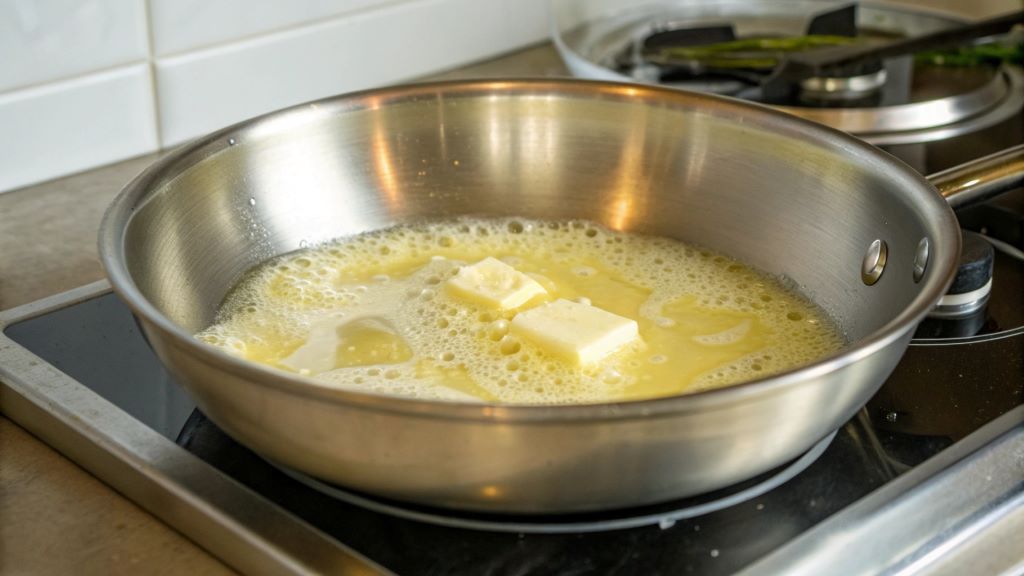
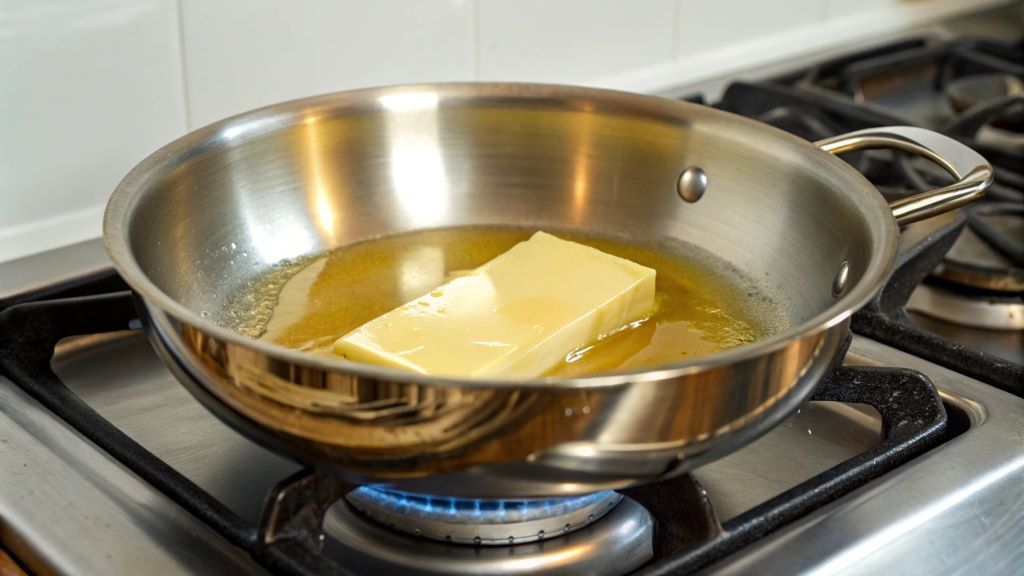
Timing plays a critical role in successful stainless steel cooking with margarine. Add the margarine to the preheated pan and let it melt completely. Watch for it to stop foaming, which indicates that excess moisture has evaporated.
Once the margarine is ready, add your food gently. Avoid moving items too quickly, as they need time to develop a proper sear. However, don’t let food sit too long without checking, as this can lead to burning.
Additionally, use appropriate utensils. Wooden spoons and silicone spatulas work well with margarine and won’t scratch your stainless steel surface.
Tip 5: Maintain Proper Heat Control
Heat control remains essential throughout the cooking process. Stainless steel retains heat well, so you may need to adjust your burner temperature as you cook. Therefore, pay attention to how your food responds and make adjustments accordingly.
If you notice excessive smoking or spattering, reduce the heat slightly. Conversely, if food isn’t browning properly, you might need to increase the temperature. However, make gradual adjustments to avoid shocking the pan.
Furthermore, remember that different foods require different heat levels. Delicate items like fish need gentler heat, while vegetables might benefit from higher temperatures for proper caramelization.
Common Mistakes to Avoid
Several mistakes can undermine your success with margarine and stainless steel cookware. First, never add margarine to a cold pan, as this can cause uneven melting and potential sticking issues.
Additionally, avoid using margarine that’s too cold. Let it soften slightly at room temperature for easier spreading and better performance. However, don’t let it get too warm, as this can affect its cooking properties.
Another common error is moving food too soon. Allow items to develop a proper sear before attempting to flip or move them. Therefore, practice patience for better results.
Cleaning and Care Tips
Proper cleaning helps maintain your stainless steel cookware’s performance. After cooking with margarine, let the pan cool slightly before cleaning. Then, use warm soapy water and a soft sponge to remove any residue.
For stubborn spots, create a paste with baking soda and water. Additionally, white vinegar can help remove water spots and restore shine to your cookware.
Avoid using abrasive cleaners or steel wool, as these can scratch the surface. Therefore, stick to gentle cleaning methods that preserve your pan’s integrity.
Conclusion
Mastering the use of margarine in stainless steel cookware opens up new possibilities in your kitchen. These five tips provide a foundation for achieving consistent, professional-quality results. Remember to focus on proper temperature control, use the right amount and type of margarine, perfect your timing, and maintain appropriate heat levels throughout cooking.
Additionally, avoiding common mistakes and properly maintaining your cookware will ensure years of excellent performance. Therefore, practice these techniques regularly, and you’ll soon discover why so many cooks prefer this combination for their culinary adventures.
The key to success lies in understanding how margarine and stainless steel work together. However, with patience and practice, you’ll develop the skills needed to create delicious meals with confidence.
Frequently Asked Questions
Can I use margarine in stainless steel pans for high-heat cooking?
Yes, margarine works well for high-heat cooking in stainless steel pans. Choose margarine with a higher smoke point and monitor the temperature carefully to prevent burning. Additionally, stick margarine typically performs better than tub varieties for high-heat applications.
How do I prevent margarine from burning in my stainless steel pan?
Control your heat carefully and ensure the pan reaches the proper temperature before adding margarine. Watch for the margarine to stop foaming, which indicates it’s ready for cooking. Furthermore, avoid using maximum heat settings, as medium to medium-high heat usually works best.
Is margarine better than butter for stainless steel cookware?
Margarine often performs better than butter in stainless steel pans because it has a higher smoke point and contains fewer milk solids that can burn. However, both can work well when used properly. Therefore, choose based on your flavor preferences and cooking requirements.
What’s the best way to distribute margarine evenly in a stainless steel pan?
Add margarine to a properly preheated pan and let it melt naturally. Then, tilt the pan gently to distribute the melted margarine evenly across the surface. Additionally, you can use a spatula to spread it if needed, ensuring complete coverage.
Can I reuse margarine that’s left in the pan after cooking?
It’s generally not recommended to reuse margarine that has been heated and potentially mixed with food particles. Fresh margarine provides better flavor and cooking performance. Therefore, clean your pan thoroughly between uses and start with fresh margarine for each cooking session.
Read More:
The Dark Side of Granite: Unveiling the Disadvantages of Granite Countertops
The Glittering Illusion: Unveiling the Disadvantages of Marble Countertops