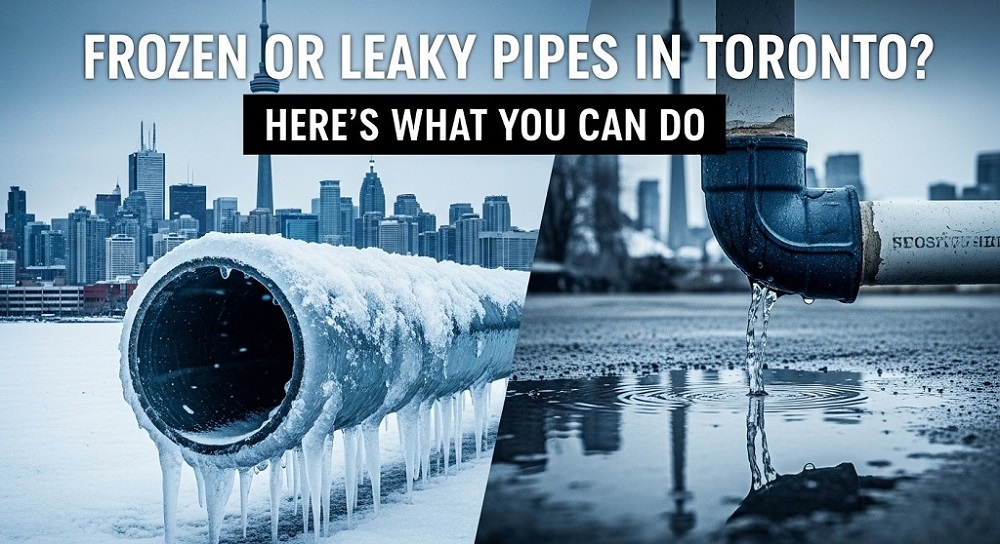
Toronto winters hit hard. Temperatures regularly drop below –20°C, and sudden thaws bring their own problems. As a result, thousands of homeowners deal with frozen pipes or unexpected leaks every year. According to Environment Canada, the Greater Toronto Area experienced 28 days below –15°C in the 2024–2025 winter season so far. Moreover, the Insurance Bureau of Canada reports that water damage from burst or leaking pipes remains the number-one cause of home insurance claims in Ontario. Fortunately, quick action and the right knowledge can save you thousands in repairs and keep your family safe.
Why Pipes Freeze or Leak in Toronto Homes
Cold weather causes water inside pipes to expand when it freezes. This expansion creates enormous pressure—up to 40,000 psi—enough to rupture copper, PEX, or galvanized steel. On the other hand, older plumbing, poor insulation, and rapid temperature swings lead to cracks and sudden leaks even without freezing. In Toronto, many homes built before 1980 still have original galvanized pipes that corrode over time. Consequently, both new and vintage properties face these risks every winter.

Signs You Have Frozen Pipes
Homeowners often notice the problem too late. However, early warning signs help you act fast. Look for these clues:
- Little or no water comes out of faucets
- Strange banging or clanking noises inside walls
- Frost appears on exposed pipes
- Unusual bulging or cracking along pipe surfaces
- A sudden drop in water pressure throughout the house
If you spot any of these indicators, move quickly to prevent a burst.
Signs of a Leaking or Burst Pipe
Leaks show different symptoms. Stay alert for:
- Water stains on ceilings, walls, or floors
- Musty smells in basements or crawl spaces
- Unexplained increase in your water bill
- Sounds of running water when all taps are off
- Damp spots under sinks or around the water heater
Quick detection limits damage and reduces restoration costs.
Immediate Steps When You Suspect Frozen Pipes
Act calmly but decisively. Follow these steps in order:
- Turn off the main water shut-off valve right away. Most Toronto homes have it near the water meter in the basement or near the front foundation wall.
- Open all affected faucets (both hot and cold) to relieve pressure as ice melts.
- Locate the frozen section. Pipes along exterior walls, in unheated basements, or near drafty windows freeze first.
- Apply gentle heat—never an open flame. Safe methods include:
- Space heaters on low setting
- Hair dryers held 6–8 inches away
- Warm towels soaked in hot water and wrapped around the pipe
- Heat lamps or heat tape designed for plumbing
- Work from the open faucet back toward the frozen area. This technique lets steam escape and speeds thawing.
- Keep applying heat until full water pressure returns.
Once water flows normally, check carefully for leaks. Even a tiny crack can worsen quickly.
What to Do If a Pipe Has Already Burst
Water gushes fast—sometimes 500 litres per minute. Therefore, speed matters most:
- Shut off the main water valve immediately
- Turn off electricity at the breaker if water contacts outlets or appliances
- Move valuables and furniture out of the flooded area
- Place buckets or towels to catch dripping water
- Call a licensed Toronto plumber right away, even if it’s 2 a.m.—many offer 24/7 emergency service
- Take photos of all damage for insurance purposes
Do not turn electricity back on until a professional confirms it’s safe.
How Toronto Homeowners Can Prevent Frozen Pipes
Prevention beats emergency repairs every time. Implement these proven strategies before the next deep freeze:
- Insulate all exposed pipes with foam sleeves or heat tape
- Seal cracks around windows, doors, and foundation walls
- Keep garage doors closed if water lines run through the garage
- Maintain indoor temperature at 13°C or higher, even when away
- Let cold water drip from faucets served by exposed pipes during extreme cold
- Disconnect and drain garden hoses; shut off outdoor spigots from inside
- Install pipe heating cables on vulnerable lines in crawl spaces or attics
Moreover, consider upgrading insulation in unheated areas. Many Toronto homeowners qualify for energy rebates when they improve home efficiency.
Long-Term Solutions for Recurring Problems
Some homes face repeated issues. In these cases, consider permanent fixes:
- Reroute pipes away from exterior walls into conditioned space
- Replace galvanized pipes with modern PEX or copper
- Install low-temperature alarms that text you when indoor temperature drops
- Add smart water leak detectors that shut off water automatically
- Upgrade attic and basement insulation to R-40 or higher
These upgrades pay for themselves through lower heating bills and fewer emergencies.
Special Considerations for Toronto Condos and High-Rises
Condo owners face unique challenges. You often cannot access the main shut-off valve quickly. Additionally, water from your unit can damage multiple floors below. Therefore:
- Know your unit’s individual shut-off valves (usually under sinks or behind toilet access panels)
- Inform your property manager immediately
- Review your condo corporation’s emergency protocol
- Purchase adequate condo insurance that covers water damage assessments
Quick communication prevents disputes and speeds repairs.
When to Call a Professional Plumber in Toronto
Some situations require expert help. Contact a licensed plumber if:
- You cannot locate the frozen section
- Water continues after thawing attempts
- You see signs of a burst pipe
- Multiple fixtures remain without water
- You smell gas (frozen pipes sometimes affect nearby gas lines)
Toronto’s extreme weather demands plumbers experienced with local building codes and frozen ground conditions.

Emergency Plumber Checklist for Toronto Residents
Keep this list handy during winter:
- Main water shut-off location marked clearly
- Emergency plumber phone numbers saved (at least two companies)
- Flashlight and batteries near the shut-off valve
- Pipe insulation supplies in an accessible spot
- Copy of home insurance policy and claim phone number
Preparation turns panic into control.
Related Topics: How to Turn Off Water to Your Toilet
Conclusion
Toronto’s harsh winters test every home’s plumbing system. However, understanding why pipes freeze or leak, recognizing warning signs early, and taking swift action dramatically reduce damage and stress. Simple preventive measures like insulation, steady heat, and dripping faucets protect your property year after year. When problems strike, prioritize safety, shut off water immediately, and reach out to licensed professionals without delay.
Don’t wait for the next polar vortex. Inspect your pipes today, add insulation where needed, and save emergency contacts now. Your future self—and your wallet—will thank you.
Related Topics: Bubble Bath in a Jacuzzi Tub
FAQs
How cold does it have to get for pipes to freeze in Toronto?
Pipes can freeze when outdoor temperatures drop below –6°C for six hours or more, especially if wind chill is severe and pipes lack insulation.
Can I use a torch to thaw frozen pipes?
Never use an open flame. Torches can cause pipes to explode or start house fires. Stick to electric heat sources only.
Why does my Toronto home get frozen pipes but my neighbour’s doesn’t?
Differences in insulation, pipe location, thermostat settings, and even tree cover affect risk. Homes with pipes on north-facing walls freeze first.
Will home insurance cover burst pipes in Toronto?
Most policies cover sudden and accidental bursts, but not damage from neglect (like failing to maintain heat). Review your policy annually.
How quickly can a burst pipe flood a Toronto basement?
A 1/2-inch pipe can release over 200 litres per minute. Basements can see several inches of water in under 30 minutes.
References
- Environment and Climate Change Canada – Historical Weather Data for Toronto: https://climate.weather.gc.ca
- Insurance Bureau of Canada – Water Damage Statistics: https://www.ibc.ca
- City of Toronto – Winter Home Maintenance Tips: https://www.toronto.ca/services-payments/water-environment/water-sewer-system-protection/prevent-frozen-pipes